Kimchi is a traditional Korean fermented vegetable dish made with napa cabbage, seasonings, and a flavorful red pepper mixture. It has a delicious combination of salty, spicy, tangy, and slightly sweet flavors.
This Easy Kimchi Recipe for Beginners keeps the process simple while introducing the basic techniques used to make homemade kimchi. With napa cabbage, fresh vegetables, garlic, ginger, fish sauce, and Korean red pepper flakes, you can make a flavorful batch at home without complicated equipment.
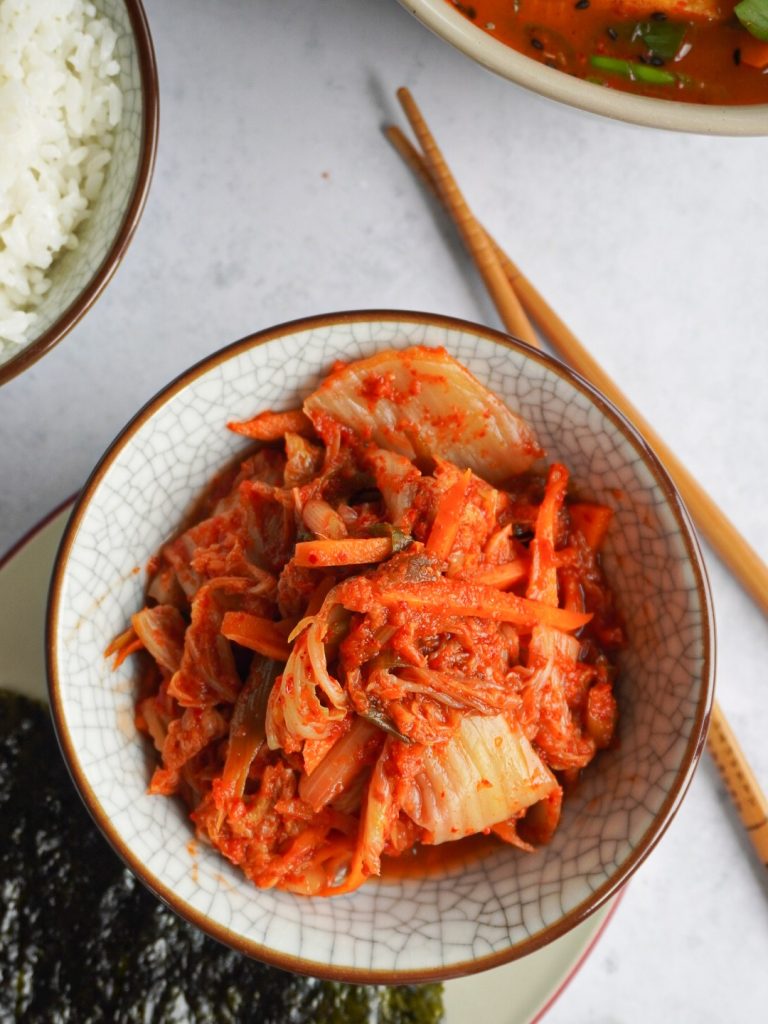
1. Easy Kimchi Recipe for Beginners (Yield: 6–8 Servings)
Ingredients
- 1 medium napa cabbage, about 2–2½ pounds
- ¼ cup kosher salt
- 4 cups cold water
- 1 small carrot, julienned
- 4 green onions, sliced
- ½ small yellow onion, roughly chopped
- 5 cloves garlic
- 1-inch piece fresh ginger, peeled
- 2 tablespoons fish sauce
- 1 tablespoon soy sauce
- 1 tablespoon honey or granulated sugar
- 3 tablespoons Korean red pepper flakes (gochugaru)
- ½ cup water
- 1 tablespoon all-purpose flour or rice flour
Instructions
Start by preparing the napa cabbage. Remove any damaged outer leaves and rinse the cabbage under cool running water. Cut it lengthwise into quarters and remove the hard core from each section.
Cut the cabbage into bite-sized pieces, about 1½ to 2 inches wide. Place the cabbage in a large bowl.
Dissolve the kosher salt in 4 cups of cold water. Pour the salt water over the cabbage and toss everything together with clean hands so the leaves are evenly moistened.
Let the cabbage sit in the salt water for about 1½ to 2 hours. Toss the cabbage every 30 minutes so the salt reaches all the leaves. The cabbage will gradually soften as it sits.
While the cabbage is salting, prepare the seasoning paste. Add the chopped yellow onion, garlic, ginger, fish sauce, soy sauce, honey or sugar, gochugaru, and ½ cup of water to a blender.
Blend until the mixture is mostly smooth. A little texture is fine, so you don’t need to make it completely pureed.
In a small saucepan, combine 1 tablespoon of flour or rice flour with a few tablespoons of water. Whisk until smooth, then add the remaining water.
Place the saucepan over medium-low heat and cook for about 2 to 3 minutes, stirring constantly, until the mixture becomes slightly thickened. Remove it from the heat and allow it to cool completely.
Once the cabbage has finished salting, rinse it thoroughly under cold running water two or three times. This removes excess salt from the leaves.
Drain the cabbage well and gently squeeze out excess water. Let it sit in a colander for about 10 minutes so additional moisture can drain away.
Place the drained cabbage in a large mixing bowl. Add the julienned carrot and sliced green onions.
Pour the blended seasoning mixture over the vegetables. Add the cooled flour mixture and toss everything together using clean hands or food-safe gloves.
Gently massage the seasoning into the cabbage until all the pieces are evenly coated. Make sure the red pepper mixture reaches between the cabbage leaves and coats the vegetables thoroughly.
Transfer the seasoned kimchi into a clean glass jar or fermentation container. Press the kimchi down firmly as you add it to remove large air pockets.
Leave about 1 to 2 inches of space at the top of the container because the kimchi can expand slightly during fermentation.
Press the vegetables down again so they are covered with their own liquid as much as possible. Wipe the rim of the jar clean and close it with a lid, but don’t tighten it excessively during the initial fermentation.
Leave the jar at room temperature for about 1 to 2 days. Place it on a plate or tray in case a small amount of liquid escapes during fermentation.
Check the kimchi after 24 hours. You may notice small bubbles, a slightly sour aroma, or liquid rising around the vegetables. These are normal signs of fermentation.
If the room is warm, the kimchi may ferment faster. Once it reaches the level of tanginess you like, transfer the jar to the refrigerator.
Let the kimchi continue developing its flavor in the refrigerator for several days before eating. The flavor will become more complex and tangy as it continues to ferment.
Always use a clean utensil when removing kimchi from the jar. Keep the remaining kimchi refrigerated and make sure the vegetables stay below the liquid as much as possible.

2. Tips for Perfect Homemade Kimchi
Use fresh napa cabbage with crisp, firm leaves. Fresh cabbage holds its texture better throughout the salting and fermentation process.
Don’t skip the salting stage. Salt helps draw moisture from the cabbage and softens the leaves so they can absorb the seasoning mixture.
Rinse the cabbage thoroughly after salting. Too much leftover salt can make the finished kimchi overly salty.
Gochugaru gives kimchi its characteristic Korean red pepper flavor. Regular chili powder is not an exact substitute because its flavor, texture, and heat level can be different.
Adjust the gochugaru to your preference. Three tablespoons creates a moderately spicy batch, but you can reduce the amount for a milder flavor.
Use gloves when mixing the seasoning into the cabbage. Gochugaru can stain your hands and may cause irritation if you touch your eyes afterward.
Don’t pack the fermentation jar completely full. Leaving some space at the top allows room for expansion as fermentation produces gas.
Fermentation time depends on room temperature. Warmer conditions generally speed up fermentation, while cooler conditions slow it down.
The flavor should become pleasantly tangy rather than developing an unpleasant or rotten smell. If you notice unusual mold, an abnormal odor, or other signs of spoilage, discard the batch.
Keep the finished kimchi refrigerated. Cold storage slows fermentation and helps maintain its texture and flavor.
3. Frequently Asked Questions
What does kimchi taste like?
Kimchi typically has a combination of spicy, salty, sour, savory, and slightly sweet flavors. The exact taste changes as it ferments, with older kimchi generally becoming more tangy and complex.
Does kimchi always contain fish sauce?
No. Fish sauce is common in many traditional kimchi recipes, but it can be replaced with a suitable plant-based alternative when making vegetarian or vegan kimchi.
Why does kimchi bubble during fermentation?
Bubbles are produced naturally by microorganisms during fermentation. Seeing some bubbling during the early fermentation stage is generally expected.
Can children eat kimchi?
Kimchi can be quite spicy and salty, so it may not suit every child. If introducing it to a child, consider a mild version with less gochugaru and an appropriate portion.
What can I do with very sour kimchi?
Very sour kimchi doesn’t necessarily need to be discarded if it has been stored properly and has no signs of spoilage. Strongly fermented kimchi can be particularly useful in cooked dishes such as kimchi fried rice, kimchi pancakes, or kimchi stew.
4. Nutrition Information
The following nutrition values are approximate and based on one serving of homemade kimchi.
| Nutrient | Amount Per Serving |
|---|---|
| Calories | 55 |
| Protein | 2 g |
| Carbohydrates | 8 g |
| Fat | 2 g |
| Saturated Fat | 0.3 g |
| Cholesterol | 0 mg |
| Fiber | 3 g |
| Sugar | 3 g |
| Sodium | 1,050 mg |
| Potassium | 250 mg |
| Calcium | 75 mg |
| Iron | 1 mg |
Making kimchi at home is easier than it may seem, especially when you start with a simple napa cabbage recipe. The combination of salted cabbage, fresh vegetables, garlic, ginger, gochugaru, and savory seasonings creates a flavorful mixture that changes naturally as it ferments.
This Easy Kimchi Recipe for Beginners is a great starting point for learning the basics of homemade kimchi. Once you’re comfortable with the process, you can adjust the spice level, fermentation time, and vegetables to create a version that suits your taste.