Thai Red Curry Noodle Soup is a comforting bowl that brings together the familiar warmth of curry with a light, satisfying noodle base. It is a wonderful choice for a homemade meal when you want something cozy, filling, and full of character without making the cooking process overly complicated.
This soup comes together in a single pot with a simple sequence of cooking steps. The result is a colorful and inviting meal that can easily become part of your regular dinner rotation. With a few fresh finishing touches, each bowl feels complete and satisfying.
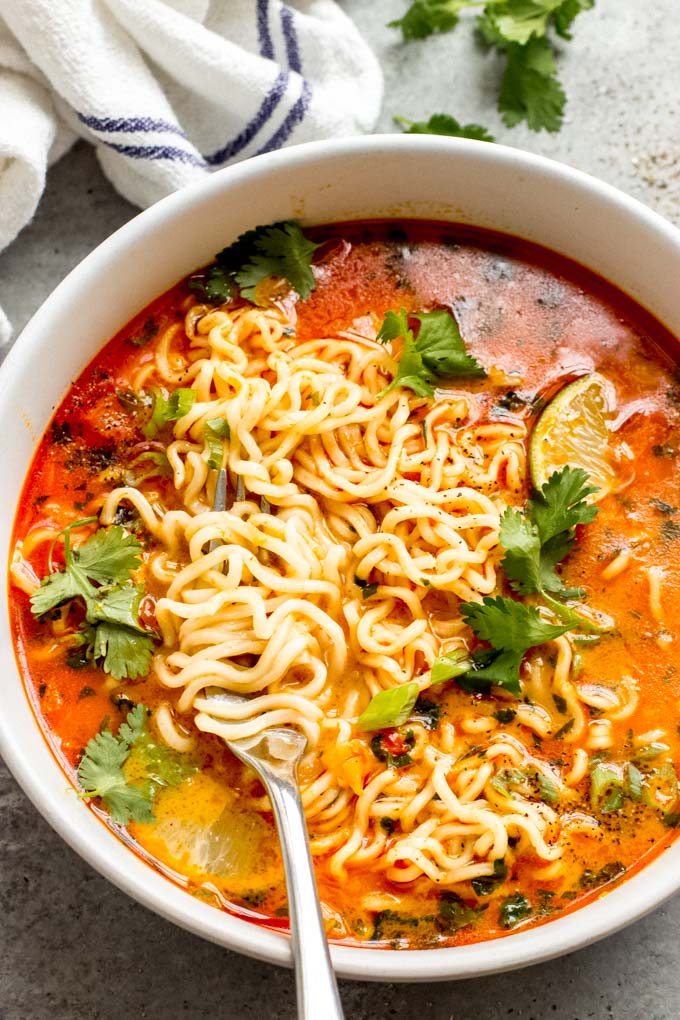
1. Thai Red Curry Noodle Soup Recipe ( Yield: 6 Servings )
Ingredients
- 2 tablespoons avocado oil or olive oil
- 1/2 cup diced yellow onion
- 1/2 cup diced red bell pepper
- 1/2 cup diced carrots
- 3 garlic cloves, minced
- 1 tablespoon freshly grated ginger
- 1/4 cup red curry paste
- 6 cups chicken broth or vegetable stock
- 1 (14-ounce) can full-fat coconut milk
- 3 tablespoons fish sauce
- 4–5 ounces ramen or rice noodles
- 1 tablespoon fresh lime juice, plus more to taste
- 1/2 cup fresh chopped cilantro, plus more for serving
- Lime wedges, for serving
Instructions
Begin by preparing all of the ingredients. Dice the onion, red bell pepper, and carrots into small, similar-sized pieces. Mince the garlic, grate the fresh ginger, chop the cilantro, and have the remaining ingredients measured and ready. Preparing everything before you begin makes the cooking process smooth and easy to manage.
Place a large pot or Dutch oven over medium heat and add the avocado oil or olive oil. Allow the oil to warm for about 30 seconds.
Add the diced yellow onion, red bell pepper, and carrots to the pot. Cook for about 4 to 5 minutes, stirring occasionally, until the vegetables begin to soften. They do not need to be completely tender at this point because they will continue cooking in the broth.
Add the minced garlic and freshly grated ginger. Stir everything together and cook for about 30 seconds to 1 minute, just until the garlic becomes fragrant. Keep an eye on the garlic so it does not brown or burn.
Add the red curry paste to the pot. Stir it into the vegetables and cook for about 1 to 2 minutes. This allows the curry paste to warm through and blend with the oil and vegetables.
Slowly pour the chicken broth or vegetable stock into the pot while stirring. Use your spoon to loosen any curry paste or vegetables that may have settled on the bottom.
Add the full-fat coconut milk and fish sauce. Stir gently until the coconut milk is completely incorporated into the broth.
Increase the heat slightly and bring the soup to a gentle simmer. Once it begins to simmer, reduce the heat to medium-low. Allow the soup to cook for about 8 to 10 minutes, giving the vegetables enough time to become tender.
Taste the broth at this stage. The flavor should be balanced, but you can adjust it later after adding the noodles and lime juice.
Add the ramen or rice noodles to the simmering soup. Cook according to the noodle variety you are using, generally for about 3 to 5 minutes. Stir gently once or twice to keep the noodles from sticking together.
Avoid overcooking the noodles. They should be tender but still have enough structure to hold up in the hot broth. Rice noodles can cook particularly quickly, so check them a little earlier than the package’s suggested time.
Once the noodles are cooked, turn off the heat. Stir in the fresh lime juice and chopped cilantro.
Taste the soup again and add more lime juice if desired. If you prefer a slightly stronger savory flavor, you can adjust the seasoning carefully, keeping in mind that the fish sauce already contributes saltiness.
Ladle the Thai Red Curry Noodle Soup into six bowls. Add additional chopped cilantro to each serving and place a lime wedge alongside each bowl.
Allow each person to squeeze fresh lime juice over their soup according to their preference. Serve the soup warm.
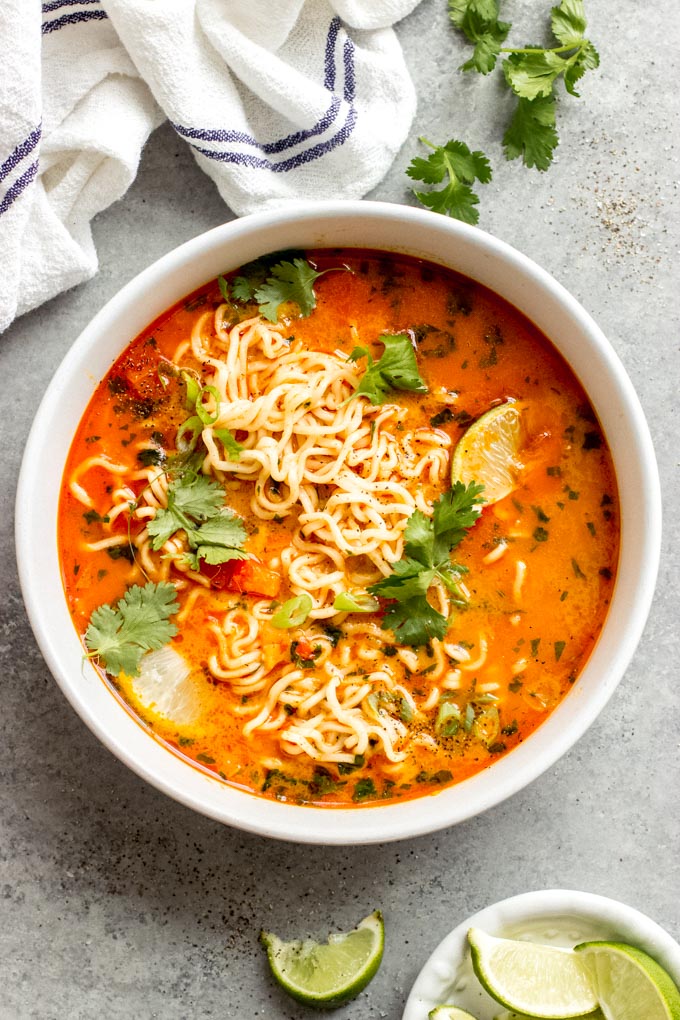
2. Tips for Perfect Thai Red Curry Noodle Soup
Choose a red curry paste that matches your preferred level of heat. Different brands can vary considerably in strength, so starting with the listed amount gives you a good foundation before making adjustments.
Cut the vegetables into small, uniform pieces. This helps them cook at a similar rate and makes the finished soup easier to eat.
Do not rush the curry paste step. Cooking it briefly with the vegetables and oil helps distribute it throughout the soup and creates a more cohesive base.
Use full-fat coconut milk for the richest texture. Shake or stir the can before opening if the coconut cream and liquid have separated.
Keep the soup at a gentle simmer rather than a vigorous boil after adding the coconut milk. A moderate temperature helps maintain a smooth consistency.
Pay attention to the noodles. They continue to soften as they sit in the hot broth, so cooking them just until tender helps prevent them from becoming overly soft.
If you expect to have leftovers, consider cooking the noodles separately and adding them to individual bowls. Noodles can absorb a significant amount of broth as they sit, especially after refrigeration.
Fresh lime juice is best added toward the end of cooking. It provides a bright finishing element without losing as much of its fresh character from prolonged cooking.
Add the cilantro after turning off the heat. This keeps its fresh quality and makes it more noticeable in the finished soup.
For a heartier variation, you can add cooked chicken, shrimp, tofu, mushrooms, or additional vegetables. Additions may change the cooking time, so make sure each ingredient is properly cooked before serving.
If the soup becomes too concentrated after sitting, loosen it with a small amount of warm chicken broth or vegetable stock when reheating.
3. Frequently Asked Questions
Can I make Thai Red Curry Noodle Soup ahead of time?
Yes. The soup base can be prepared ahead and refrigerated in an airtight container. For the best noodle texture, cook fresh noodles separately when you are ready to serve and combine them with the reheated soup.
Can I freeze this soup?
The soup base can be frozen, but the noodles may change texture after freezing and thawing. For the best results, freeze the broth and vegetables without noodles, then prepare fresh noodles when reheating.
What type of noodles work best in this soup?
Both ramen and rice noodles work well. Ramen gives the soup a springy, hearty texture, while rice noodles provide a lighter feel. The important thing is to avoid cooking the noodles longer than necessary.
Can I make this soup vegetarian?
Yes. Use vegetable stock instead of chicken broth and replace the fish sauce with a suitable vegetarian alternative, such as a vegetarian fish sauce or another savory seasoning. Check the red curry paste label as well, since some varieties may contain animal-derived ingredients.
How can I make the soup more filling?
You can add cooked chicken, tofu, shrimp, mushrooms, or additional vegetables. These additions make the soup more substantial while still allowing the curry broth and noodles to remain the main components.
4. Nutrition Information
The following nutrition estimates are approximate and can vary depending on the specific brands of curry paste, coconut milk, noodles, broth, and fish sauce used.
| Nutrient | Amount per serving |
|---|---|
| Calories | 350 kcal |
| Protein | 8 g |
| Carbohydrates | 42 g |
| Fat | 18 g |
| Saturated Fat | 12 g |
| Fiber | 3 g |
| Sugar | 7 g |
| Sodium | 1,360 mg |
| Calcium | 45 mg |
| Iron | 3 mg |
Thai Red Curry Noodle Soup is a simple homemade meal that brings together noodles, vegetables, coconut milk, and a flavorful curry-based broth in one comforting bowl. The straightforward preparation makes it approachable for home cooks while still creating a meal that feels special.
The recipe is also easy to adapt to your preferences. You can adjust the amount of lime juice, choose your favorite noodles, or add extra ingredients to create a bowl that works for your household. With its simple preparation and satisfying texture, this soup is a useful recipe to have on hand.