Mashed potatoes are a classic comfort food loved for their creamy texture and rich, buttery flavor. This simple dish is a staple at family dinners, holiday celebrations, and everyday meals because it pairs well with almost anything—from roasted meats to grilled vegetables.
In this guide, you’ll learn how to make perfect mashed potatoes from scratch with simple ingredients and easy steps. With the right technique, you can create a delicious homemade side dish that everyone will enjoy.
1. How to Make Mashed Potatoes ( Yield: 10 Serving )
Ingredients
- 4 lbs russet potatoes (about 12 medium), peeled
- 1 1/4 cups hot milk (use 1 to 1 1/4 cups), whole milk recommended
- 16 tbsp unsalted butter (2 sticks), at room temperature (not melted)
- 1 1/2 tsp salt, or to taste (sea salt works well)
- 1 tbsp fresh parsley or chives, finely chopped for garnish (optional)
Instructions
Step 1: Prepare the potatoes
Start by peeling the russet potatoes. After peeling, rinse them under cold water to remove any surface starch or dirt. Cut the potatoes into evenly sized chunks, about 1½ to 2 inches each. Cutting them into similar sizes helps them cook evenly.
Step 2: Boil the potatoes
Place the cut potatoes in a large pot and cover them with cold water by about one inch. Starting with cold water allows the potatoes to cook evenly from the inside out.
Add a generous pinch of salt to the water. Bring the pot to a boil over medium-high heat. Once boiling, reduce the heat slightly and allow the potatoes to simmer for about 15–20 minutes.
The potatoes are ready when a fork easily pierces through the center.
Step 3. Drain the potatoes
Once the potatoes are fully cooked, drain them in a colander. Let them sit for about 2–3 minutes to allow excess moisture to evaporate. Removing extra water helps prevent watery mashed potatoes.
For even better texture, you can return the drained potatoes to the hot pot and place it over low heat for about 1 minute, gently shaking the pot to remove remaining moisture.
Step 4: Mash the potatoes
Using a potato masher, begin mashing the potatoes while they are still hot. Mash until most of the large chunks are gone but avoid overworking them, which can make the potatoes gummy.
If you prefer extra smooth mashed potatoes, you can use a potato ricer instead of a traditional masher.
Step 5: Add butter
Add the room-temperature butter to the hot mashed potatoes. Stir gently until the butter is fully melted and incorporated. Adding butter first helps coat the potato starch, which improves the final texture.
Step 6: Add hot milk
Slowly pour in the hot milk while stirring the potatoes. Start with about 1 cup and add more gradually until the potatoes reach your desired consistency.
Warm milk blends more smoothly into the potatoes and prevents them from becoming stiff or gluey.
Step 7: Season the potatoes
Add salt and taste the mashed potatoes. Adjust seasoning if necessary. You can add a bit more salt or butter depending on your preference.
Step 8: Serve and garnish
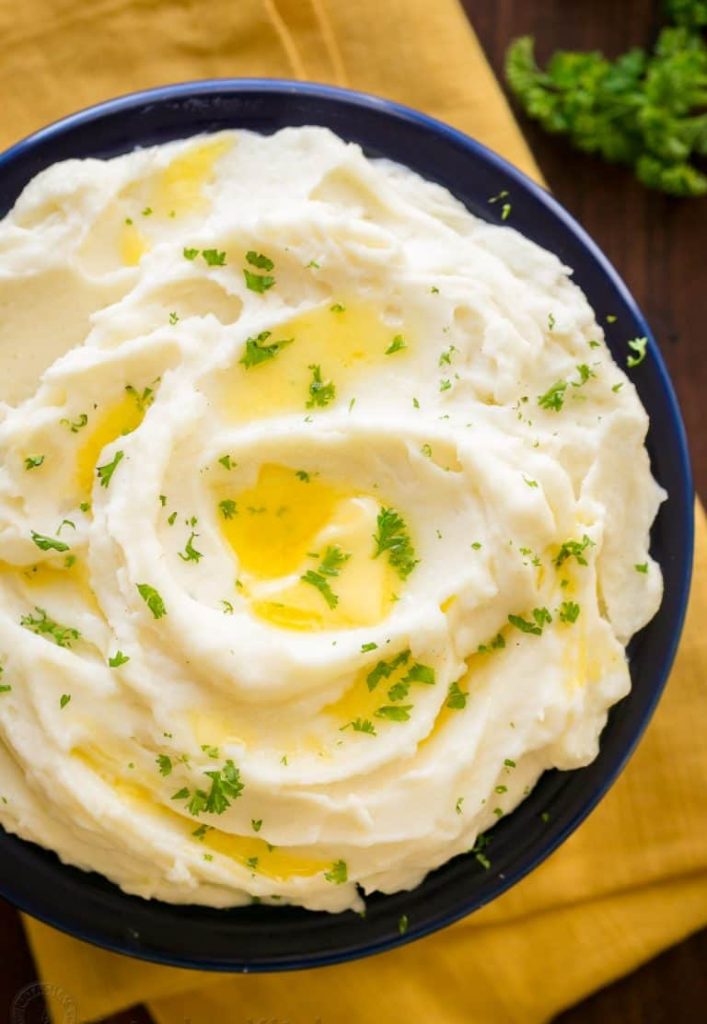
Transfer the mashed potatoes to a serving bowl. Garnish with freshly chopped parsley or chives for added color and flavor.
Serve warm and enjoy this creamy, classic side dish.
2. Tips for Perfect Mashed Potatoes
Select high-starch potatoes for the best texture. Russet potatoes are commonly used because they break down easily when cooked, producing light and fluffy mashed potatoes. Yukon Gold potatoes can also work well if you prefer a naturally creamy flavor.
Cut the potatoes into evenly sized pieces. When potato chunks are similar in size, they cook at the same rate, preventing some pieces from becoming overly soft while others remain firm.
Start cooking the potatoes in cold water. Placing potatoes in cold water and then bringing them to a boil ensures they cook gradually and evenly throughout.
Drain the potatoes thoroughly. After boiling, allow the potatoes to sit in the colander for a few minutes so excess moisture can evaporate. Removing extra water helps prevent watery mashed potatoes.
Heat the milk before adding it. Warm milk blends smoothly with the potatoes and keeps them soft and creamy. Cold milk can lower the temperature and affect the final texture.
Incorporate butter while the potatoes are still hot. This allows the butter to melt evenly and absorb into the potatoes, enhancing both flavor and texture.
Mash gently rather than aggressively. Overworking the potatoes releases too much starch, which can make them dense or sticky instead of fluffy.
Taste and adjust the seasoning at the end. Potatoes absorb salt differently depending on the variety and cooking method, so final seasoning ensures balanced flavor.
3. Frequently Asked Questions
What are the best potatoes for mashed potatoes?
Russet potatoes are the most popular choice because they create light and fluffy mashed potatoes. Yukon Gold potatoes are another excellent option if you prefer a naturally buttery flavor and slightly creamier texture.
Can mashed potatoes be made ahead of time?
Yes, mashed potatoes can be prepared a few hours ahead. Store them in a covered dish and keep them warm in a low oven (about 200°F / 95°C). Add a little warm milk or butter before serving to refresh the texture.
How do I fix mashed potatoes that are too thick?
If the mashed potatoes are too thick, simply stir in small amounts of warm milk, cream, or melted butter until the desired consistency is reached.
Why did my mashed potatoes turn gluey?
Overmixing is the most common cause. When potatoes are overworked, they release too much starch, which results in a sticky texture. Using a masher instead of a blender helps prevent this issue.
Can I add extra flavor to mashed potatoes?
Absolutely. Many people like adding roasted garlic, cream cheese, sour cream, or grated Parmesan cheese. Fresh herbs such as chives, thyme, or parsley also enhance the flavor.
4. Nutrition Information
| Nutrient | Amount per Serving |
|---|---|
| Calories | 320 kcal |
| Carbohydrates | 34 g |
| Protein | 5 g |
| Fat | 19 g |
| Saturated Fat | 12 g |
| Cholesterol | 50 mg |
| Sodium | 360 mg |
| Fiber | 3 g |
| Sugar | 2 g |
| Potassium | 750 mg |
Nutrition values are approximate and may vary depending on ingredient brands and portion sizes.
Perfect mashed potatoes are all about simple ingredients and proper technique. By cooking the potatoes evenly, draining them well, and carefully mixing in butter and warm milk, you can achieve a creamy, fluffy texture every time.
This classic dish is incredibly versatile and can be customized with different herbs, seasonings, or additional ingredients to suit your taste. Once you master this easy recipe, you’ll find that making mashed potatoes from scratch is quick, reliable, and far more flavorful than any store-bought alternative.