Leavening agents are responsible for creating the light and airy structure in many baked goods. Without them, breads, cakes, and pastries would turn out dense and heavy. Two of the most widely used leavening agents in baking are baking powder and yeast. Although they both help dough or batter rise, they operate through entirely different processes and produce different results in texture and flavor.
Understanding the differences between baking powder and yeast helps bakers determine which ingredient is best suited for a specific recipe. Knowing how each leavening agent works, when it should be used, and whether it can be substituted allows for more consistent and successful baking results.
1. What Is Baking Powder
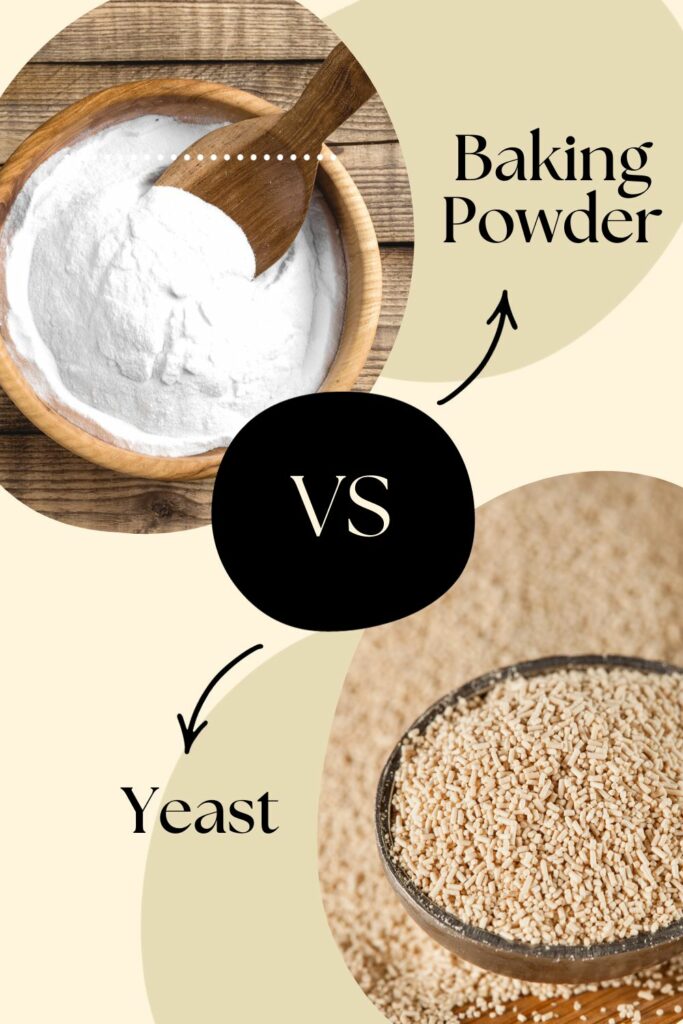
Baking powder is a chemical leavening agent designed to produce carbon dioxide gas when exposed to moisture and heat. It is usually composed of three main ingredients: baking soda, an acidic compound such as cream of tartar, and a stabilizing ingredient like cornstarch that prevents premature reactions.
When baking powder is mixed into a batter and combined with liquid ingredients, the acid reacts with the baking soda to release carbon dioxide bubbles. These bubbles expand when heated in the oven, causing the batter to rise and creating a light texture.
Most modern baking powders are classified as double-acting. This means they create gas in two stages. The first reaction occurs when the powder is mixed with wet ingredients, and the second reaction occurs during baking. This dual reaction helps ensure that baked goods rise properly even if the batter sits briefly before entering the oven.
Baking powder is especially useful for recipes that do not contain yeast or do not require kneading. It is widely used in quick breads, muffins, pancakes, biscuits, and many cake recipes.
2. What Is Yeast
Yeast is a living microorganism that belongs to the fungus family. In baking, yeast functions as a biological leavening agent by converting sugars into carbon dioxide gas through fermentation.
When yeast is mixed with warm liquid and a food source such as sugar or carbohydrates from flour, it begins to metabolize those sugars. During this process, yeast releases carbon dioxide and small amounts of alcohol. The gas becomes trapped in the gluten network of the dough, causing it to expand and rise.
Because yeast is alive, it requires specific conditions to function properly. Temperature plays an important role, as yeast performs best in warm environments. If the liquid is too hot, the yeast may die; if it is too cold, fermentation may slow down significantly.
The fermentation process can take anywhere from 30 minutes to several hours depending on the recipe. This time allows the dough to develop structure and flavor, which is why yeast is most commonly used in breads such as sandwich loaves, pizza dough, and dinner rolls.
3. Key Differences Between Baking Powder and Yeast
Although both baking powder and yeast create gas that causes baked goods to rise, their behavior in recipes differs in several important ways.
The most noticeable difference is the source of the reaction. Baking powder relies on a chemical reaction between acidic and alkaline ingredients. Yeast, however, produces gas through a biological fermentation process.
Another key difference is preparation time. Baking powder works almost immediately after mixing and heating, so recipes using it can often be completed quickly. Yeast-based dough requires resting time to allow fermentation and gas production.
Flavor development is another important distinction. Baking powder produces very little flavor because the reaction happens quickly. Yeast fermentation creates distinctive aromas and slightly tangy notes that contribute to the characteristic taste of bread.
The structure of the final product also varies. Baking powder generally produces soft, crumbly textures similar to cake or muffins. Yeast creates stronger gluten networks, resulting in stretchy dough and chewy bread.
Because of these structural differences, the two leavening agents are typically used in completely different categories of baked goods.
4. When to Use Baking Powder
Baking powder is most appropriate for recipes that rely on a batter rather than a kneaded dough. In these recipes, ingredients are usually mixed quickly and baked soon afterward.
Quick breads are a common example. Despite the name, quick breads are not traditional yeast breads but rather baked goods that rise using baking powder or baking soda. Muffins, pancakes, waffles, and many biscuits also fall into this category.
Another situation where baking powder is useful is when a recipe contains ingredients that would make yeast fermentation difficult. High sugar levels or acidic components can interfere with yeast activity, but baking powder can still produce reliable leavening.
Because baking powder does not require proofing or kneading, it is also ideal for recipes where speed and simplicity are important.
5. When to Use Yeast
Yeast is the preferred leavening agent when a recipe requires strong dough structure or when fermentation flavor is desired. Breads made with yeast often go through several stages including mixing, kneading, rising, shaping, and a second rise before baking.
These steps allow the gluten in the dough to develop and strengthen, which helps trap gas bubbles produced by yeast. As the dough expands, it forms the airy crumb structure typical of many breads.
Yeast is essential in recipes such as baguettes, sandwich loaves, pizza crust, and dinner rolls. In these foods, the fermentation process contributes to both texture and taste.
Longer fermentation periods can also deepen flavor. Some bread recipes even allow dough to ferment overnight in the refrigerator to enhance complexity.
6. Which One Is Healthier
In most baking recipes, both baking powder and yeast are used in relatively small amounts, which means their direct nutritional impact is minimal.
Yeast does contain small quantities of nutrients such as B vitamins and trace minerals. However, because only a small amount of yeast is added to dough, these nutrients usually do not significantly change the overall nutritional value of the baked product.
Baking powder contributes a small amount of sodium to recipes due to the presence of baking soda. For people monitoring sodium intake, this may be a minor consideration, although the quantity is generally modest.
Ultimately, the overall nutritional profile of baked goods depends far more on the primary ingredients such as flour, sugar, butter, or whole grains rather than the leavening agent itself.
7. Can You Substitute Baking Powder for Yeast
Substituting baking powder for yeast is generally not recommended in traditional bread recipes. Yeast performs multiple roles in bread making, including producing gas, strengthening dough structure, and developing flavor during fermentation.
If baking powder is used instead, the dough will rise only briefly during baking and will not develop the same chewy texture. The finished product will resemble a quick bread rather than a classic loaf.
However, some recipes are specifically designed to mimic yeast breads using baking powder. These recipes typically skip the fermentation stage and rely entirely on chemical leavening to produce a lighter texture.
When following most standard bread recipes, it is best to use the leavening agent originally specified in the instructions.
Conclusion
Baking powder and yeast are both important leavening agents that help baked goods rise, but they work through entirely different mechanisms. Baking powder relies on chemical reactions to produce gas quickly, making it ideal for quick breads, cakes, and pancakes. Yeast, by contrast, is a living organism that ferments sugars and gradually releases carbon dioxide, giving bread its distinctive texture and flavor.
The choice between baking powder and yeast depends largely on the type of recipe being prepared. Quick recipes that require minimal preparation benefit from baking powder, while traditional breads depend on yeast fermentation to achieve the desired structure and taste.
By understanding how each ingredient functions, bakers can select the most appropriate leavening agent and produce better results in the kitchen.