Natural sweeteners are widely used in cooking, baking, and beverages. Among the most popular options are honey and maple syrup. Both are considered natural alternatives to refined sugar and are often chosen for their flavor and perceived health benefits.
Many people wonder which sweetener is healthier, sweeter, or better suited for cooking and baking. This guide explains what honey and maple syrup are, how they differ, when to use each one, and whether they can be substituted in recipes.
1. What Is Honey
Honey is a natural sweet substance made by bees from the nectar of flowering plants. Bees collect nectar and store it in honeycomb cells inside their hive. During this process, enzymes break down the nectar’s complex sugars, and excess moisture evaporates, resulting in the thick liquid we recognize as honey.
Honey is primarily composed of simple sugars, mainly fructose and glucose. It also contains small amounts of vitamins, minerals, enzymes, and antioxidants that come from the plants where the nectar originated.
The color and flavor of honey can vary depending on the flowers used by the bees. Some varieties are light and mild, while others are darker with stronger flavors.
Because honey contains natural acids and a relatively low moisture content, it has been used for centuries not only as a sweetener but also as a natural preservative. Its thick consistency and strong sweetness make it a popular ingredient in beverages, desserts, sauces, and baked goods.
2. What Is Maple Syrup
Maple syrup is a natural sweetener made from the sap of maple trees. The production process begins when sap is collected from trees, usually during early spring when temperatures fluctuate between freezing nights and warmer days.
The sap itself contains only a small amount of sugar, so it must be boiled to remove water and concentrate the sugars. After sufficient evaporation, the remaining liquid thickens into maple syrup.
Unlike honey, maple syrup is primarily composed of sucrose, the same type of sugar found in table sugar. However, it also contains trace minerals such as manganese, zinc, and calcium.
Maple syrup has a distinct flavor that is often described as rich, warm, and slightly caramel-like. Its color can range from light golden to dark amber depending on the harvest time and processing method.
This sweetener is commonly used as a topping for pancakes and waffles, but it is also popular in baking, glazes, marinades, and salad dressings.
3. Key Differences Between Honey and Maple Syrup
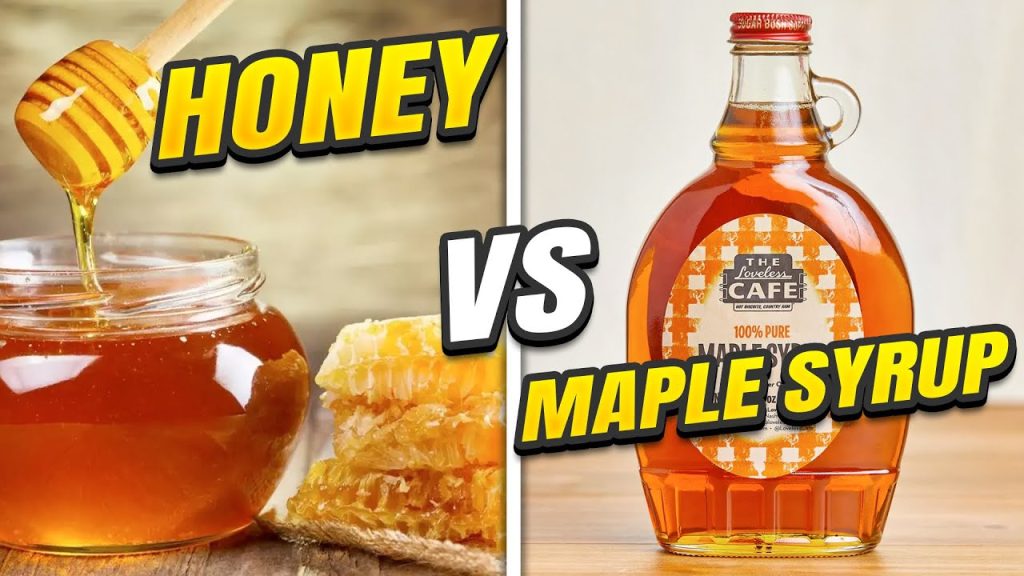
Although honey and maple syrup are both natural liquid sweeteners, several differences set them apart.
One major difference is their source. Honey is produced by bees using flower nectar, while maple syrup is extracted from the sap of maple trees. These different origins influence both flavor and composition.
Another difference is the type of sugar each contains. Honey mainly contains fructose and glucose, which are simple sugars. Maple syrup is largely made up of sucrose.
The flavor profiles also vary considerably. Honey tends to have a floral sweetness that depends on the type of nectar used by bees. Maple syrup has a deeper, more caramel-like flavor that comes from the boiling process.
Consistency is another distinction. Honey is thicker and more viscous, while maple syrup is thinner and flows more easily.
Nutritionally, both contain small amounts of minerals, but maple syrup generally provides slightly higher levels of certain minerals such as manganese and zinc.
These differences can affect how each sweetener performs in cooking and baking.
4. When to Use Honey
Honey works well in recipes where a thick, concentrated sweetness is desired. Because it is denser than maple syrup, it can add body and richness to certain dishes.
In baking, honey helps retain moisture, which can keep cakes, muffins, and quick breads soft for longer periods. It is also commonly used in marinades and sauces where its natural sweetness balances savory ingredients.
Honey dissolves easily in warm beverages, making it a popular addition to tea and hot drinks.
Another advantage of honey is its strong sweetness. Since it is sweeter than maple syrup, smaller amounts are sometimes enough to achieve the desired flavor.
5. When to Use Maple Syrup
Maple syrup is often chosen when a recipe benefits from its distinctive flavor and lighter texture. Because it is thinner than honey, it mixes easily into batters, dressings, and glazes.
One of the most common uses of maple syrup is as a topping for breakfast foods such as pancakes, waffles, and French toast. Its warm flavor complements these dishes particularly well.
Maple syrup is also used in baking, especially in recipes where a subtle caramel-like sweetness enhances the overall flavor.
Additionally, it works well in salad dressings, roasted vegetable glazes, and sauces where a balanced sweetness is needed without excessive thickness.
6. Which One Is Healthier
Both honey and maple syrup are natural sweeteners, but they are still forms of added sugar and should be consumed in moderation.
Honey contains small amounts of antioxidants and enzymes that come from flower nectar. Maple syrup, on the other hand, contains higher levels of certain minerals such as manganese and zinc.
In terms of calories, the difference between the two is relatively small. Honey generally contains slightly more calories per tablespoon than maple syrup because it is denser.
Neither sweetener is considered significantly healthier than the other when consumed in large amounts. The overall health impact depends more on total sugar intake rather than the specific type of sweetener used.
7. Can You Substitute Honey for Maple Syrup
Honey and maple syrup can often replace each other in recipes, but adjustments may be necessary.
Because honey is thicker and sweeter, using it as a substitute for maple syrup may require adding a small amount of liquid to maintain the correct consistency. Honey also has a stronger flavor that could slightly change the taste of a recipe.
If maple syrup is used instead of honey, the batter or sauce may become slightly thinner because maple syrup contains more water.
Despite these differences, the two sweeteners are commonly interchangeable in many recipes, especially in baking and sauces.
Conclusion
Honey and maple syrup are both natural sweeteners that offer unique flavors and culinary uses. Honey is produced by bees and has a thicker texture with a floral sweetness, while maple syrup comes from tree sap and provides a lighter consistency with a rich, caramel-like taste.
The choice between honey and maple syrup often depends on the recipe and personal flavor preference. Honey works well in moist baked goods and beverages, while maple syrup is ideal for breakfast dishes and recipes that benefit from its distinctive flavor.
By understanding how these two sweeteners differ, you can select the one that best complements your cooking and baking needs.