Plant-based milk alternatives have become increasingly popular as more people look for dairy-free options. Among the many choices available, almond milk and oat milk are two of the most widely consumed. Both are commonly used in coffee, cereal, smoothies, and cooking, and they are often chosen by people who are lactose intolerant, vegan, or simply exploring non-dairy beverages.
Although almond milk and oat milk are both plant-based drinks, they are made from very different ingredients and have unique nutritional profiles. This guide explains what almond milk and oat milk are, their key differences, when to use each one, and whether they can be substituted in recipes.
1. What Is Almond milk
Almond milk is a plant-based beverage made from almonds and water. The production process typically involves soaking almonds, blending them with water, and then straining the mixture to remove solid particles. The remaining liquid becomes almond milk.
This dairy-free milk alternative has a light texture and a mild nutty flavor. Because it is mostly water with a small amount of almonds, almond milk tends to be relatively low in calories compared with many other plant-based milks.
Many commercial varieties are fortified with nutrients such as calcium, vitamin D, and vitamin B12 to make them more nutritionally comparable to dairy milk.
Almond milk is widely used in beverages like coffee, tea, and smoothies. Its mild flavor makes it versatile in both sweet and savory recipes. However, because it is thinner than some other plant-based milks, it may not provide as much creaminess in certain dishes.
2. What Is Oat milk
Oat milk is another plant-based milk alternative made from oats and water. The process usually involves blending oats with water and then filtering the mixture to create a smooth liquid.
Unlike almond milk, oat milk naturally contains more carbohydrates because oats are a grain. This gives it a slightly thicker texture and a mild sweetness even without added sugar.
One of the reasons oat milk has become especially popular is its creamy consistency. It blends well with coffee and produces a smooth foam, which is why many coffee shops offer oat milk as a dairy substitute.
Oat milk is also often fortified with vitamins and minerals, including calcium and vitamin D. Its balanced flavor makes it suitable for a wide variety of recipes, including baking, smoothies, and sauces.
3. Key Differences Between Almond Milk and Oat Milk
Although both drinks are dairy-free milk alternatives, almond milk and oat milk differ in several important ways.
One of the biggest differences is their primary ingredient. Almond milk is made from almonds, while oat milk is made from oats. This difference influences flavor, texture, and nutrition.
Texture is another major distinction. Almond milk tends to be lighter and thinner, whereas oat milk is naturally creamier and thicker.
Nutritionally, almond milk usually contains fewer calories and carbohydrates, especially in unsweetened varieties. Oat milk, on the other hand, generally provides more carbohydrates and fiber because it is derived from grains.
Flavor also varies between the two. Almond milk has a mild nutty taste, while oat milk has a slightly sweet and grain-like flavor.
These differences can affect how each milk alternative performs in beverages, cooking, and baking.
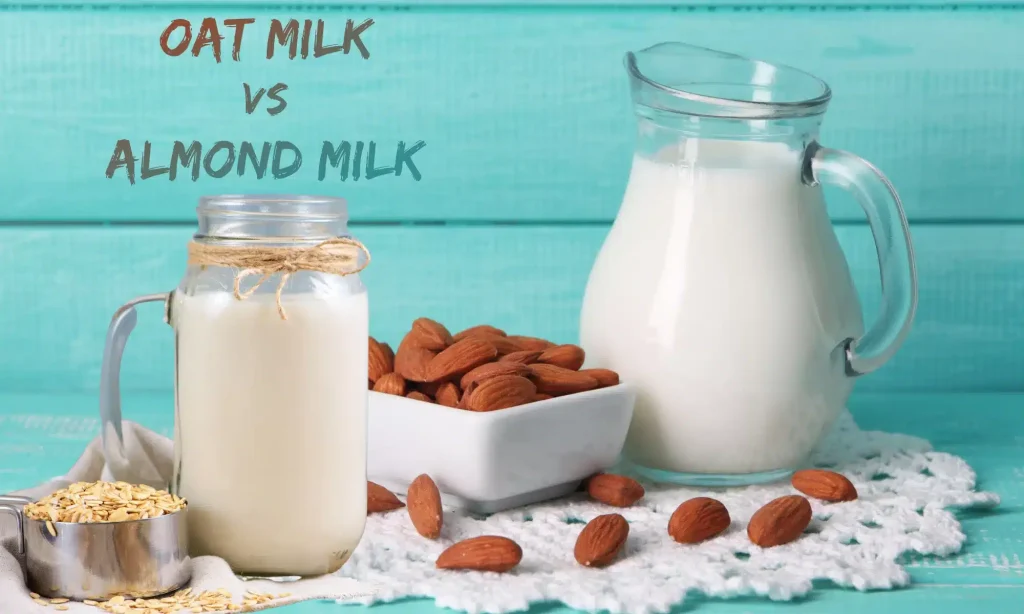
4. When to Use Almond Milk
Almond milk is often chosen for its light texture and relatively low calorie content. It works well in smoothies, cereal, and beverages where a subtle flavor is preferred.
Because it is thinner than oat milk, almond milk blends easily into drinks like coffee and tea without making them overly heavy.
It can also be used in baking recipes where a mild flavor is desired. The neutral taste allows other ingredients to stand out.
Additionally, almond milk is commonly used by people who want a dairy-free option that is lower in carbohydrates compared with some other plant-based milks.
5. When to Use Oat Milk
Oat milk is ideal for recipes that benefit from a richer and creamier texture. Its thicker consistency makes it particularly popular for coffee drinks such as lattes and cappuccinos.
The natural sweetness of oat milk can also enhance certain recipes, especially baked goods and breakfast dishes like oatmeal or pancakes.
Oat milk blends well into smoothies and creamy sauces, where its texture can add body and smoothness.
Because of its versatility and mild flavor, oat milk has become a common substitute for dairy milk in many plant-based recipes.
6. Which One Is Healthier
Both almond milk and oat milk can be part of a balanced diet, but their nutritional benefits differ.
Almond milk is typically lower in calories and carbohydrates, especially in unsweetened versions. This can make it a popular choice for people looking to reduce calorie intake.
Oat milk generally contains more fiber and carbohydrates because oats naturally contain these nutrients. The fiber may contribute to digestive health and help promote feelings of fullness.
However, the nutritional value of both beverages can vary depending on the brand and whether sugar or other ingredients are added.
In many cases, the healthiest option depends on individual dietary needs and personal preferences.
7. Can You Substitute Almond Milk for Oat Milk
Almond milk and oat milk can often replace each other in recipes, although the final result may differ slightly.
When substituting almond milk for oat milk, the dish may become slightly lighter and less creamy because almond milk has a thinner consistency.
If oat milk is used instead of almond milk, the recipe may have a thicker texture and a slightly sweeter taste.
Despite these differences, both milk alternatives generally work well in smoothies, cereals, baked goods, and many savory dishes.
Conclusion
Almond milk and oat milk are two of the most popular plant-based alternatives to dairy milk. Almond milk offers a light texture and mild nutty flavor, while oat milk provides a creamier consistency and naturally sweet taste.
The choice between them often depends on personal taste, nutritional preferences, and how the milk will be used in recipes. Almond milk works well for lighter beverages and low-calorie diets, while oat milk is ideal for creamy drinks and rich dishes.
By understanding the differences between these two plant-based milks, you can choose the one that best fits your cooking, baking, and dietary needs.