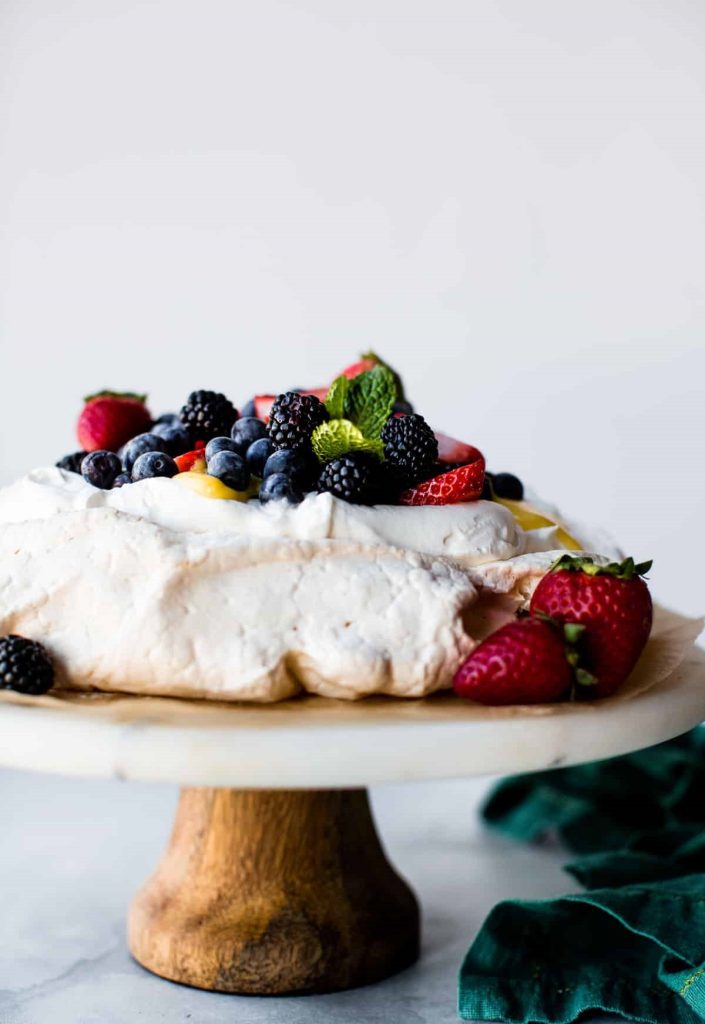
Light as air and beautifully crisp on the outside with a soft, marshmallow-like center, pavlova is a show-stopping dessert that never fails to impress. This meringue-based treat is named after the famous ballerina Anna Pavlova and is beloved for its delicate texture and elegant presentation.
This meringue-based dessert is light, airy, and ideal for showcasing fresh spring berries. With just a handful of ingredients and a little patience, you can create a dessert that looks stunning and tastes even better.
1. Pavlova Recipe ( Yield: 8 – 10 Serving )
Ingredients
- 4 large egg whites
- 1 cup (200g) superfine sugar
- 1 teaspoon pure vanilla extract
- 1/2 teaspoon cream of tartar
- 1 teaspoon cornstarch
Toppings
- Homemade whipped cream, fresh fruit, strawberry topping, lemon curd, or any desired topping
Instructions
Start by preheating your oven to 250°F (120°C). Line a baking sheet with parchment paper and draw a circle about 8–9 inches in diameter as a guide. Flip the parchment over so the pencil mark is underneath.
In a clean, dry mixing bowl, beat the egg whites on medium speed until soft peaks form. This usually takes about 2–3 minutes. Once the egg whites are foamy and hold their shape slightly, add the cream of tartar. This helps stabilize the mixture.
Gradually add the superfine sugar, one tablespoon at a time, while continuing to beat on high speed. Take your time with this step—adding sugar slowly ensures a smooth and glossy meringue. Continue beating until stiff peaks form and the mixture is thick and shiny. You should be able to rub a small amount between your fingers without feeling sugar granules.
Gently fold in the vanilla extract and cornstarch using a spatula. Be careful not to deflate the meringue. The cornstarch helps create that soft, marshmallow-like interior.
Spoon the meringue onto the prepared baking sheet, shaping it into a round disk using your drawn circle as a guide. Create a slight indentation in the center to hold the toppings later.
Place the pavlova in the oven and immediately reduce the temperature to 225°F (110°C). Bake for 75–90 minutes. The outside should be dry and firm, while the inside remains soft.
Once baked, turn off the oven and leave the pavlova inside with the door slightly ajar until completely cooled. This prevents cracking from sudden temperature changes.
When ready to serve, carefully transfer the pavlova to a serving plate. Top with freshly whipped cream and your choice of fruits or sauces. Slice gently and serve immediately for the best texture.
2. Tips for Perfect Pavlova
Achieving the perfect pavlova comes down to technique and attention to detail.
Always use room temperature egg whites, as they whip up more easily and create better volume.
Make sure your mixing bowl and beaters are completely clean and free from grease, as even a small amount can prevent the egg whites from whipping properly.
Superfine sugar is key for a smooth meringue. If you don’t have it, you can pulse regular sugar in a food processor until finer. Adding sugar slowly is crucial—rushing this step can result in a grainy texture.
Humidity can affect your pavlova. Try to make it on a dry day if possible, as moisture in the air can make the meringue sticky. Baking at a low temperature and allowing it to cool gradually in the oven helps prevent cracks and collapse.
Finally, always assemble your pavlova just before serving. The meringue can absorb moisture from the toppings and lose its crisp texture if left too long.
3. Frequently Asked Questions
Why did my pavlova crack?
Cracking is quite common and doesn’t affect the taste. It usually happens بسبب rapid temperature changes. Letting the pavlova cool slowly in the oven helps minimize cracks.
Can I make pavlova ahead of time?
Yes, you can bake the meringue a day in advance and store it in an airtight container at room temperature. Add toppings just before serving to maintain texture.
What fruits work best for pavlova?
Fresh berries like strawberries, blueberries, and raspberries are classic choices. Kiwi, mango, and passion fruit also pair beautifully with the sweetness of the meringue.
How do I know when the pavlova is done?
The outer shell should feel dry and firm to the touch. It may have a pale color rather than golden brown, which is normal.
Can I freeze pavlova?
It’s not recommended to freeze pavlova, as moisture can ruin its texture. It’s best enjoyed fresh or stored short-term in a dry environment.
4. Nutrition Information
| Nutrient | Amount per Serving |
|---|---|
| Calories | 180 kcal |
| Carbohydrates | 28 g |
| Protein | 3 g |
| Fat | 5 g |
| Sugar | 24 g |
| Sodium | 40 mg |
| Fiber | 1 g |
Pavlova is a dessert that beautifully combines simplicity and elegance. With its crisp outer shell and soft, cloud-like center, it offers a delightful contrast in textures that makes every bite memorable. The versatility of toppings allows you to customize it for any season or occasion, making it a go-to dessert for both casual and special gatherings.
Once you master the technique, pavlova becomes an easy yet impressive treat that you’ll want to make again and again. With the right balance of patience and care, you can create a dessert that’s as stunning as it is delicious.