When using an oven, you’ve probably come across two common settings: bake and broil. At first glance, they may seem similar since both rely on dry heat. However, these two cooking methods work in completely different ways and can produce very different results.
Understanding the difference between baking and broiling is essential if you want to cook food properly without burning it or ending up with uneven textures. Whether you’re baking a cake or finishing a steak, choosing the right method can make all the difference.
1. What Does “Bake” Mean?
Baking is one of the most common cooking methods used in home kitchens. It involves cooking food using consistent, moderate heat that surrounds the food evenly inside the oven.
When you bake, the heat typically comes from both the top and bottom heating elements (depending on the oven), allowing the food to cook gradually. This even heat distribution is especially important for foods that need time to develop structure.
Baking is ideal for recipes that rely on precise cooking conditions. As the food heats up slowly, ingredients like flour, eggs, and leavening agents (such as baking powder or yeast) react to create the desired texture.
Foods commonly baked:
- Cakes and cupcakes
- Bread and rolls
- Cookies and pastries
- Lasagna and casseroles
The main goal of baking is to cook food evenly from the inside out while maintaining a soft, stable texture. For example, a properly baked cake should be fluffy and moist, not burned or overly crisp on the outside.
2. What Does “Broil” Mean?
Broiling is a high-heat cooking method that works very differently from baking. Instead of surrounding the food with heat, broiling uses intense heat from a single source—usually located at the top of the oven.
This direct, top-down heat cooks food very quickly. In fact, broiling is often compared to grilling, except the heat comes from above instead of below.
Because broiling uses extremely high temperatures, it is best suited for foods that cook quickly or for finishing dishes that are already mostly cooked.
Foods commonly broiled:
- Steak and thin cuts of meat
- Fish fillets
- Vegetables (for charring)
- Dishes topped with cheese (like casseroles or pasta)
The goal of broiling is to create a browned, slightly crispy surface in a short amount of time. However, because the heat is so intense, food can burn quickly if left unattended.
3. Key Differences Between Bake and Broil
Although both methods use an oven, the way they apply heat—and the results they produce—are very different.
| Feature | Bake | Broil |
|---|---|---|
| Heat Direction | Surrounding heat | Top-down heat |
| Temperature | Moderate | Very high |
| Cooking Time | Longer | Very fast |
| Best For | Cakes, bread, casseroles | Meat, fish, melting cheese |
In simple terms, baking is slow and steady, while broiling is fast and intense. Baking is about cooking food evenly, while broiling is about quickly adding color and texture.
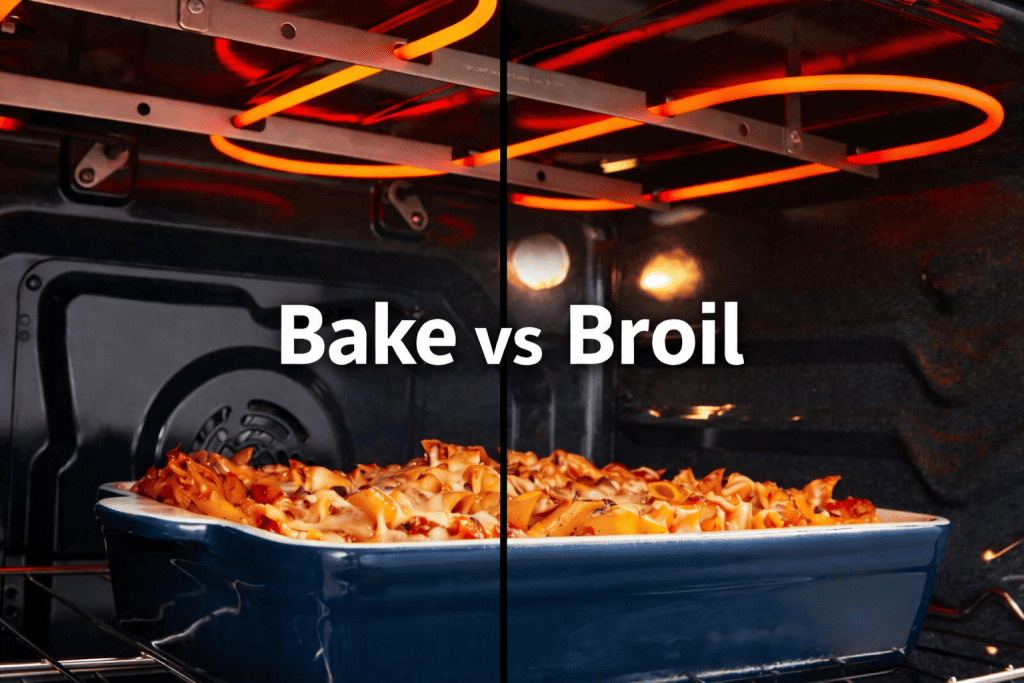
4. How Broiling Works
To fully understand broiling, it helps to look at how it works inside the oven. When you switch to the broil setting, the oven activates a heating element at the top. This element becomes extremely hot and radiates direct heat downward onto the food.
Because the heat is concentrated and not evenly distributed, the surface of the food cooks much faster than the inside. This is why broiling is often used for thin cuts of meat or as a finishing step.
For example, you might bake a dish until it’s fully cooked, then broil it for a few minutes to melt cheese or create a golden crust on top.
However, this method requires close attention. Since broiling happens so quickly, even an extra minute can turn perfectly browned food into something burnt.
5. When to Use Bake
Baking is the better choice when your goal is to cook food evenly and thoroughly. It is especially important for recipes that require time to develop texture and structure.
You should use baking when:
- Making baked goods like cakes, cookies, or bread
- Cooking dishes that need to rise or set
- Preparing meals that should remain soft and moist
For example, if you’re baking bread, the dough needs time to expand and cook evenly inside. Using high, direct heat (like broiling) would burn the outside before the inside is done.
Baking is also ideal for larger or thicker foods that need consistent heat to cook all the way through.
6. When to Use Broil
Broiling is best when you want to cook food quickly or add a finishing touch. Because of its high heat, it’s perfect for creating a crispy or browned surface in a short amount of time.
You should use broiling when:
- Cooking thin cuts of meat or fish
- Melting or browning cheese on top of dishes
- Adding a crispy finish to already cooked food
For example, after baking a casserole, you can broil it for a few minutes to create a golden, bubbly top layer. Similarly, broiling a steak can give it a nicely seared crust without overcooking the inside—if done correctly.
However, timing is critical. Broiling requires you to stay close to the oven and monitor the food carefully.
Conclusion
Although bake and broil are both oven-based cooking methods, they serve very different purposes. Baking uses moderate, even heat to cook food thoroughly and create soft, consistent textures. It’s ideal for baked goods and dishes that need time to develop.
Broiling, on the other hand, uses intense, direct heat from above to cook food quickly and add a browned, crispy surface. It works best for thin cuts of meat, fish, and finishing touches.
Knowing when to use bake or broil can dramatically improve your cooking results. By choosing the right method for each dish, you’ll avoid common mistakes and achieve better flavor, texture, and presentation every time.