Buttermilk is a key ingredient in many recipes, from fluffy pancakes and tender biscuits to moist cakes and flavorful marinades. While it is easy to find in most grocery stores, there are times when you may not have it on hand. The good news is that you can make a simple and effective substitute at home using just two basic ingredients.
Homemade buttermilk is quick to prepare and works well in almost any recipe that calls for it. By combining milk with a small amount of acid like lemon juice or vinegar, you create a slightly tangy liquid that mimics the taste and texture of traditional buttermilk. It’s an easy kitchen trick that every home cook should know.
1. How to Make Buttermilk at Home ( Yield: 1 Cup )
Ingredients
- 1 tablespoon white vinegar or lemon juice (15 ml)
- 1 cup milk (scant cup, about 240 ml) – whole milk is best, but 2% also works
Instructions
Start by choosing your milk. Whole milk will give you the richest and most authentic result, but 2% milk can also be used if that’s what you have available. Pour slightly less than 1 full cup of milk into a measuring cup, leaving room for the acid.
Add 1 tablespoon of white vinegar or freshly squeezed lemon juice directly into the milk. Gently stir the mixture to combine. You don’t need to mix vigorously—just enough to distribute the acid evenly.
Let the mixture sit at room temperature for about 5 to 10 minutes. During this time, the milk will begin to curdle slightly and thicken. You may notice small lumps forming and the liquid taking on a slightly tangy smell. This is exactly what you want, as it mimics the properties of traditional buttermilk.
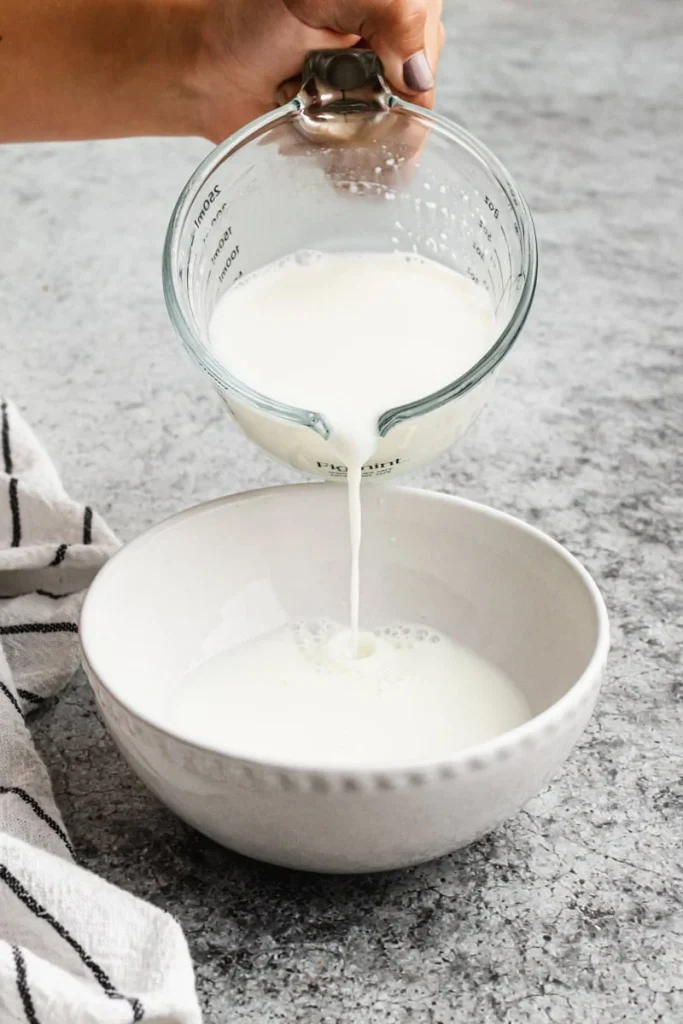
After resting, give the mixture another gentle stir. Your homemade buttermilk is now ready to use in recipes like pancakes, waffles, cakes, muffins, or marinades. Use it immediately for the best results.
2. Tips for Perfect Homemade Buttermilk
Use fresh milk for the best flavor and consistency. Milk that is close to its expiration date may not react as well with the acid.
Choose between lemon juice and vinegar based on what you have on hand. Lemon juice gives a slightly fresher taste, while vinegar provides a more neutral tang.
Let the mixture rest long enough. If you rush the process, the milk may not thicken properly, which can affect your final recipe.
Stir gently after resting. Overmixing is not necessary and can break down the texture you just created.
If you need a larger quantity, simply scale up the ingredients while keeping the same ratio of 1 tablespoon acid per 1 cup of milk.
3. Frequently Asked Questions
Can I use plant-based milk to make buttermilk?
Yes, you can use plant-based options like almond milk or soy milk. Soy milk works particularly well because it curdles similarly to dairy milk.
Does homemade buttermilk taste exactly like store-bought?
It has a similar tangy flavor and works well in recipes, though traditional cultured buttermilk may have a slightly richer taste.
Can I store homemade buttermilk for later use?
It is best used fresh, but you can store it in the refrigerator for up to 2 days. Stir before using.
What recipes benefit most from buttermilk?
Buttermilk is commonly used in baked goods like pancakes, biscuits, cakes, and muffins, as well as in marinades for meats.
Why is buttermilk important in baking?
It helps tenderize baked goods and reacts with baking soda to create a light, fluffy texture.
4. Nutrition Information
| Nutrient | Amount per 1 Cup |
|---|---|
| Calories | 150 kcal |
| Protein | 8 g |
| Carbohydrates | 12 g |
| Sugar | 12 g |
| Fat | 8 g |
| Saturated Fat | 5 g |
| Cholesterol | 25 mg |
| Sodium | 120 mg |
| Calcium | 300 mg |
Making buttermilk at home is quick, simple, and surprisingly useful in everyday cooking. With just two basic ingredients, you can create a reliable substitute that works well in everything from baked goods to savory dishes.
Once you get used to this method, it becomes an easy go-to whenever a recipe calls for buttermilk. It saves time, uses ingredients you likely already have, and helps you keep cooking without interruption.