Sugar is a fundamental ingredient in baking and cooking, affecting not only sweetness but also texture, color, and moisture. Two of the most commonly used types are brown sugar and white sugar.
While both are derived from sugar cane or sugar beets, they differ in processing, flavor, and how they behave in recipes. Understanding the differences between brown sugar and white sugar can help you choose the right type for your recipes and achieve better baking results.
1. What Is Brown Sugar
Brown sugar is a type of sugar that contains molasses, which gives it its distinctive color and flavor. It is typically made by adding molasses back into refined white sugar or by stopping the refining process before all molasses is removed.
The presence of molasses gives brown sugar a soft, moist texture. It also adds a deeper, slightly caramel-like taste that enhances many baked goods.
There are two main types of brown sugar: light brown sugar and dark brown sugar. The difference lies in the amount of molasses. Dark brown sugar contains more molasses, resulting in a stronger flavor and darker color.
Because of its moisture content, brown sugar helps retain softness in baked goods and can contribute to a chewier texture.
2. What Is White Sugar
White sugar, also known as granulated sugar, is a highly refined form of sugar. It is processed to remove all molasses, resulting in a pure sucrose product with a clean, sweet taste.
White sugar has a dry, crystalline texture that makes it easy to measure and incorporate into recipes. It dissolves easily and provides consistent sweetness without altering the flavor profile of a dish.
Because it lacks molasses, white sugar does not contribute additional moisture or color. This makes it ideal for recipes where a light texture and neutral taste are desired.
White sugar is commonly used in baking, beverages, sauces, and desserts.
3. Key Differences Between Brown Sugar and White Sugar
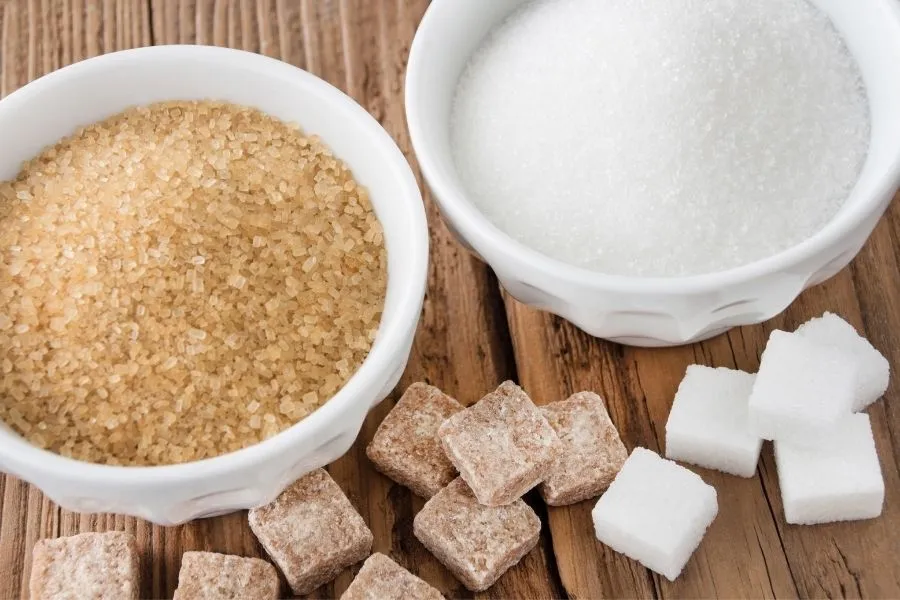
The main difference between brown sugar and white sugar is the presence of molasses. Brown sugar contains molasses, while white sugar does not.
This difference affects several aspects of baking. Brown sugar is moist and sticky, while white sugar is dry and free-flowing.
Flavor is another key distinction. Brown sugar has a richer, deeper taste, while white sugar provides a straightforward sweetness.
Color also varies. Brown sugar gives baked goods a darker appearance, while white sugar keeps them lighter.
Texture differences are also important. Brown sugar tends to make baked goods softer and chewier, while white sugar can contribute to crispness.
These differences influence how each type of sugar is used in recipes.
4. When to Use Brown Sugar
Brown sugar is best used in recipes where moisture and a rich flavor are desired. It is commonly used in cookies, especially those that benefit from a chewy texture.
It is also popular in recipes like gingerbread, brownies, and certain cakes where a deeper color and flavor enhance the final product.
Brown sugar works well in sauces and marinades as well, where its molasses content adds complexity.
Because of its moisture, it helps keep baked goods soft for longer periods.
5. When to Use White Sugar
White sugar is ideal for recipes that require a light texture and neutral flavor. It is commonly used in cakes, meringues, and pastries where structure and consistency are important.
It is also essential in recipes that rely on sugar crystals for texture, such as cookies with crisp edges or caramelized desserts.
White sugar dissolves easily, making it a preferred choice for beverages and syrups.
Because it does not add additional flavor, it allows other ingredients to stand out.
6. Which One Is Healthier
From a nutritional perspective, brown sugar and white sugar are very similar. Both are primarily composed of sucrose and provide the same amount of calories per serving.
Although brown sugar contains small amounts of minerals from molasses, the quantities are too minimal to provide significant health benefits.
In terms of overall health, both types of sugar should be consumed in moderation.
The choice between brown sugar and white sugar is more about flavor and function than nutritional value.
7. Can You Substitute Brown Sugar for White Sugar
Brown sugar and white sugar can often be substituted for each other, but the results may differ.
Using brown sugar instead of white sugar will add moisture and a deeper flavor to the recipe. This may make baked goods softer and darker.
Replacing brown sugar with white sugar will result in a drier texture and a lighter color. The flavor will also be less complex.
In some cases, small adjustments may be needed to maintain the desired consistency and texture.
Conclusion
Brown sugar and white sugar are both essential ingredients in baking, but they serve different purposes. Brown sugar adds moisture, flavor, and chewiness, while white sugar provides structure, sweetness, and a lighter texture.
Choosing the right type of sugar depends on the recipe and the desired outcome. By understanding their differences, you can achieve better results in your cooking and baking.