Authentic fish ceviche is one of the freshest and most vibrant seafood dishes you can make at home. Along the Pacific coasts of Mexico and Latin America, ceviche is more than just seafood marinated in citrus — it’s about texture, timing, balance, and ingredient quality. A truly great ceviche tastes clean and bright, with tender fish, crisp vegetables, gentle heat, and enough acidity to wake up every flavor without overwhelming the seafood.
One detail many recipes overlook is how the fish is cut and cured. Small differences in cube size, lime quality, and marinating time dramatically change the final texture. After preparing ceviche countless times, one thing becomes clear: authentic ceviche should never taste overly sour or rubbery. The fish should remain delicate and buttery while absorbing the citrus flavor.
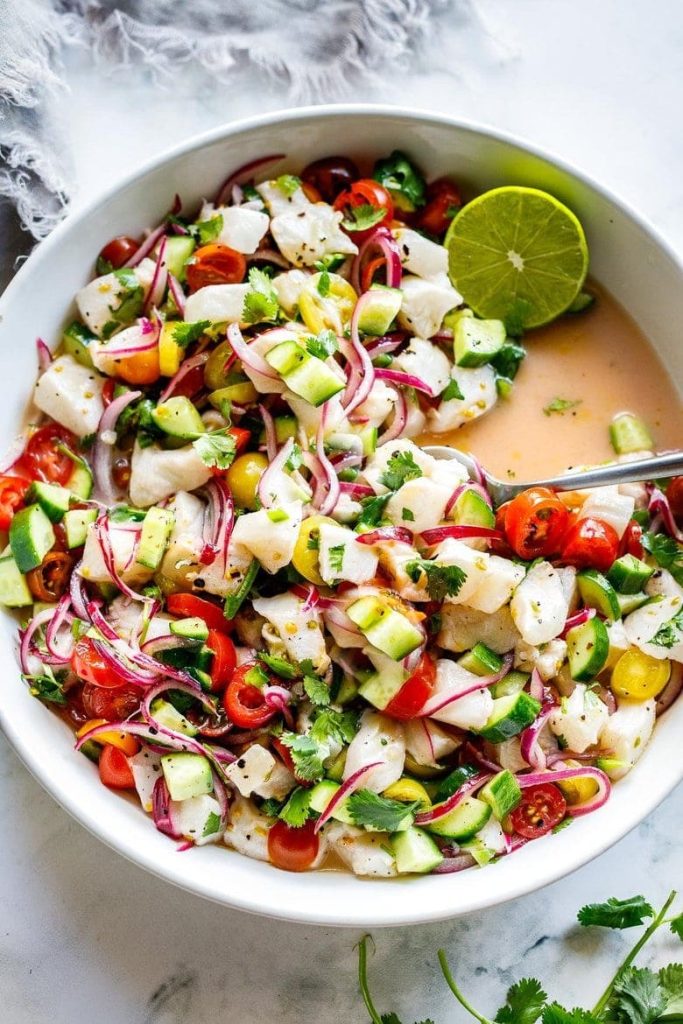
This recipe focuses on a classic Mexican-style fish ceviche using sea bass, fresh lime juice, serrano pepper, cucumber, cilantro, and tomatoes. It’s light enough for warm afternoons yet satisfying enough to serve as the centerpiece of a meal with tostadas or tortilla chips.
1. How to Make Fish Ceviche ( Yield: 4-6 Servings)
Ingredients
- 1/2 a red onion, thinly sliced, with the grain
- 1–1 1/2 teaspoon kosher salt, start with 1, add more to taste
- 1/4 teaspoon black pepper
- 3/4 cup fresh lime juice (4-6 limes) freshly squeezed (try to use ripe limes)
- 1–2 garlic cloves very finely minced (use a garlic press)
- 1 fresh serrano or jalapeño chili pepper seeded and very finely chopped. Start conservatively, more to taste.
- 1 pound fresh sea bass – diced into 1/2 inch cubes
- 1/4–1/2 cup fresh cilantro, chopped
- 1 cup grape or cherry tomatoes, sliced or cut in half (or 1 cup diced tomatoes)
- 1 cup diced cucumber
- 1 tablespoon olive oil (optional)
Instructions
Start by preparing the onion properly. Place the thinly sliced red onion into a bowl of cold water with a pinch of salt and let it soak for about 10 minutes. This removes some of the sharp bite while keeping the onion crisp and vibrant. Drain well before using.
Choose the freshest sea bass possible. Fresh fish should smell clean like the ocean, never fishy or sour. Pat the fish dry with paper towels before cutting because excess moisture can dilute the citrus marinade.
Using a sharp knife, cut the sea bass into evenly sized 1/2-inch cubes. Uniform pieces ensure the fish cures evenly in the lime juice.
Place the fish into a large glass or ceramic bowl. Avoid metal bowls because acidic citrus can react with metal and slightly affect flavor.
Season the fish with 1 teaspoon kosher salt and black pepper. Toss gently to coat the fish evenly before adding the lime juice. Pre-seasoning helps the fish absorb flavor more consistently.
Pour the freshly squeezed lime juice over the fish. The juice should mostly cover the fish pieces. Stir gently to combine.
Add the minced garlic and chopped serrano or jalapeño pepper. If you prefer mild ceviche, start with a smaller amount of chili and add more later after tasting.
Cover the bowl and refrigerate for 20 to 30 minutes. During this time, the lime juice changes the texture and color of the fish. The sea bass will become slightly firmer and turn opaque on the outside while remaining tender inside.
Check the ceviche after 20 minutes. Smaller cubes cure faster than larger pieces. Over-marinating can make the fish tough and overly acidic.
Once the fish is ready, add the drained red onion, cilantro, tomatoes, and cucumber. Stir gently to combine everything evenly.
Drizzle with olive oil if using. While optional, a small amount of olive oil softens the acidity slightly and gives the ceviche a smoother mouthfeel, especially if your limes are very tart.
Taste and adjust the seasoning. Add more salt, lime juice, or chili pepper if needed.
Serve immediately while cold and fresh. Fish ceviche is best enjoyed right after mixing the vegetables into the cured fish.
Serve with tostadas, tortilla chips, sliced avocado, or lettuce cups. For a truly authentic coastal-style presentation, add extra lime wedges and hot sauce on the side.
2. Tips for Perfect Fish Ceviche
Use sushi-grade or ultra-fresh fish from a trusted seafood market. Freshness is the foundation of excellent ceviche.
Ripe limes matter more than people realize. Heavy, slightly soft limes usually contain sweeter juice with better flavor balance.
Cut fish into equal-sized cubes. Uneven cuts create inconsistent texture, with some pieces becoming mushy while others remain too raw.
Do not marinate too long. Fish ceviche should taste fresh and delicate, not heavily pickled.
Salt the fish before adding lime juice. This small step improves flavor penetration throughout the seafood.
Keep all ingredients cold before mixing. Chilled vegetables help maintain a crisp texture and refreshing flavor.
Seed the peppers carefully. Serrano peppers can vary dramatically in heat levels.
Use English cucumber or remove seeds from regular cucumbers to avoid extra water in the ceviche.
Add cilantro near the end. Mixing it too early can slightly darken the herb and mute its freshness.
If serving at a gathering, keep the ceviche bowl over ice. Warm ceviche quickly loses texture and freshness.
3. Frequently Asked Questions
What Are the Best Types of Fish for Ceviche?
Firm white fish works best because it maintains texture during the curing process. Sea bass, halibut, snapper, mahi-mahi, and flounder are excellent choices. Avoid oily fish like salmon or tuna for traditional Mexican ceviche because their texture and flavor behave differently in citrus marinades.
Is Ceviche Safe to Eat?
Ceviche can be safe when prepared with extremely fresh fish handled properly under refrigeration. Lime juice changes the texture and appearance of fish, but it does not cook seafood with heat. Purchasing high-quality fish from a trusted source is essential.
Why Did My Ceviche Turn Rubbery?
Over-marinating is usually the cause. Acid from lime juice continues affecting the fish texture over time. Leaving fish in citrus too long can make it firm, dry, and chewy instead of tender.
Can Fish Ceviche Be Made Ahead of Time?
You can prep the vegetables ahead, but the fish should be cured shortly before serving for the best texture. Fresh ceviche tastes brighter and cleaner than ceviche stored for several hours.
What Should You Serve with Fish Ceviche?
Traditional accompaniments include tostadas, tortilla chips, avocado, sliced cucumber, crackers, or even sweet potato in some Latin American regions. Cold drinks pair especially well with the bright citrus flavor of ceviche.
4. Nutrition Information
| Nutrient | Amount Per Serving |
|---|---|
| Calories | 185 |
| Protein | 23g |
| Carbohydrates | 8g |
| Fat | 7g |
| Saturated Fat | 1g |
| Cholesterol | 45mg |
| Sodium | 620mg |
| Fiber | 2g |
| Sugar | 4g |
| Vitamin C | 28mg |
| Potassium | 520mg |
Authentic fish ceviche proves that simple ingredients can create extraordinary flavor when treated carefully. Fresh sea bass, ripe lime juice, crisp vegetables, and balanced seasoning come together to create a dish that feels refreshing, elegant, and deeply connected to coastal cooking traditions.
The key is restraint. Great ceviche allows the fish to remain the star while the citrus, herbs, and vegetables enhance every bite. Once you master the timing and ingredient balance, homemade fish ceviche becomes one of the easiest impressive dishes you can serve for gatherings, summer meals, or casual dinners at home.