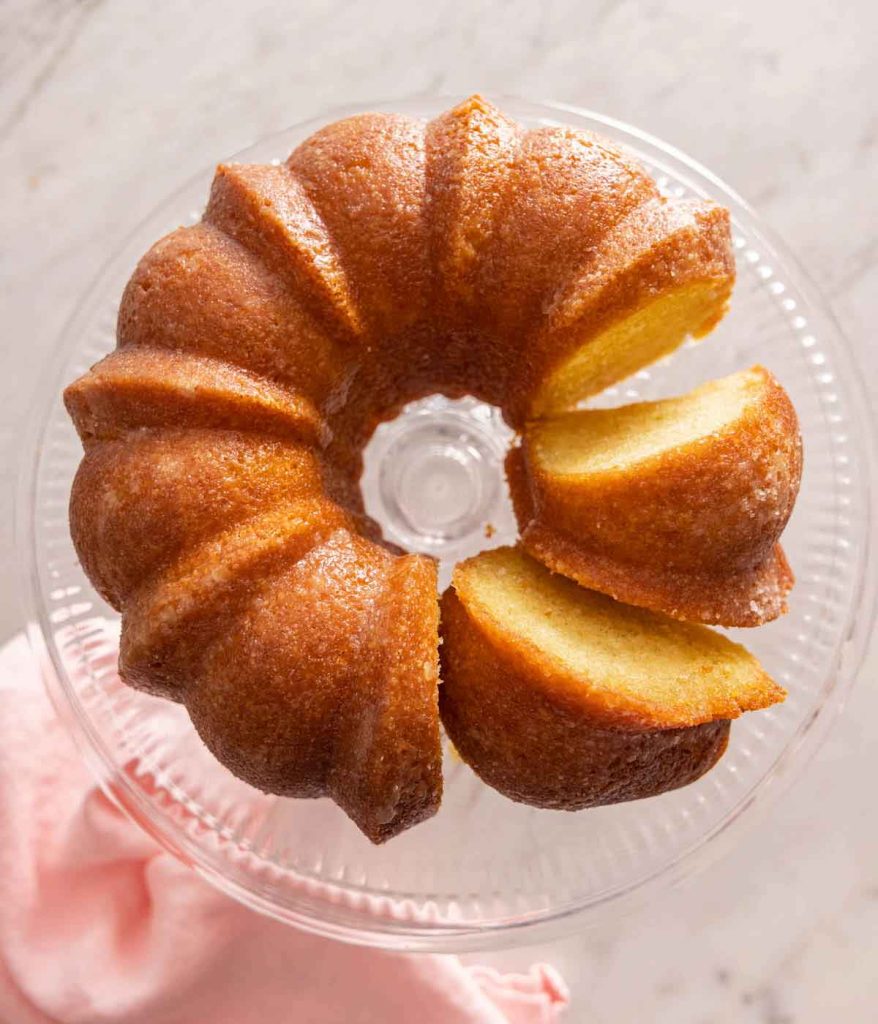
A truly great butter cake doesn’t try to impress with complexity—it wins you over with texture and flavor. When done right, it has a soft, velvety crumb, a rich buttery taste, and a golden crust that feels just slightly crisp on the outside. This is the kind of cake that works for everything: a simple afternoon treat, a family gathering, or a dependable base for something more dressed up.
After testing this recipe multiple times in a 10- to 12-cup Bundt pan, I’ve fine-tuned the balance of ingredients and technique so you get consistent results every time. The addition of a warm butter glaze takes it one step further, soaking into the cake and creating that signature moist, melt-in-your-mouth finish.
1. Butter Cake Recipe ( Yield: 12 Servings )
Ingredients
For the Cake:
- 3 cups all-purpose flour (360g)
- 1 teaspoon salt
- ¾ teaspoon baking powder
- ½ teaspoon baking soda
- 1 cup unsalted butter softened (227g)
- 2 cups granulated sugar (400g)
- 4 large eggs
- 1 cup whole milk (240ml)
For the Glaze:
- 5 tablespoons unsalted butter (70g)
- ¾ cup granulated sugar (150g)
- ¼ cup water (60ml)
- 1½ teaspoons vanilla extract
Equipment
- Electric or stand mixer
- Mixing Bowls
- Bundt pan (10- to 12-cup capacity)Saucepan
- Cooling rack
Instructions
Start by preheating your oven to 175°C (350°F). Grease your Bundt pan thoroughly with butter, making sure to reach every curve and crevice, then lightly dust it with flour. This step is critical—Bundt cakes are notorious for sticking if not properly prepared.
In a medium bowl, whisk together the flour, salt, baking powder, and baking soda. Set this aside. Having your dry ingredients evenly mixed before adding them ensures a consistent rise and texture.
In a large mixing bowl, beat the softened butter on medium speed until creamy and pale. This usually takes about 2 to 3 minutes. Add the sugar gradually and continue beating until the mixture becomes light and fluffy. This step is where the magic begins—proper creaming creates tiny air pockets that help your cake rise beautifully.
Add the eggs one at a time, beating well after each addition. Scrape down the sides of the bowl to make sure everything is evenly incorporated. The batter should look smooth and slightly glossy at this stage.
Reduce the mixer speed to low. Add the dry ingredients in three parts, alternating with the milk. Begin and end with the dry ingredients. Mix just until combined each time—overmixing can make the cake dense instead of tender.
Pour the batter evenly into the prepared Bundt pan and smooth the top with a spatula. Tap the pan gently on the counter to release any trapped air bubbles.
Bake for 55 to 65 minutes, or until a toothpick inserted into the center comes out clean. The top should be golden brown and slightly springy to the touch.
While the cake is baking, prepare the glaze. In a small saucepan over medium heat, combine the butter, sugar, and water. Stir until the butter melts and the sugar dissolves completely. Let it simmer gently for about 2 to 3 minutes, then remove from heat and stir in the vanilla extract.
Once the cake is done, let it cool in the pan for about 10 minutes. Then carefully invert it onto a cooling rack. While the cake is still warm, slowly spoon the glaze over the top, allowing it to soak into the cake. Take your time here—the glaze should absorb gradually, creating a moist and flavorful finish.
Let the cake cool completely before slicing. The texture improves as it rests, and the flavors settle beautifully.
2. Tips for Perfect Homemade Butter Cake
One thing I learned after several test batches is that temperature matters more than most people think. Your butter should be soft but not greasy, and your eggs should be at room temperature. Cold ingredients don’t blend well and can lead to a lumpy batter.
Another key detail is the creaming process. Don’t rush it. If the butter and sugar aren’t properly aerated, your cake won’t have that light, tender crumb. I usually set a timer to make sure I cream for at least a full 3 minutes.
When it comes to the glaze, applying it while the cake is warm is essential. If the cake is too cool, the glaze will sit on top instead of soaking in. If it’s too hot, the glaze may run off too quickly.
Finally, always use a light-colored Bundt pan if possible. Dark pans tend to brown the crust too quickly, which can lead to uneven baking.
Frequently Asked Questions
Can I use salted butter instead of unsalted butter?
Yes, but reduce the added salt in the recipe slightly. Unsalted butter gives you better control over the flavor balance.
Why is my butter cake dry?
This often happens from overbaking or adding too much flour. Always measure flour carefully and check your cake a few minutes before the suggested baking time.
Can I add flavors or mix-ins to this cake?
Absolutely. Lemon zest, almond extract, or even a handful of chocolate chips can work well. Just keep additions moderate so they don’t weigh down the batter.
How should I store butter cake?
Store it in an airtight container at room temperature for up to 3 days. You can also refrigerate it for longer storage, but bring it to room temperature before serving for the best texture.
Can I freeze this cake?
Yes, this cake freezes very well. Wrap it tightly in plastic wrap and foil, then freeze for up to 2 months. Thaw at room temperature before serving.
4. Nutrition Information
| Nutrient | Amount per Serving |
|---|---|
| Calories | 420 kcal |
| Carbohydrates | 58 g |
| Protein | 5 g |
| Fat | 18 g |
| Saturated Fat | 11 g |
| Cholesterol | 95 mg |
| Sodium | 220 mg |
| Sugar | 38 g |
Once you’ve made this butter cake, it’s likely to become a regular in your kitchen. It’s reliable, adaptable, and delivers that classic homemade flavor that never goes out of style. The combination of a tender crumb and buttery glaze creates a cake that feels comforting without being heavy.
As you get familiar with the process, you’ll find it easy to tweak and make your own, but even as written, it stands strong as a go-to recipe you can trust anytime you want something simple and truly satisfying.