Vanilla cake is one of those timeless desserts that fits almost every occasion, from casual family dinners to large birthday celebrations. A good vanilla cake should taste rich and buttery with a soft crumb that stays moist for days, not dry or overly sweet like many store-bought versions. This recipe focuses on creating that perfect balance using simple ingredients and reliable baking techniques that work consistently in a home kitchen.
One of the biggest lessons I learned after testing vanilla cakes repeatedly is that texture matters just as much as flavor. Using room-temperature ingredients, alternating the dry ingredients with buttermilk, and mixing the batter carefully all make a noticeable difference in the final cake. These small details help create layers that are light and fluffy while still strong enough for frosting and decorating.
The vanilla buttercream frosting in this recipe is smooth, creamy, and easy to spread, making the cake ideal for beginner bakers who want professional-looking results without complicated methods. It is the kind of dependable recipe you can bake for birthdays, holidays, school events, or simple weekend treats and still feel proud serving every single time.
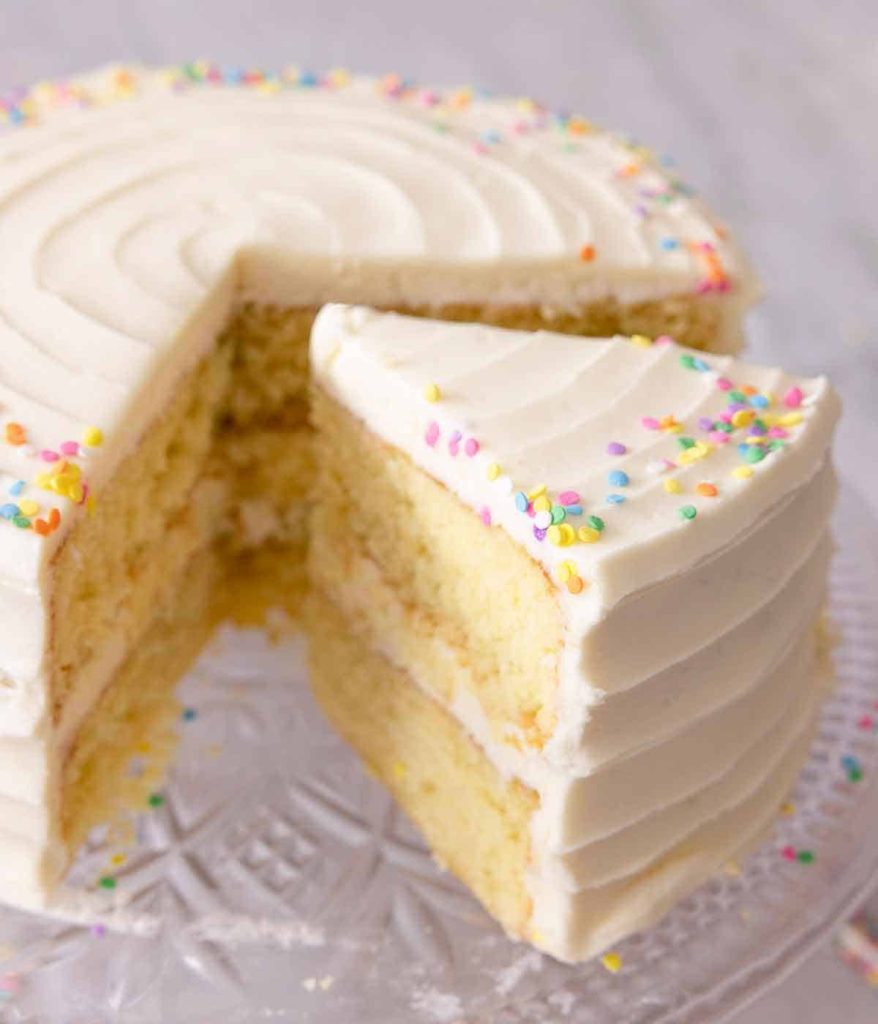
1. Basic Vanilla Cake Recipe ( Yield: 12 Servings )
Ingredients
For the Cake:
- 2½ cups all-purpose flour (300g)
- 2¼ teaspoon baking powder
- ¾ teaspoon salt
- 1⅔ cups granulated sugar (333g)
- ¾ cup unsalted butter, softened (170g)
- 3 large eggs, room temperature
- 1 tablespoon vanilla extract
- 1 cup whole or low-fat buttermilk, room temperature (240mL)
For the Frosting:
- 1½ cups unsalted butter, softened (340g)
- ¼ teaspoon salt
- 5 cups powdered sugar (600g)
- ¼ cup heavy cream or whole milk, plus more as needed (60mL)
- 2 teaspoons vanilla extract
- Sprinkles for decorating, optional
Equipment
- Electric hand or stand mixer
- 2 8 inch cake pans
Instructions
Preheat your oven to 350°F (177°C). Grease two 8 inch cake pans thoroughly, then line the bottoms with parchment paper. This extra step helps the cakes release easily after baking and prevents sticking.
In a medium bowl, whisk together the flour, baking powder, and salt. Mixing the dry ingredients first ensures the leavening agents distribute evenly throughout the batter.
In a large mixing bowl, beat the softened butter and granulated sugar together using an electric mixer on medium speed for about 4 to 5 minutes. The mixture should become pale and fluffy. Many bakers rush this step, but proper creaming creates air pockets that help give the cake its soft texture.
Add the eggs one at a time, mixing well after each addition. Scrape down the sides of the bowl occasionally to keep the batter smooth and evenly mixed. Stir in the vanilla extract.
Reduce the mixer speed to low. Add one-third of the dry ingredients to the butter mixture, followed by half of the buttermilk. Continue alternating between the dry ingredients and buttermilk, ending with the final portion of dry ingredients. Mix only until combined. Overmixing can develop too much gluten and make the cake dense instead of tender.
Divide the batter evenly between the prepared cake pans. Smooth the tops gently with a spatula so the layers bake evenly.
Bake for 28 to 32 minutes, or until the tops are lightly golden and a toothpick inserted into the center comes out clean. Avoid opening the oven door too early because sudden temperature changes can cause the cakes to sink in the center.
Remove the cakes from the oven and allow them to cool in the pans for about 10 minutes. Carefully turn them out onto wire racks and let them cool completely before frosting.
To prepare the frosting, place the softened butter into a large bowl and beat until creamy and smooth. Add the salt and vanilla extract.
Gradually mix in the powdered sugar, about one cup at a time, alternating with small amounts of heavy cream or milk. Continue beating until the frosting becomes light and fluffy. If the frosting feels too thick, add a little extra cream. If it feels too soft, mix in a bit more powdered sugar.
Place one cake layer onto a serving plate or cake stand. Spread a thick layer of frosting over the top. Add the second cake layer and frost the top and sides evenly. Decorate with sprinkles if desired.
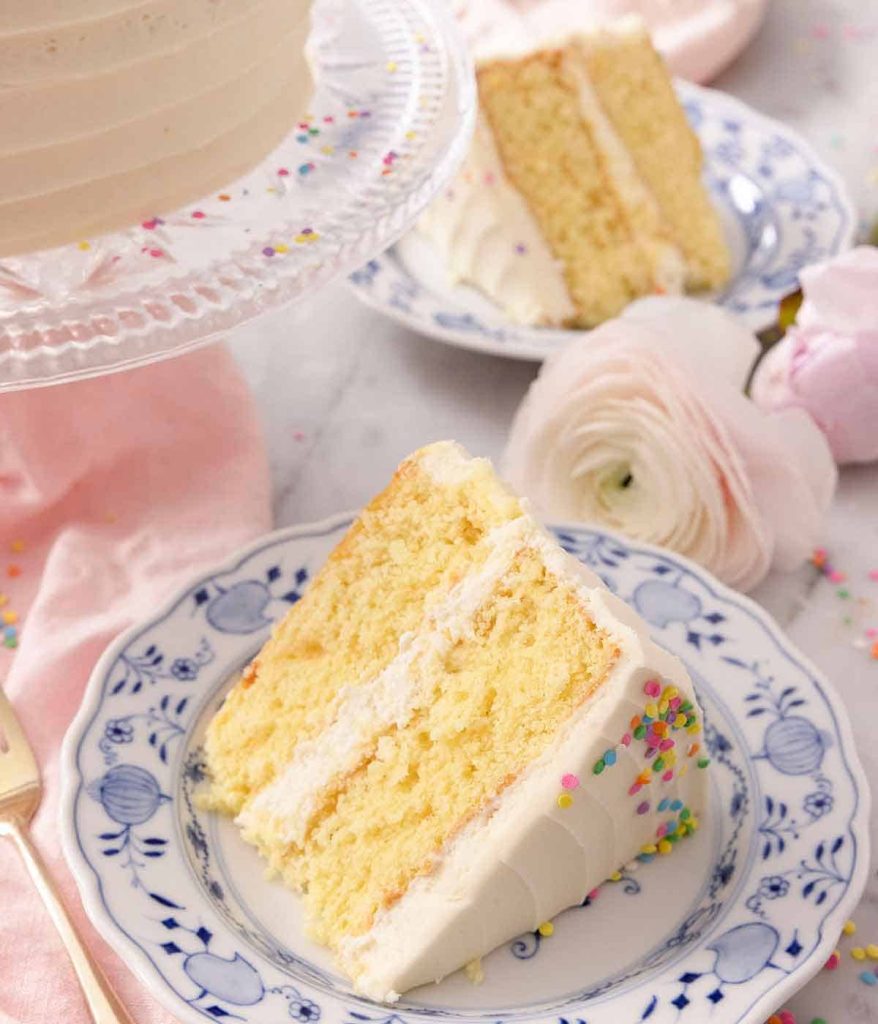
For the cleanest slices, refrigerate the cake for about 20 minutes before cutting. This helps the frosting firm up slightly and gives the layers a neater appearance.
2. Tips for Perfect Homemade Vanilla Cake
Always use room-temperature ingredients. Cold eggs or buttermilk can cause the batter to curdle and bake unevenly.
Measure flour carefully using a kitchen scale if possible. Scooping directly from the bag often packs in too much flour, leading to a dry cake.
Do not overmix once the flour is added. Gentle mixing keeps the crumb soft and tender.
Use high-quality vanilla extract because vanilla is the main flavor in the cake. Pure vanilla extract creates a much deeper flavor compared to imitation vanilla.
Tap the cake pans lightly on the counter before baking to release large air bubbles trapped in the batter.
Cool the cake layers completely before frosting. Warm cakes will melt the buttercream and create a messy finish.
If your kitchen is warm, chill the frosting for 10 to 15 minutes before decorating to make spreading easier.
For extra moisture, brush the cake layers lightly with simple syrup before frosting.
3. Frequently Asked Questions
Can I make this cake ahead of time?
Yes. The cake layers can be baked one day in advance. Wrap them tightly in plastic wrap after cooling and store them at room temperature overnight.
Can I turn this recipe into cupcakes?
Absolutely. This batter works very well for cupcakes. Fill cupcake liners about two-thirds full and bake at 350°F for approximately 18 to 20 minutes.
Why is my cake dry even after following the recipe?
Dry cake is often caused by overbaking. Ovens can vary, so checking the cake a few minutes early can help prevent moisture loss.
Can I use this recipe for layered celebration cakes?
Yes. The cake has a stable structure that works beautifully for birthday cakes, holiday desserts, and simple layered cakes with fillings.
How should leftover cake be stored?
Store the frosted cake covered at room temperature for up to two days or refrigerate for up to five days. Let refrigerated slices sit at room temperature for a short time before serving for the best texture.
4. Nutrition Information
| Nutrient | Amount Per Serving |
|---|---|
| Calories | 620 |
| Carbohydrates | 78g |
| Protein | 5g |
| Fat | 32g |
| Saturated Fat | 19g |
| Cholesterol | 120mg |
| Sodium | 240mg |
| Sugar | 60g |
| Fiber | 1g |
This basic vanilla cake recipe proves that simple ingredients can create a dessert that feels truly special. The soft, tender layers combined with creamy vanilla frosting make it a reliable choice for everything from birthday parties to casual family gatherings. With the right mixing techniques and a few careful baking details, you can achieve a homemade cake that tastes rich, fresh, and beautifully balanced.