Homemade stuffing is one of the most beloved side dishes on the Thanksgiving table. With its soft, flavorful center, lightly crisp edges, and fragrant combination of fresh herbs, it brings a familiar sense of comfort to a holiday meal. Making stuffing from scratch is also easier than many people think, and the result is worth the little extra effort.
This Easy Homemade Stuffing Recipe combines toasted bread cubes with buttery vegetables, fresh herbs, and a savory broth mixture. It is a wonderful way to bring traditional holiday flavor to your table and makes a generous side dish for sharing with family and friends.
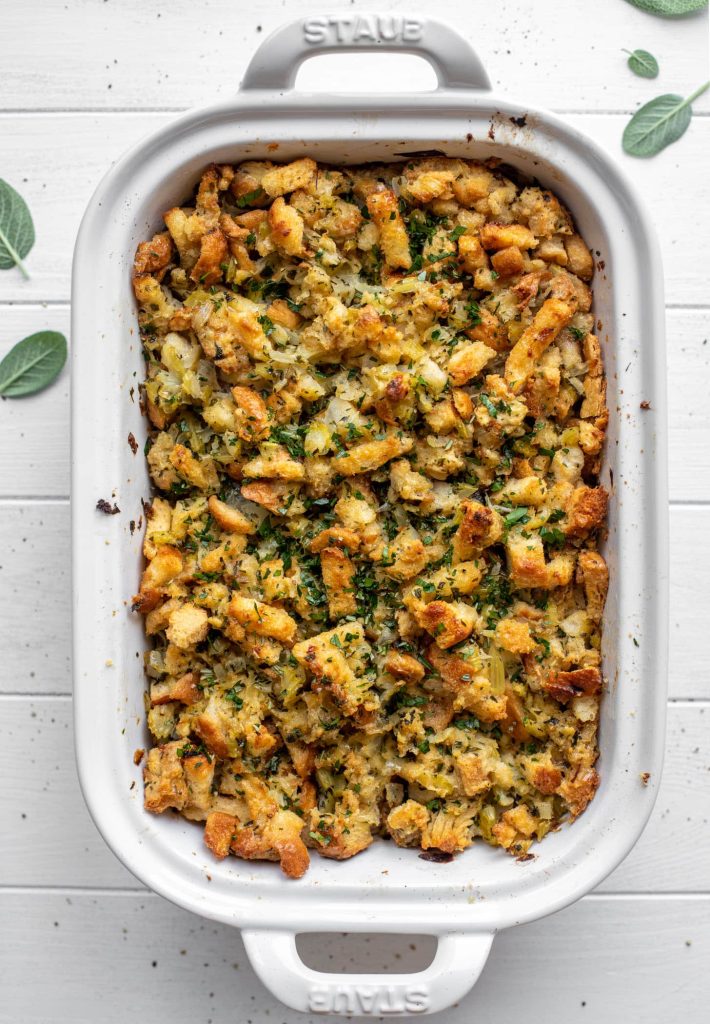
1. Homemade Stuffing Recipe
Yield: 10–12 servings|Prep Time: 25 minutes|Cook Time: 45–50 minutes|Total Time: About 1 hour 15 minutes
Ingredients
- 18 to 24 ounces bread cubes (about 1.5 loaves of bread or 12 to 14 cups), preferably toasted or stale
- 1 cup unsalted butter
- 3 cups diced sweet onion (roughly 2 large onions)
- 2 cups diced celery
- 6 garlic cloves, minced
- Kosher salt and black pepper, to taste
- 3 tablespoons chopped fresh sage
- 3 tablespoons chopped fresh parsley
- 3 tablespoons chopped fresh rosemary
- 2 1/2 cups chicken or vegetable stock
- 2 large eggs
- A mixture of fresh herbs for sprinkling
Equipment
- Large skillet
- Large mixing bowl
- 9 x 13-inch baking dish
- Cutting board and sharp knife
- Whisk
- Aluminum foil
Instructions
Step 1: If your bread is fresh, cut it into small, even cubes and spread them across baking sheets. Bake at 300°F (150°C) for about 20–30 minutes, stirring once or twice, until the cubes feel dry and lightly toasted. Let them cool completely. If you are using stale bread that is already dry, you can skip this step.
Step 2: Melt the butter in a large skillet over medium heat. Add the diced onion and celery, stirring occasionally. Cook for about 8–10 minutes, until the vegetables soften and the onion becomes translucent. Add the minced garlic and cook for another minute, stirring frequently so it does not burn.
Step 3: Stir the chopped sage, parsley, and rosemary into the skillet. Season with kosher salt and black pepper to taste. Cook for another minute to allow the herbs to release their aroma. Remove the skillet from the heat and let the mixture cool slightly.
Step 4: Place the toasted bread cubes in a large mixing bowl. Pour the buttery vegetable and herb mixture over the bread. Use a large spoon or spatula to toss everything together, making sure the bread cubes are evenly coated.
Step 5: In a separate bowl, whisk together the chicken or vegetable stock and eggs until well combined. Slowly pour this mixture over the bread, tossing gently as you go. The bread should absorb the liquid and become moist without turning into a mushy mixture. If the bread still feels very dry, add a little extra stock as needed.
Step 6: Preheat your oven to 350°F (175°C). Lightly grease a 9 x 13-inch baking dish with butter or cooking spray. Transfer the stuffing mixture into the dish and spread it out evenly. Avoid pressing it down too firmly so the stuffing retains a light texture.
Step 7: Cover the baking dish loosely with aluminum foil and bake for 25–30 minutes. Remove the foil and continue baking for another 15–20 minutes, until the top is golden brown and the edges are lightly crisp. The center should reach 165°F (74°C) for food safety.
Step 8: Remove the stuffing from the oven and let it rest for about 5–10 minutes before serving. Sprinkle fresh herbs over the top for a finishing touch. Serve warm alongside your favorite Thanksgiving dishes.
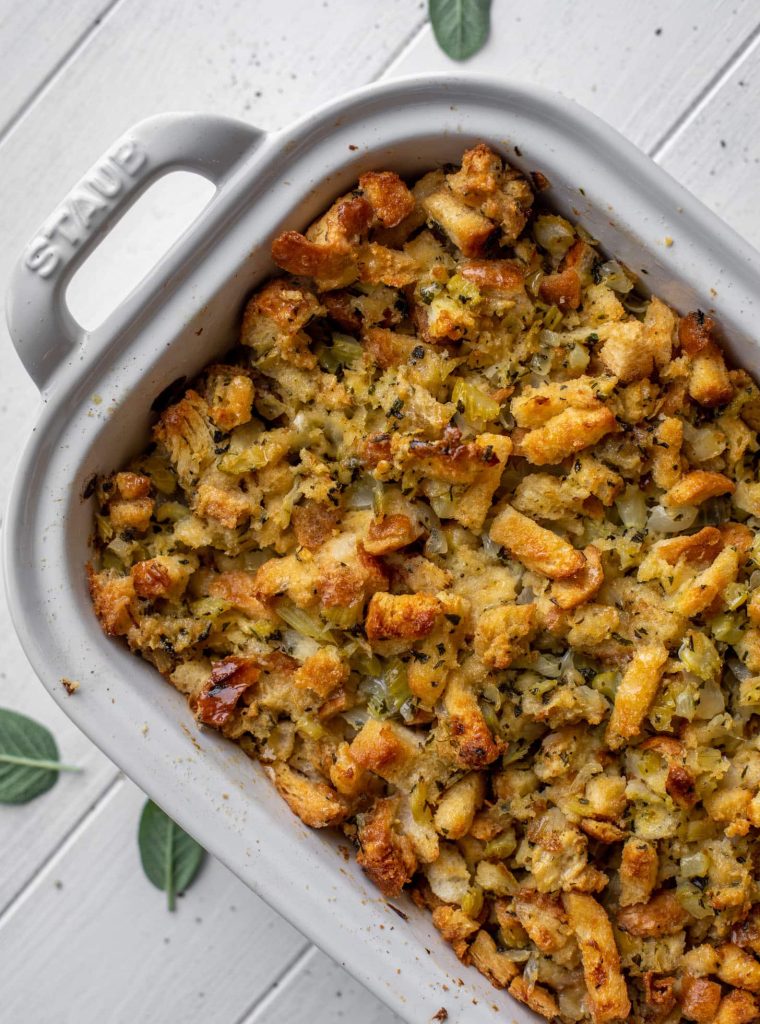
2. Tips for Perfect Homemade Stuffing
Use dry bread: Stale or toasted bread absorbs the stock more evenly and helps prevent soggy stuffing. If your bread is fresh, dry it in the oven before using it.
Choose a sturdy bread: French bread, sourdough, and hearty white bread all work well. They hold their shape during mixing and baking.
Adjust the moisture gradually: Different types of bread absorb liquid differently. Start with the recommended amount of stock and add more only if the mixture seems too dry.
Keep the texture light: Toss the ingredients gently instead of crushing the bread cubes. This helps the finished stuffing maintain a pleasant texture.
Bake uncovered at the end: Covering the dish first helps the center heat through, while removing the foil allows the top to become golden and crisp.
Prepare ahead: You can toast the bread and chop the vegetables and herbs a day or two in advance. Store them separately until you are ready to assemble the stuffing.
3. Frequently Asked Questions
What is the difference between stuffing and dressing?
The two terms often describe very similar bread-based side dishes. Stuffing traditionally refers to a mixture cooked inside poultry, while dressing is usually baked separately in a casserole dish. However, the names vary by family and region, and many people use them interchangeably.
Can I use homemade bread for stuffing?
Absolutely! Homemade bread works beautifully, especially when it has a firm texture. Allow it to become stale or dry the cubes in the oven before using them so they can absorb the liquid without falling apart.
Why is stuffing traditionally served at Thanksgiving?
Bread-based stuffing has a long history as a way to make use of leftover or day-old bread. Over time, it became a familiar holiday side dish, particularly in Thanksgiving meals, where it is often served alongside roasted turkey and other traditional foods.
Can I make this recipe vegetarian?
Yes. Simply use vegetable stock instead of chicken stock. Check that the bread and other ingredients are also suitable for your dietary preferences. The fresh herbs and buttery vegetable mixture provide plenty of flavor.
How can I tell when homemade stuffing is fully cooked?
The top should be golden brown, the edges lightly crisp, and the center hot throughout. Since this recipe contains eggs, check that the center reaches 165°F (74°C) with a food thermometer.
4. Nutrition Information
The following nutrition information is an estimate based on 12 servings. Actual values may vary depending on the type of bread, stock, and other ingredients used.
| Nutrient | Amount per serving |
|---|---|
| Calories | 340 kcal |
| Carbohydrates | 39 g |
| Protein | 8 g |
| Fat | 17 g |
| Saturated Fat | 10 g |
| Cholesterol | 65 mg |
| Sodium | 570 mg |
| Fiber | 3 g |
| Sugar | 5 g |
Homemade stuffing is a classic Thanksgiving side dish that brings warmth and tradition to the holiday table. With its straightforward preparation and familiar homemade appeal, this recipe is a lovely addition to a festive meal and a dish your family can enjoy year after year.
Making stuffing from scratch also gives you the freedom to adjust the texture and seasonings to suit your preferences. Keep this recipe in your holiday collection for a dependable side dish that makes Thanksgiving dinner feel complete.