
Eggs are amazing—until you run out of them, can’t eat them, or just want a plant-based option. I’ve been there more times than I can count, staring at a recipe halfway through and realizing… no eggs. The good news? Eggs are surprisingly easy to replace once you know what role they play.
In baking and cooking, eggs usually do one (or more) of these things: bind ingredients, add moisture, help things rise, or create structure. No single substitute does everything, but the options below cover almost every situation—from cakes and cookies to savory dishes.
Here are my go-to egg substitutes that I actually use and trust.
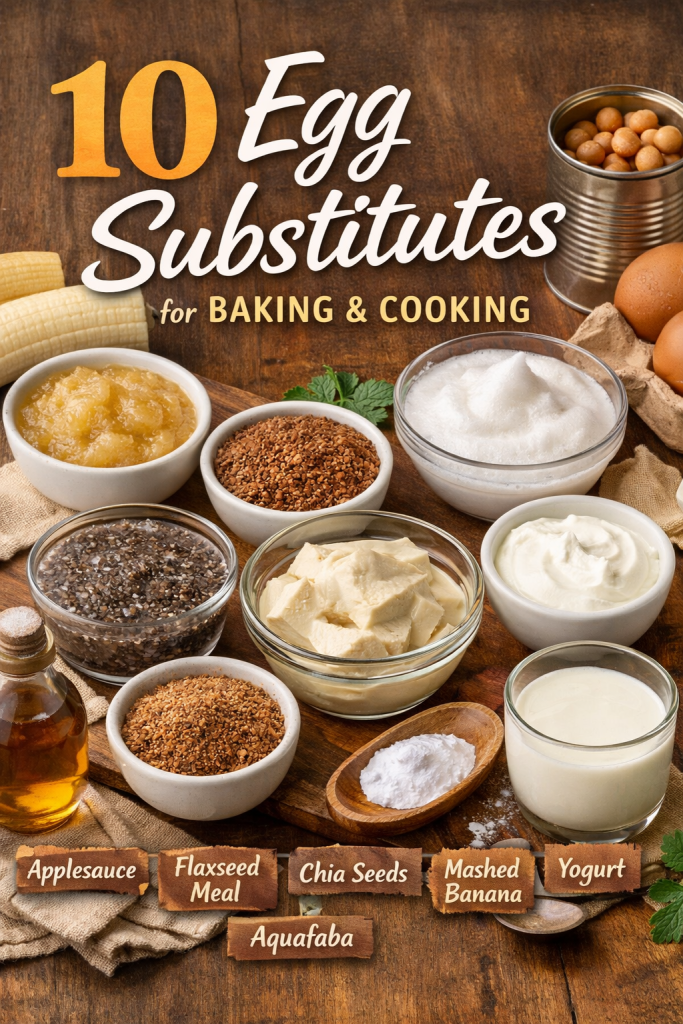
1. Applesauce
Applesauce is one of the easiest and most beginner-friendly egg substitutes out there. I love using it in muffins, cakes, brownies, and quick breads. It adds moisture and a little natural sweetness, which works beautifully in baked goods.
To replace one egg, I usually use ¼ cup of unsweetened applesauce. The texture comes out soft and tender, though the final result is a bit denser than recipes made with eggs. Applesauce doesn’t help much with rising, so it’s best for recipes that don’t rely heavily on eggs for lift. If you’re baking something cozy and forgiving, like banana bread or spice cake, this is a fantastic choice.
2. Mashed Banana
Mashed banana is another classic egg substitute, especially if you like a hint of banana flavor. I reach for this one when making pancakes, muffins, or brownies. It binds ingredients well and adds moisture, similar to applesauce.
One egg equals about ¼ cup of mashed ripe banana. The riper the banana, the better—it’ll mash easily and blend smoothly into the batter. The main thing to keep in mind is flavor. Banana definitely shows up in the final dish, which can be amazing or distracting depending on the recipe. For chocolate desserts or breakfast baking, though, it’s a total win.
3. Flaxseed Egg (Flax Egg)
If I had to pick one egg substitute that feels the most “egg-like,” it would be a flax egg. I use this all the time in vegan baking because it binds incredibly well and has a neutral flavor when baked.
To make one flax egg, mix 1 tablespoon ground flaxseed with 2½ tablespoons water and let it sit for 5–10 minutes until gel-like. This works best in cookies, muffins, pancakes, and even veggie burgers. Flax eggs don’t add fluffiness, but they hold everything together beautifully. Pro tip: always use ground flaxseed, not whole seeds, or it won’t gel properly.
4. Chia Seed Egg
Chia seed eggs work almost the same way as flax eggs, and I often use them interchangeably. They’re especially handy if chia seeds are already in your pantry. The texture they create is thick and gel-like, which helps with binding.
To replace one egg, mix 1 tablespoon chia seeds with 2½ tablespoons water, then let it sit until it thickens. You can use whole or ground chia seeds, though ground gives a smoother texture. Chia eggs are great in muffins, quick breads, cookies, and savory patties. Just know that the tiny seeds may be visible in lighter baked goods.
5. Yogurt (Dairy or Plant-Based)
Yogurt is one of my favorite egg substitutes for baking because it adds moisture, richness, and a slight tang. I’ve used both dairy yogurt and plant-based versions like soy or coconut yogurt with great results.
Use ¼ cup yogurt to replace one egg. This works best in cakes, muffins, cupcakes, and quick breads. Yogurt helps keep baked goods soft and tender, though it doesn’t provide much lift. I usually pair it with baking soda or baking powder to help compensate. For savory cooking, plain unsweetened yogurt can also help bind fritters or batters.
6. Silken Tofu
Silken tofu is a powerhouse egg substitute, especially when texture matters more than flavor. Once blended, it becomes incredibly smooth and neutral. I like using it in dense baked goods like brownies, cheesecakes, and custard-style desserts.
To replace one egg, blend ¼ cup silken tofu until completely smooth. It adds structure and moisture without sweetness, which makes it great for both sweet and savory recipes. Silken tofu won’t help things rise, but it creates a rich, creamy texture that feels indulgent. Just make sure you blend it well—lumps are not your friend here.
7. Vinegar and Baking Soda
This combo is my secret weapon for cakes that need lift. When vinegar and baking soda react, they create bubbles that help baked goods rise, mimicking one of the key roles eggs play.
To replace one egg, mix 1 tablespoon vinegar (apple cider or white) with 1 teaspoon baking soda. This works best in cakes, cupcakes, and quick breads. You won’t taste the vinegar at all once baked—promise. While this substitute doesn’t add moisture or binding, it’s excellent when paired with another moist ingredient like plant milk or yogurt.
8. Aquafaba (Chickpea Brine)
Aquafaba feels like kitchen magic the first time you use it. It’s the liquid from a can of chickpeas, and it behaves a lot like egg whites. I use it when I need lightness or structure.
To replace one whole egg, use 3 tablespoons aquafaba. It’s amazing for meringues, mousses, macarons, and even pancakes. You can whip it to soft or stiff peaks just like egg whites. For savory dishes, it also works well as a binder. Tip: unsalted chickpea liquid works best to avoid weird flavors.
9. Buttermilk (or Plant-Based Buttermilk)
Buttermilk is a surprisingly effective egg substitute, especially in baking. It adds moisture and acidity, which helps activate baking soda and create a tender crumb.
To replace one egg, use ¼ cup buttermilk. If you don’t have it, you can make a plant-based version by mixing plant milk with a teaspoon of vinegar or lemon juice. This substitute works best in pancakes, waffles, cakes, and muffins. Like yogurt, it doesn’t bind strongly, but it’s excellent for soft, fluffy baked goods.
10. Commercial Egg Replacers
When I want consistency and zero guesswork, I use a store-bought egg replacer. These are usually made from starches and leavening agents designed specifically to mimic eggs in baking.
Most commercial egg replacers are mixed with water and used according to package instructions, typically replacing one egg per serving. They work well in cookies, cakes, brownies, and muffins. While they’re not ideal for omelets or scrambled eggs, they shine in baking. If you bake egg-free often, keeping one of these in your pantry can be a lifesaver.
Final Thoughts
Egg substitutes don’t have to be complicated or intimidating. Once you understand what eggs do in a recipe, choosing the right replacement becomes second nature. I’ve baked entire cakes, trays of cookies, and savory dishes without eggs—and honestly, most people never notice the difference.
My advice? Start simple. Applesauce, flax eggs, and yogurt will cover most baking needs. From there, experiment and find what works best for your taste and style of cooking. Sometimes the “substitute” ends up being even better than the original—and that’s a win in my book.
