
Crisp stems, tender leafy greens, and a mild flavor that soaks up sauces beautifully—it’s no wonder bok choy is a staple in many Asian-inspired dishes. If you’ve ever wondered how to cook bok choy so it stays vibrant, flavorful, and not soggy, sautéing is one of the best methods to master.
In this guide, I’ll walk you through how to cook bok choy using a quick sauté technique that highlights its natural crunch while layering in savory, slightly sweet, and aromatic flavors. This article also includes some tips to help you feel confident cooking bok choy at home.
1. How to Cook Bok Choy ( Yield: 4 Serving )
Ingredients
- 1 pound baby bok choy, 3 to 4, halved or quartered
- 1 tablespoon tamari or soy sauce
- 1 tablespoons water
- ½ tablespoon rice vinegar
- 1 teaspoon mirin, or ½ teaspoon honey
- ¼ teaspoon toasted sesame oil
- 1 garlic clove, chopped
- 2 teaspoons avocado oil, plus more as needed
- Red pepper flakes
- Sesame seeds, for sprinkling
Instructions
Prepare the bok choy
Start by rinsing the baby bok choy thoroughly under cold running water. Bok choy often traps dirt near the base, so gently separate the leaves to clean them well. Pat dry with a kitchen towel. Halve or quarter the bok choy lengthwise, keeping the base intact so the leaves stay together during cooking.
Mix the sauce
In a small bowl, whisk together the tamari or soy sauce, water, rice vinegar, mirin (or honey), and toasted sesame oil. This mixture will be added at the end to flavor the bok choy without overpowering it.
Heat the pan
Place a large skillet or wok over medium-high heat. Add the avocado oil and allow it to heat until it shimmers slightly. A hot pan is key to achieving lightly charred edges and crisp-tender stems.
Sauté the garlic
Add the chopped garlic to the pan and sauté for about 20–30 seconds, just until fragrant. Stir constantly to prevent burning, as garlic can turn bitter quickly.
Cook the bok choy
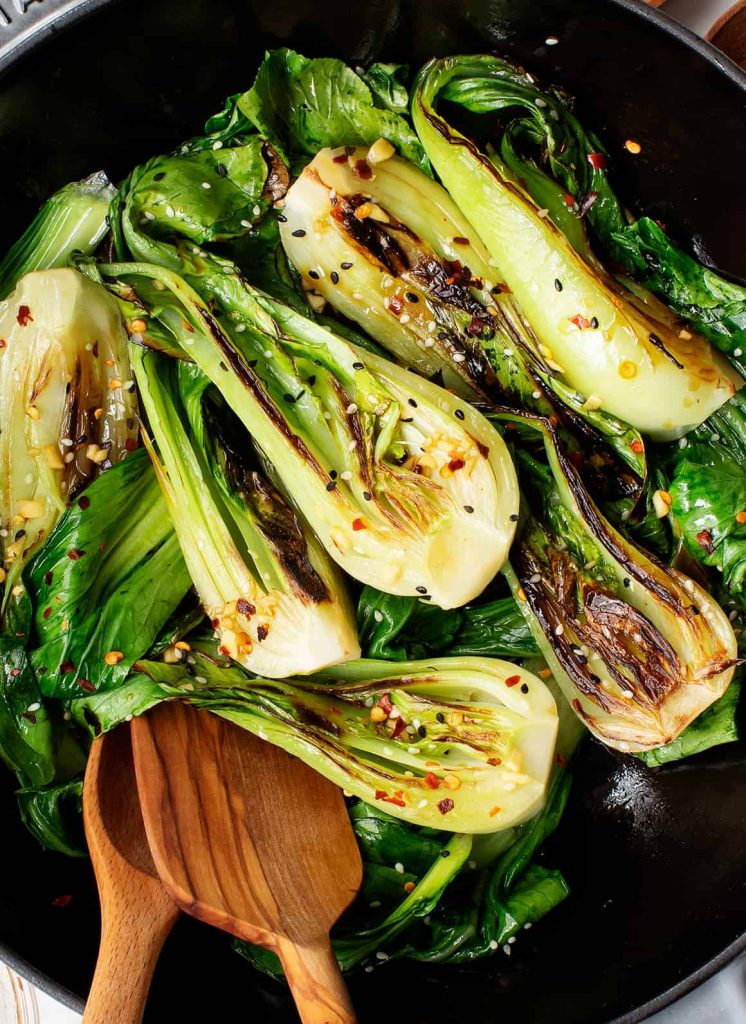
Place the bok choy in the pan cut-side down in a single layer. Cook undisturbed for 2 to 3 minutes to allow the cut surfaces to caramelize. Flip the bok choy and cook for another 2 minutes, stirring gently so the leaves wilt evenly.
Add the sauce
Pour the prepared sauce mixture into the pan. The liquid will sizzle and lightly steam the bok choy. Toss everything together and cook for another 1 to 2 minutes, until the stems are tender-crisp and the leaves are silky.
Season and finish
Sprinkle in red pepper flakes to taste and give the bok choy a final toss. Remove from heat and transfer to a serving dish.
Garnish and serve
Finish with a sprinkle of sesame seeds. Serve immediately as a side dish or over rice, noodles, or alongside tofu, chicken, or fish.
2. Tips for Perfect Sauteed Bok Choy
Heat the pan before adding oil to ensure the bok choy sautés properly instead of steaming. A hot pan helps create lightly caramelized stems while keeping the leaves tender.
Do not overcrowd the pan. Give the bok choy enough space so moisture can evaporate quickly, allowing each piece to cook evenly and stay crisp-tender.
Place the bok choy cut-side down first. This gives the thicker stems direct contact with the heat so they soften without overcooking the leafy greens.
Add sauces and liquids at the end of cooking. Bok choy cooks fast, and adding liquid too early can make it watery and dull the flavor.
Watch the garlic closely. Stir constantly and add the bok choy soon after to prevent burning, which can cause bitterness.
Serve immediately after cooking. Sauteed bok choy tastes best when hot and fresh, with vibrant color and a balanced texture.
3. Frequently Asked Questions
Can I use regular bok choy instead of baby bok choy?
Yes, regular bok choy works well, but it should be chopped into smaller pieces since the stems are thicker and take longer to cook.
Why is my bok choy bitter?
Bok choy can taste bitter if it’s overcooked or if the garlic burns. Keep the cooking time short and use medium-high heat.
Should bok choy be crunchy or soft when cooked?
Ideally, the stems should be tender-crisp while the leaves are soft and silky. This contrast is what makes sautéed bok choy so enjoyable.
Can I make sautéed bok choy ahead of time?
It’s best served fresh, but leftovers can be stored in the refrigerator for up to two days and reheated gently in a pan.
What flavors pair well with bok choy?
Garlic, ginger, sesame oil, soy sauce, chili flakes, and a touch of sweetness like mirin or honey all complement bok choy beautifully.
4. Nutrition Information
Below is an approximate nutrition breakdown per serving (based on 4 servings):
| Nutrient | Amount |
|---|---|
| Calories | 70 kcal |
| Protein | 2 g |
| Carbohydrates | 6 g |
| Fiber | 2 g |
| Fat | 4 g |
| Sodium | 380 mg |
| Vitamin A | 45% |
| Vitamin C | 50% |
| Calcium | 8% |
| Iron | 6% |
Once you know how to cook bok choy properly, it becomes a go-to vegetable for fast and healthy meals. A simple sauté brings out its natural sweetness while preserving its satisfying crunch and vibrant color. Whether you’re serving it on its own or pairing it with rice, noodles, or protein, sautéed bok choy is a versatile dish that fits easily into everyday cooking.
