
Meringue powder is a popular baking ingredient used to stabilize frostings, create stiff peaks, and replace fresh egg whites in recipes like royal icing, macarons, and meringues. However, it’s not always easy to find, and some bakers prefer alternatives due to dietary restrictions, availability, or cost.
Fortunately, there are several effective substitutes that can mimic the binding, foaming, or stabilizing properties of meringue powder. In this article, we’ll explore the 10 best meringue powder substitutes, how they work, and when to use each one for the best baking results.
1. Powdered Egg Whites
Powdered egg whites are one of the closest substitutes for meringue powder. They are made by dehydrating egg whites and offer nearly the same functionality in recipes that require whipping and structure.
When rehydrated with water, powdered egg whites can be whipped into stiff peaks, making them ideal for royal icing, buttercream stabilization, and meringue-based desserts. They also have a neutral flavor and a long shelf life, which makes them convenient for frequent bakers.
Unlike meringue powder, powdered egg whites do not usually contain added stabilizers or sweeteners, so you may need to add sugar or cream of tartar depending on your recipe. Overall, this substitute works best in recipes where egg whites are the primary functional ingredient.

2. Agar
Agar is a plant-based gelling agent derived from seaweed and is commonly used as a vegetarian or vegan alternative to gelatin. While it doesn’t whip like egg whites, agar provides excellent structure and firmness.
In baking, agar works well in recipes that need stabilization rather than volume, such as marshmallow-like textures, frostings, or decorative elements. It sets firmly when cooled and holds its shape even at room temperature.
Because agar needs to be dissolved in hot liquid to activate, it’s best suited for cooked recipes rather than raw meringues. It’s a great option for vegan baking when egg-based substitutes are not an option.

3. Flax Seeds
Flax seeds are commonly used as an egg substitute in vegan baking, thanks to their ability to form a gel when mixed with water. Ground flax seeds combined with water create what’s often called a “flax egg.”
While flax eggs don’t whip into peaks, they provide binding and moisture, making them useful in baked goods like cookies, cakes, and muffins where meringue powder is used for structure rather than aeration.
Flax seeds do add a slightly nutty flavor and darker color, so they are best used in recipes where these characteristics won’t affect the final appearance or taste too much.

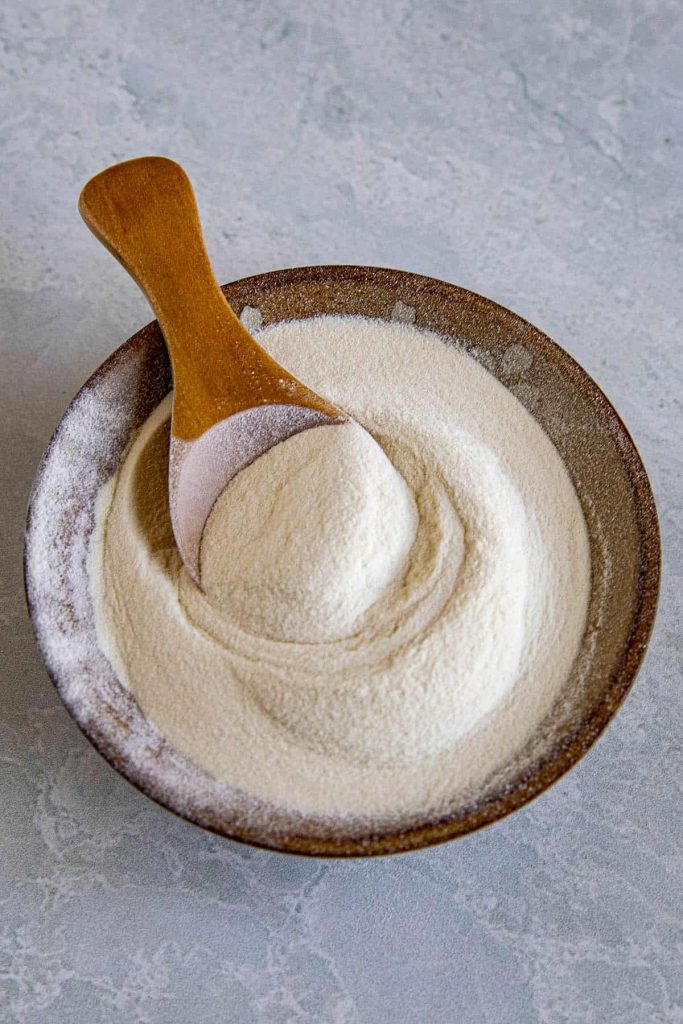
4. Xanthan Gum
Xanthan gum is a powerful thickening and stabilizing agent commonly used in gluten-free baking. Only a very small amount is needed to achieve noticeable results.
As a meringue powder substitute, xanthan gum works best for stabilizing frostings, whipped toppings, and batters. It helps prevent separation and improves texture but does not create foam on its own.
Because of its strength, it’s important to measure carefully. Too much xanthan gum can result in a gummy or overly thick texture. When used correctly, it can significantly improve consistency and stability.
5. Bananas
Mashed bananas are a natural egg substitute often used in baking, particularly in sweet recipes. While bananas cannot replicate the whipping ability of meringue powder, they offer moisture, binding, and slight sweetness.
Bananas work well in cakes, muffins, pancakes, and quick breads where meringue powder is used as a binder rather than a leavening agent. However, they will alter the flavor and color of the final product.
This substitute is best reserved for recipes where a banana flavor is complementary or not noticeable, and where a dense, moist texture is acceptable.

6. Arrowroot Powder
Arrowroot powder is a starch extracted from tropical plants and is often used as a thickener. It’s flavorless, clear when cooked, and gentle compared to other starches.
As a meringue powder substitute, arrowroot powder helps provide structure and stability in baked goods. It’s especially useful in frostings, sauces, and fillings that need to hold their shape.
While arrowroot does not whip or foam, it can support texture and consistency, making it a good secondary substitute when volume is not the main goal.

7. Gelatin
Gelatin is an animal-based gelling agent made from collagen and is excellent for stabilization. It’s often used in whipped creams, mousses, and marshmallows to help maintain structure.
When dissolved and added to whipped mixtures, gelatin can help hold peaks and prevent deflation, somewhat mimicking the stabilizing role of meringue powder. It works especially well in frostings and cream-based desserts.
Because gelatin requires blooming in water and gentle heating, it’s best used in recipes that allow for temperature control. It’s not suitable for vegan or vegetarian diets.

8. Chia Seed
Chia seeds function similarly to flax seeds when mixed with water, forming a thick gel that can replace eggs in many recipes. Ground chia seeds work best for smoother textures.
Chia gel provides binding and moisture but does not add air or volume. This makes it suitable for baked goods like brownies, cookies, and cakes where meringue powder is used as a stabilizer rather than for aeration.
Like flax, chia seeds can slightly alter texture and appearance, so they’re best used in rustic or dense baked goods.

9. Aquafaba
Aquafaba, the liquid from canned or cooked chickpeas, is one of the most popular vegan substitutes for egg whites. It can be whipped into stiff peaks just like meringue.
This makes aquafaba one of the best substitutes for meringue powder in recipes that rely on foam and volume, such as meringues, macarons, and royal icing. With the addition of sugar and an acid like cream of tartar, aquafaba becomes remarkably stable.
Aquafaba has a neutral flavor once whipped and baked, making it an excellent choice for both sweet and decorative baking.

10. Egg White
Fresh egg whites are the most traditional and effective substitute for meringue powder. They whip easily, create stable foam, and provide excellent structure.
Egg whites are ideal for recipes like meringues, royal icing, and buttercream. However, they require careful handling due to food safety concerns, especially in no-bake recipes.
If using egg whites as a substitute, ensure they are fresh and properly separated. Pasteurized egg whites are a safer option for frostings and uncooked applications.

Meringue powder is convenient, but it’s far from the only option in baking. Whether you need a vegan alternative, a simple pantry substitute, or a stabilizer for frostings and desserts, there’s a solution that fits your needs.
From aquafaba and powdered egg whites for whipping, to gelatin, agar, and xanthan gum for stabilization, and even fruits and seeds for binding, these substitutes offer flexibility without sacrificing quality. Understanding the role meringue powder plays in your recipe will help you choose the best alternative and achieve consistent, delicious results every time.
