One Pan Balsamic Chicken is a simple dinner that makes it easy to bring a homemade meal to the table without a complicated cooking process. Using one pan keeps preparation and cleanup manageable, making this recipe a practical choice for busy days.
This recipe is designed to keep the cooking straightforward from start to finish. With a few basic preparation steps and an easy pan-cooking method, you can create a satisfying chicken dinner that works well for both everyday meals and relaxed family gatherings.
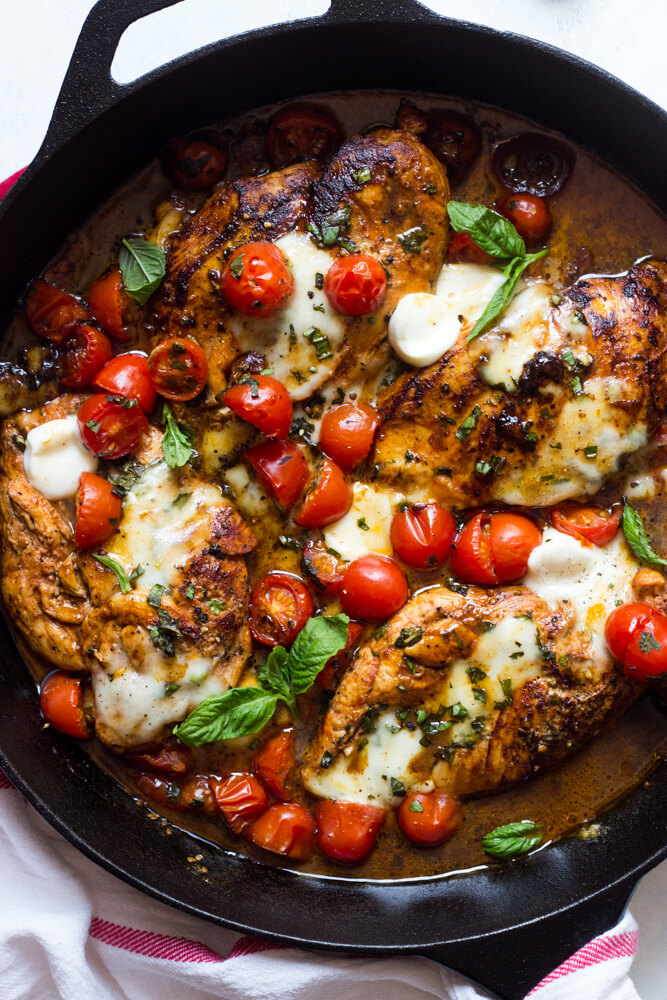
1. One Pan Balsamic Chicken (Yield: 4 Servings)
Ingredients
Chicken
- 2 lb boneless, skinless chicken breasts, pounded to even thickness
- 2 tbsp avocado oil or other high-heat oil
- Kosher salt and freshly ground black pepper, to taste
Sauce
- ⅓ cup balsamic vinegar
- 2 tbsp honey
- 2 tbsp oil, such as avocado or olive oil
- 2 garlic cloves, minced
- 1 tsp Italian seasoning
- 1 tbsp Dijon mustard
Tomato Mozzarella
- 8 oz grape tomatoes, halved
- 8 oz fresh mozzarella balls, such as ciliegine or pearls
- 2 tbsp finely chopped fresh basil
Instructions
Start by preparing the chicken. Place each chicken breast on a cutting board and pound it gently with a meat mallet until the pieces are an even thickness. This helps the chicken cook more consistently and prevents thinner sections from becoming dry before the thicker parts are finished.
Pat the chicken dry with paper towels, then season both sides with kosher salt and freshly ground black pepper.
Prepare the balsamic sauce in a small bowl. Whisk together the balsamic vinegar, honey, oil, minced garlic, Italian seasoning, and Dijon mustard until the mixture is smooth and well combined. Set the sauce aside while you heat the pan.
Place a large oven-safe skillet over medium-high heat and add the avocado oil. Allow the oil to heat until it is hot but not smoking.
Carefully place the seasoned chicken breasts into the skillet. Cook for about 4–5 minutes on the first side, or until the chicken is nicely browned and releases easily from the pan.
Turn the chicken and cook the other side for another 3–4 minutes. The chicken does not need to be completely cooked through at this stage because it will continue cooking with the sauce and other ingredients.
Reduce the heat to medium. Pour the prepared balsamic sauce around and over the chicken. Use a spoon to gently distribute the sauce across the pan without moving the chicken too much.
Allow the chicken to simmer in the sauce for several minutes. Spoon some of the sauce over the chicken as it cooks so the surface stays coated.
Add the halved grape tomatoes to the skillet, arranging them around the chicken. Continue cooking until the tomatoes begin to soften and the chicken is cooked through.
Check the thickest part of the chicken with an instant-read thermometer. The internal temperature should reach 165°F (74°C) for safe consumption.
Once the chicken is fully cooked, remove the skillet from the heat. Add the fresh mozzarella balls around the chicken and tomatoes.
Sprinkle the chopped fresh basil over the top. Allow the skillet to rest for a few minutes so the chicken can settle and the mozzarella can soften slightly from the residual heat.
Spoon some of the balsamic sauce from the pan over the chicken before serving. Transfer the chicken to plates and include some of the tomatoes, mozzarella, and pan sauce with each portion.
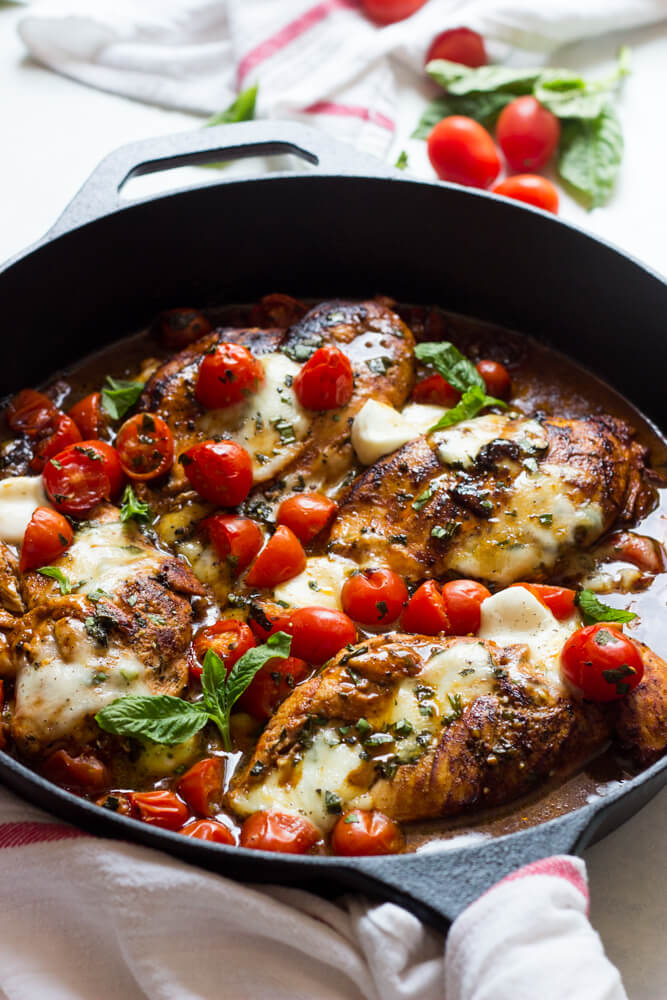
2. Tips for Perfect One Pan Balsamic Chicken
Pound the chicken evenly. Similar thickness helps the chicken cook at the same rate and makes it easier to achieve a juicy result.
Do not overcrowd the skillet. Give the chicken enough room to make good contact with the hot pan and develop a browned exterior.
Let the pan get hot first. Properly heated oil helps the chicken sear instead of simply steaming.
Watch the sauce as it cooks. Balsamic vinegar and honey can thicken quickly, so keep the heat moderate once the sauce is added.
Use an instant-read thermometer. Checking the thickest part of the chicken is the most reliable way to know when it has finished cooking.
Add mozzarella at the end. Fresh mozzarella does not need extended cooking. Adding it after the chicken is finished helps maintain its soft texture.
Let the chicken rest briefly. A short resting period helps the juices settle before slicing and serving.
3. Frequently Asked Questions
Can I use chicken thighs instead of chicken breasts?
Yes. Boneless, skinless chicken thighs can be substituted for the chicken breasts. Since thighs can vary in size, use the internal temperature rather than a fixed cooking time to determine when they are done.
Can I prepare the balsamic sauce in advance?
Yes. The sauce can be mixed several hours ahead and stored covered in the refrigerator. Give it a good stir before adding it to the skillet.
What type of skillet works best for this recipe?
A large heavy-bottomed skillet works well because it distributes heat evenly. If you plan to finish the chicken in the oven, make sure the skillet is oven-safe.
Can I use regular mozzarella instead of fresh mozzarella balls?
Yes. Fresh mozzarella pearls or larger fresh mozzarella pieces can both work. If using a larger piece, tear or cut it into smaller portions so it distributes more evenly across the dish.
How should I store leftover One Pan Balsamic Chicken?
Allow leftovers to cool, then transfer them to an airtight container and refrigerate. For the best texture, reheat the chicken gently and avoid overheating the mozzarella.
4. Nutrition Information
The following nutrition information is an estimate based on the ingredients listed and divided into 4 servings. Actual values may vary depending on the brands and exact amounts used.
| Nutrient | Amount per Serving |
|---|---|
| Calories | 590 kcal |
| Protein | 59 g |
| Carbohydrates | 22 g |
| Fat | 29 g |
| Saturated Fat | 9 g |
| Cholesterol | 155 mg |
| Sodium | 500 mg |
| Fiber | 1 g |
| Sugar | 19 g |
| Calcium | 180 mg |
| Iron | 2 mg |
One Pan Balsamic Chicken is a practical recipe to keep in your dinner rotation when you want a homemade meal without a complicated preparation process. The one-pan approach keeps the cooking organized and makes cleanup easier afterward.
With its straightforward method and simple presentation, this recipe is suitable for regular family dinners as well as occasions when you want something a little more special. It is an easy chicken recipe to return to whenever you need a dependable homemade meal.