Milk is a staple in many diets, but today consumers have more choices than ever before. Among the most common options are traditional cow milk and plant-based alternatives like almond milk.
While both are used in similar ways—such as in coffee, cereal, smoothies, and cooking—they differ significantly in nutrition, taste, and dietary suitability. Understanding the differences between almond milk and cow milk can help you decide which one better fits your health goals, taste preferences, and cooking needs.
1. What Is Almond Milk
Almond milk is a plant-based beverage made by blending almonds with water and then straining out the solids. The result is a smooth, light liquid with a subtle nutty flavor.
Because almond milk is mostly water, it is naturally low in calories—especially in unsweetened varieties. It also contains small amounts of healthy fats but very little protein compared to dairy milk.
Most commercial almond milk is fortified with nutrients such as calcium, vitamin D, and vitamin B12. This helps make it more comparable nutritionally to cow milk.
Almond milk is naturally lactose-free, making it a popular option for people with lactose intolerance or those avoiding animal products.
2. What Is Cow Milk
Cow milk is a natural dairy product obtained from cows. It has been consumed for centuries and is known for its rich nutritional profile.
Cow milk contains a balanced combination of protein, fat, and carbohydrates. It is also a natural source of calcium, vitamin B12, potassium, and other essential nutrients.
It is available in different fat levels, including whole milk, 2 percent milk, and skim milk. These variations allow consumers to choose based on their dietary preferences.
Cow milk has a creamy texture and a slightly sweet taste due to the presence of lactose, a natural sugar found in milk.
Because of its composition, cow milk plays an important role in cooking and baking, contributing to both flavor and structure.
3. Key Differences Between Almond Milk and Cow Milk
The most significant difference between almond milk and cow milk is their nutritional composition.
Cow milk contains a much higher amount of protein. A typical serving provides several grams of high-quality protein, while almond milk usually contains very little unless it is specially fortified.
Calorie content also differs. Unsweetened almond milk is typically much lower in calories than cow milk, making it appealing for those trying to reduce calorie intake.
Fat content varies depending on the type of cow milk. Whole milk contains more fat, while almond milk generally contains less fat overall.
Another key difference is lactose. Cow milk contains lactose, which some people have difficulty digesting. Almond milk is naturally lactose-free.
Texture and taste are also distinct. Cow milk is creamier and richer, while almond milk is lighter with a mild nutty flavor.
These differences can affect how each type of milk performs in recipes and beverages.
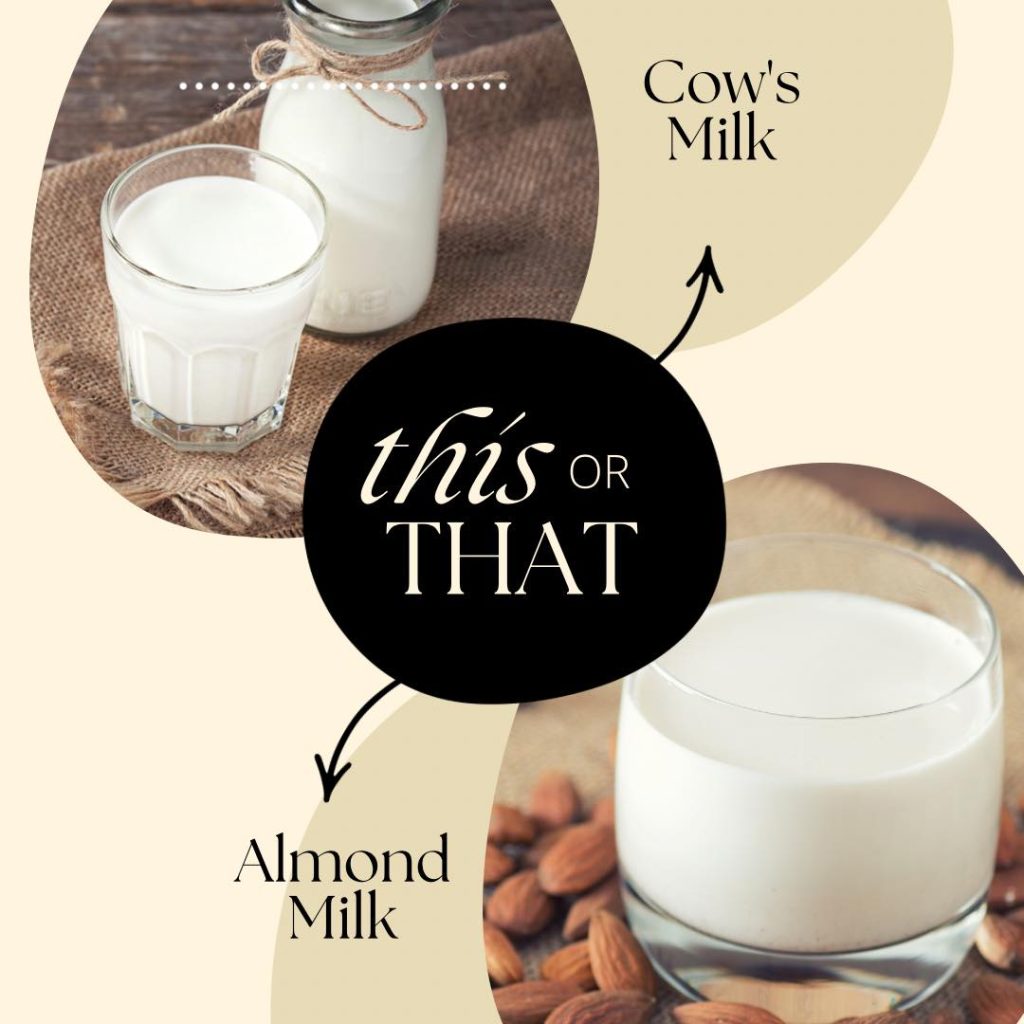
4. When to Use Almond Milk
Almond milk is a great choice for people who are avoiding dairy or looking for a lower-calorie option. Its light texture makes it suitable for smoothies, cereal, and cold drinks.
It is also commonly used in coffee and tea, although it produces less creaminess compared to cow milk.
In cooking, almond milk works well in recipes where a mild flavor is desired. It can be used in soups, sauces, and baked goods, although the results may be slightly lighter.
Because it is plant-based, almond milk is also suitable for vegan diets.
5. When to Use Cow Milk
Cow milk is ideal for recipes that require richness, protein, and structure. It performs well in baking, where its protein content helps create better texture and stability.
It is commonly used in creamy sauces, custards, and desserts because of its full-bodied flavor.
Cow milk is also a preferred choice for coffee drinks like lattes and cappuccinos due to its ability to create smooth foam.
For people who are not lactose intolerant, cow milk provides a convenient and nutrient-rich beverage option.
6. Which One Is Healthier
The answer depends on your individual dietary needs.
Cow milk is generally more nutrient-dense. It provides high-quality protein, calcium, and naturally occurring vitamins that support bone health and overall nutrition.
Almond milk, on the other hand, is lower in calories and fat, especially in unsweetened versions. This can be beneficial for people who are managing their calorie intake.
However, almond milk often relies on fortification to match the nutrient content of cow milk.
For those with lactose intolerance or dairy allergies, almond milk is the better choice. For those seeking more protein and natural nutrients, cow milk may be more beneficial.
7. Can You Substitute Almond Milk for Cow Milk
Almond milk can usually be substituted for cow milk in many recipes, but there are some differences to consider.
Because almond milk is thinner and lower in protein, it may not provide the same richness or structure in certain dishes. For example, sauces may be less creamy, and baked goods may be slightly lighter.
When replacing almond milk with cow milk, the result will typically be richer and more flavorful.
In most everyday uses—such as cereal, smoothies, and simple baking—the substitution works well, but the final texture and taste may vary.
Conclusion
Almond milk and cow milk each offer unique advantages. Almond milk is a light, plant-based alternative that is low in calories and suitable for dairy-free diets. Cow milk is a nutrient-rich option that provides protein, calcium, and a creamy texture ideal for cooking and baking.
Choosing between them depends on your dietary preferences, nutritional goals, and how you plan to use milk in your daily routine. By understanding their differences, you can make a more informed decision and select the option that best fits your lifestyle.