Marinara sauce is one of the most beloved Italian tomato sauces, known for its bright tomato flavor, fragrant garlic, fresh basil, and simple preparation. Unlike sauces that rely on many ingredients, traditional marinara lets the quality of each ingredient shine.
This Authentic Italian Marinara Sauce Recipe uses San Marzano tomatoes, extra virgin olive oil, garlic, onion, and fresh herbs to create a smooth, flavorful sauce. It is easy to prepare on the stovetop and becomes even more delicious as the flavors gently develop during cooking.
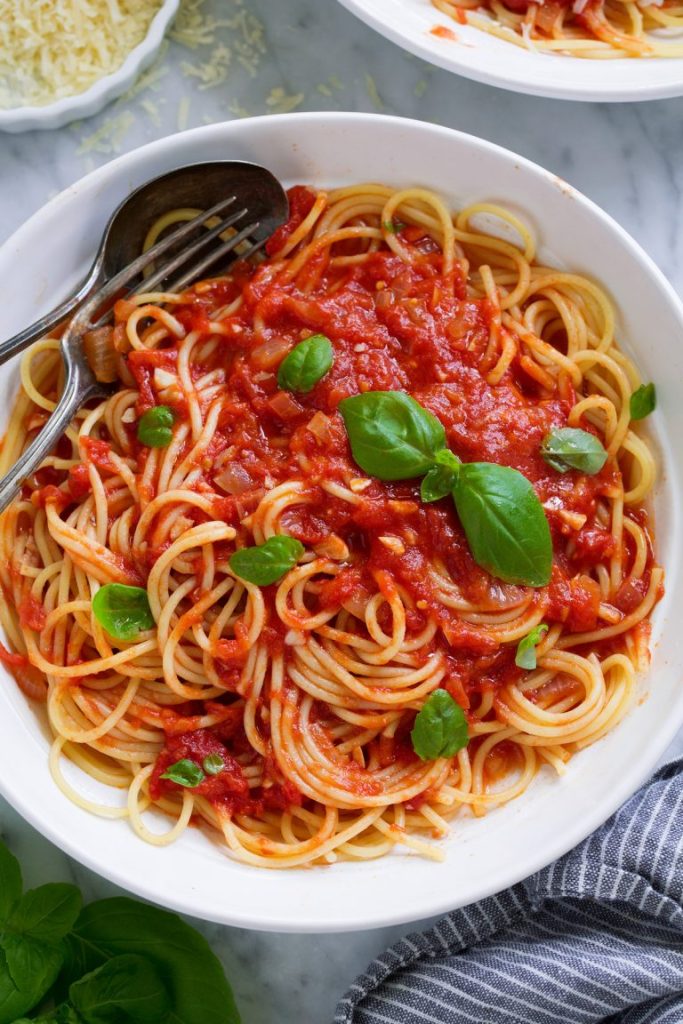
1. Authentic Italian Marinara Sauce Recipe (Yield: 8 Servings)
Ingredients
- 2 × 28-ounce cans San Marzano tomatoes
- 1/2 yellow onion, diced
- 8 cloves garlic, minced
- 1 bay leaf
- 4 sprigs fresh basil
- 1/3 cup fresh basil leaves, sliced or torn
- 4 tablespoons extra virgin olive oil or light olive oil
- 1 pinch sea salt, or to taste
Instructions
Begin by preparing the tomatoes. Pour the San Marzano tomatoes into a large bowl and gently crush them with your hands or the back of a wooden spoon. Remove any tough pieces of tomato core you find. If you prefer a smoother sauce, you can briefly blend the tomatoes with an immersion blender, but keeping some texture creates a more rustic sauce.
Place a large, heavy-bottomed saucepan or Dutch oven over medium-low heat. Add the olive oil and allow it to warm gently. The oil should be warm but not smoking.
Add the diced onion and cook for about 5 to 7 minutes, stirring occasionally. The onion should become soft and translucent without developing much color. Cooking the onion slowly gives the sauce a naturally sweet and mellow flavor.
Add the minced garlic and cook for about 30 to 60 seconds, stirring constantly. The garlic should become fragrant but should not turn dark brown, as burnt garlic can make the sauce taste bitter.
Carefully add the crushed San Marzano tomatoes to the saucepan. Stir everything together, making sure the onion and garlic are evenly distributed throughout the tomatoes.
Add the bay leaf and four fresh basil sprigs to the sauce. Stir gently and bring the mixture to a gentle simmer.
Once the sauce begins to simmer, reduce the heat to low. Leave the saucepan partially covered and let the marinara cook gently for about 30 to 45 minutes. Stir every 10 minutes or so to prevent the sauce from sticking to the bottom.
As the sauce cooks, the tomatoes will gradually break down and the liquid will reduce. This concentrates the tomato flavor and creates a thicker consistency.
After about 30 minutes, remove the basil sprigs and bay leaf. Taste the sauce and add a pinch of sea salt. Continue adjusting the seasoning gradually until the tomato flavor tastes balanced.
If the sauce is still thinner than you prefer, continue simmering uncovered for another 10 to 15 minutes. Stir occasionally as it reduces.
Turn off the heat and stir in the sliced or torn fresh basil leaves. Adding fresh basil toward the end preserves more of its delicate aroma and gives the finished sauce a fresh herbal flavor.
Let the sauce rest for about 5 minutes before using it. This short resting period allows the flavors to settle and gives the sauce a slightly thicker consistency.
For a completely smooth marinara, use an immersion blender directly in the saucepan until the desired texture is reached. For a traditional rustic texture, leave the sauce as it is.
Taste once more and add a small amount of salt if necessary. The finished marinara should have a bright tomato flavor with gentle sweetness from the onion, savory garlic, and fresh basil.
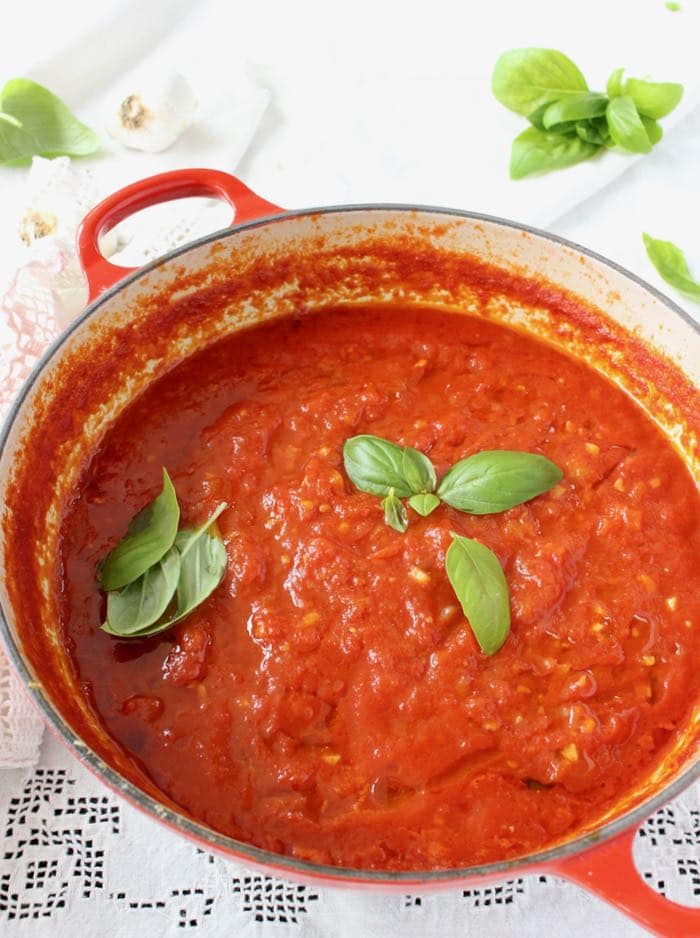
2. Tips for Perfect Authentic Italian Marinara Sauce
Use high-quality canned tomatoes because tomatoes are the main ingredient in marinara sauce. San Marzano tomatoes are particularly popular for their balanced flavor and tender texture.
Cook the onion slowly over medium-low heat. Browning isn’t necessary, and gentle cooking helps the onion become naturally sweet without overpowering the tomatoes.
Don’t let the garlic brown too much. Garlic only needs a short time in the oil to release its aroma.
Keep the sauce at a gentle simmer instead of boiling aggressively. A slow simmer allows the flavors to develop while reducing the tomatoes gradually.
Avoid adding too many dried herbs or extra seasonings. Classic marinara is intentionally simple, allowing tomatoes, garlic, olive oil, and basil to remain the main flavors.
Add fresh basil near the end of cooking for a brighter herbal aroma. Basil that cooks for too long can lose some of its fresh character.
Taste the sauce before adding more salt. Canned tomatoes can vary in their natural salt content, so seasoning gradually gives you better control.
For deeper flavor, allow the marinara to simmer a little longer over very low heat. Just make sure to stir occasionally and add a small amount of water if the sauce becomes too thick.
3. Frequently Asked Questions
What makes marinara sauce different from other tomato sauces?
Marinara is generally a simple tomato-based sauce made with ingredients such as tomatoes, garlic, olive oil, and herbs. It usually has a relatively short cooking time compared with slow-simmered meat or heavily seasoned tomato sauces.
Why are San Marzano tomatoes commonly used in marinara?
San Marzano tomatoes are prized for their balanced sweetness, mild acidity, and tender flesh. They are especially well suited to sauces because they break down easily during cooking.
Can I use fresh tomatoes instead of canned tomatoes?
Yes. Very ripe, flavorful tomatoes can be used, although they may contain more water and require additional preparation and cooking time. Canned San Marzano tomatoes provide consistent results throughout the year.
Can marinara sauce be made ahead of time?
Yes. Marinara often tastes even better after it has cooled and the flavors have had time to blend. Prepare the sauce in advance, allow it to cool, and store it properly in the refrigerator.
How can I reduce the acidity of tomato sauce?
Start by choosing naturally sweet, ripe-tasting tomatoes and cooking the sauce gently. The onion also adds natural sweetness. If the finished sauce still tastes sharply acidic, taste it carefully before making any adjustments rather than automatically adding sugar.
4. Nutrition Information
The following nutrition values are approximate and based on one serving.
| Nutrient | Amount Per Serving |
|---|---|
| Calories | 135 |
| Protein | 3 g |
| Carbohydrates | 12 g |
| Fat | 9 g |
| Saturated Fat | 1.3 g |
| Cholesterol | 0 mg |
| Fiber | 3 g |
| Sugar | 7 g |
| Sodium | 310 mg |
| Potassium | 470 mg |
| Calcium | 45 mg |
| Iron | 1.2 mg |
Homemade marinara sauce is a wonderful example of how a few quality ingredients can create a deeply flavorful dish. San Marzano tomatoes provide the foundation, while garlic, onion, olive oil, and fresh basil add layers of savory and herbal flavor without making the sauce complicated.
This Authentic Italian Marinara Sauce Recipe is easy to prepare and flexible enough for everyday cooking. Once you’ve made a fresh batch at home, you’ll have a flavorful tomato sauce that can become a reliable staple in your kitchen.