Authentic miso soup is a simple and comforting Japanese dish that is enjoyed every day in many homes and restaurants across Japan. Made with savory dashi stock, soft tofu, delicate seaweed, and rich miso paste, this traditional soup has a light yet deeply satisfying flavor.
One of the best things about homemade miso soup is how quickly it comes together. With just a few ingredients and a few minutes of cooking time, you can prepare a flavorful soup that tastes fresh and authentic. This classic recipe is perfect for breakfast, lunch, dinner, or anytime you want a warm and nourishing bowl of soup.

1. Authentic Miso Soup Recipe ( Yield: 2 Servings )
Ingredients
- 14 floz dashi stock (400 ml)
- 1 tbsp miso paste
- 4 oz tofu (100g)
- 2 tbsp wakame (dry)
- 2 tsp green shallots, chopped
- Instructions
Begin by preparing the ingredients. Place the dried wakame in a small bowl of cold water and allow it to soak for about 5 to 10 minutes. The wakame will expand significantly as it absorbs water. Once softened, drain the wakame and set it aside.
Cut the tofu into small bite-size cubes. Soft tofu or silken tofu both work well for miso soup because they create a delicate texture that blends beautifully with the broth.
Pour the dashi stock into a medium saucepan and place it over medium heat. Allow the broth to warm gently until it is hot but not boiling.
Add the soaked wakame and cubed tofu to the warm dashi stock. Let the ingredients heat gently for about 2 to 3 minutes. Stir carefully so the tofu keeps its shape.
Place the miso paste into a small bowl. Ladle a few tablespoons of the hot dashi broth into the bowl with the miso paste and stir until completely smooth. Dissolving the miso separately helps prevent lumps in the soup.
Reduce the heat to low and slowly stir the dissolved miso mixture back into the saucepan. Stir gently until the soup becomes evenly blended.
Do not allow the soup to boil after adding the miso paste. High heat can affect the flavor and reduce the delicate taste of the miso.
Taste the soup and adjust the amount of miso paste if desired. Different miso varieties can vary in saltiness and strength.
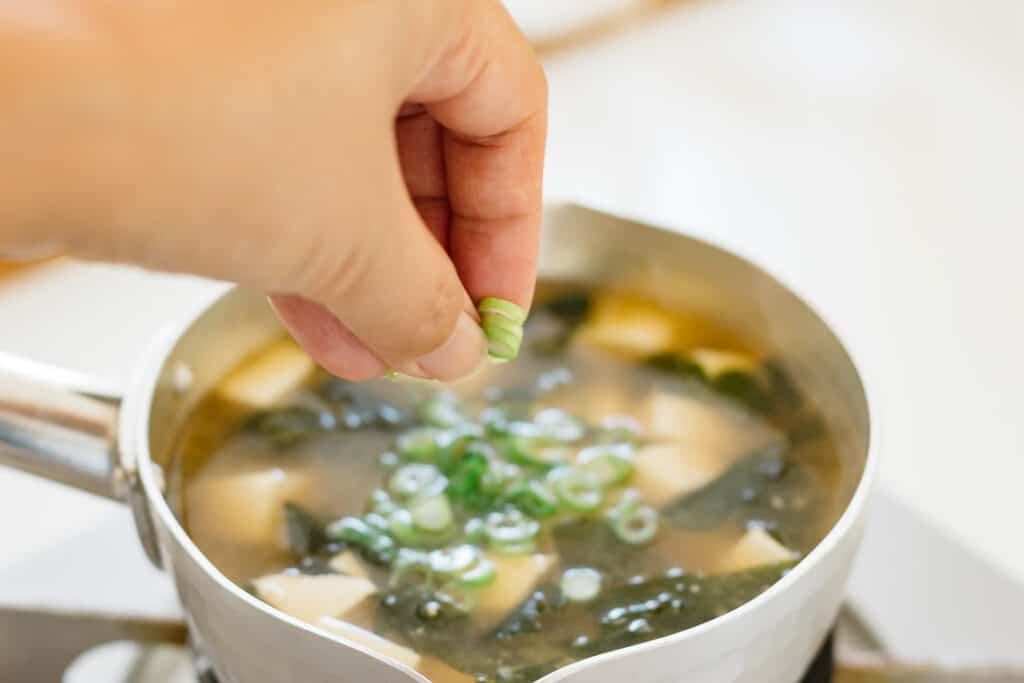
Ladle the hot miso soup into serving bowls and sprinkle the chopped green shallots over the top before serving. Serve the soup immediately while warm for the best flavor and texture.
2. Tips for Perfect Authentic Miso Soup
Choose authentic Japanese miso paste for the best flavor. White miso offers a mild and slightly sweet taste, while red miso creates a deeper and richer soup.
Warm the dashi stock gently instead of bringing it to a rolling boil. Slow heating helps preserve the delicate flavors of the broth.
Add the tofu carefully to keep the cubes from breaking apart. A gentle stir is enough to distribute the ingredients evenly.
Use fresh green shallots right before serving to add brightness and freshness to the soup.
If the soup tastes too salty, add a little extra dashi stock to balance the flavor without losing the authentic taste.
For extra depth, combine two different types of miso paste together. Mixing white and red miso creates a balanced flavor with both sweetness and richness.
Only prepare the amount you plan to serve immediately because miso soup tastes best fresh and warm.
Store dried wakame in an airtight container in a cool place so it stays fresh and expands properly when soaked.
Taste the soup before serving since different brands of miso paste can vary greatly in strength and saltiness.
3. Frequently Asked Questions
What is miso paste made from?
Miso paste is traditionally made from fermented soybeans combined with salt and koji, which is a type of fermented rice or grain culture. Some varieties also include barley or rice.
Can I make miso soup vegetarian?
Yes, vegetarian miso soup can be made using kombu and mushroom-based dashi instead of traditional fish-based dashi stock.
How long does miso soup last in the refrigerator?
Miso soup can usually be stored in the refrigerator for about 2 days in an airtight container. Reheat gently without boiling.
What type of tofu is best for miso soup?
Soft tofu and silken tofu are commonly used because they have a delicate texture that works perfectly in light broth soups.
Can I add other ingredients to miso soup?
Absolutely. Mushrooms, daikon radish, napa cabbage, spinach, noodles, and clams are all popular additions that can add variety and extra flavor.
4. Nutrition Information
| Nutrient | Amount Per Serving |
|---|---|
| Calories | 90 |
| Protein | 7g |
| Carbohydrates | 5g |
| Fat | 4g |
| Saturated Fat | 1g |
| Cholesterol | 0mg |
| Sodium | 780mg |
| Fiber | 1g |
| Sugar | 2g |
Authentic miso soup is a light and comforting Japanese classic filled with delicate flavors and simple ingredients. The combination of savory dashi broth, rich miso paste, soft tofu, and seaweed creates a warm bowl of soup that feels both nourishing and satisfying.
This easy homemade recipe comes together quickly and pairs beautifully with many Japanese meals. Once you learn how simple authentic miso soup is to prepare, it can easily become a favorite recipe to enjoy throughout the week.