If you’ve ever followed a recipe and wondered whether to bake or roast, you’re not alone. These two cooking methods are often used interchangeably, but they are not exactly the same. While both rely on dry heat inside an oven, the results they produce can be quite different.
Understanding the difference between baking and roasting can help you achieve better texture, flavor, and overall cooking results. Whether you’re making a soft cake or a crispy tray of vegetables, choosing the right method matters more than you might think.
1. What Does “Bake” Mean?
Baking is a cooking method that uses consistent, even heat to cook food. The heat surrounds the food from all sides, allowing it to cook gradually and evenly. This method is typically used for foods that need to hold or develop structure during cooking.
Baking is most commonly associated with items made from batter or dough. As the food cooks, chemical reactions occur—such as the activation of yeast or baking powder—which help the food rise and set properly.
Common foods that are baked:
- Cakes and cupcakes
- Bread and rolls
- Cookies and pastries
- Casseroles and baked pasta
The key goal of baking is to create a soft, stable texture. For example, when you bake a cake, you want it to be fluffy and evenly cooked throughout, not crispy or browned on the outside.
2. What Does “Roast” Mean?
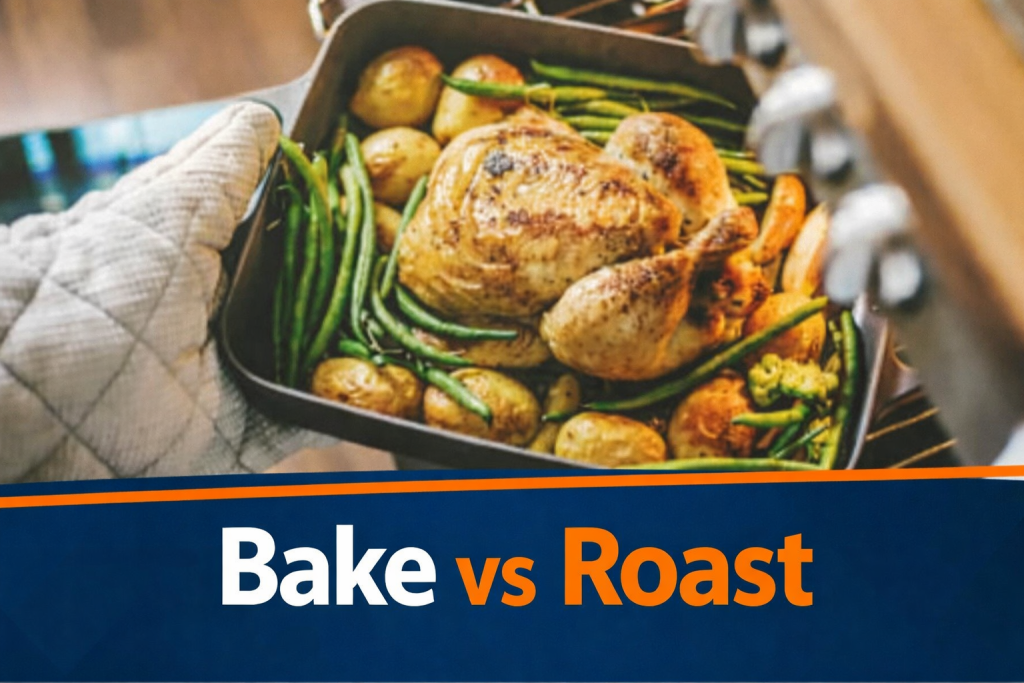
Roasting is also a dry-heat cooking method, but it typically uses higher temperatures than baking. The goal of roasting is not just to cook the food, but also to develop flavor and texture—especially a browned, crispy exterior.
Roasting works particularly well for foods that already have structure, such as meat and vegetables. The higher heat encourages caramelization and the Maillard reaction, which create deeper flavors and appealing color.
Common foods that are roasted:
- Chicken, beef, pork
- Potatoes and root vegetables
- Broccoli, carrots, and squash
When you roast food, you’re often aiming for contrast: crispy on the outside, tender and juicy on the inside. This is what makes roasted dishes so satisfying.
3. Key Differences Between Bake and Roast
Although baking and roasting use similar equipment (an oven), they differ in purpose, temperature, and results.
| Feature | Bake | Roast |
|---|---|---|
| Temperature | Lower, steady | Higher |
| Purpose | Cook evenly | Brown & crisp |
| Food Type | Baked goods | Meat, vegetables |
| Texture | Soft, fluffy | Crispy outside |
In simple terms, baking is about even cooking and structure, while roasting is about enhancing flavor and texture through higher heat.
4. When to Use Bake
Baking is the best choice when you want food to cook evenly without developing a hard or crispy exterior. It is especially important for recipes that rely on precise structure and consistency.
You should use baking when:
- Making cakes, cookies, or bread
- Cooking dishes that need to rise or set
- Preparing meals that should stay soft and moist
For example, if you try to roast a cake batter at high heat, the outside will burn before the inside has time to cook properly. Baking prevents this by using controlled, moderate heat.
5. When to Use Roast
Roasting is ideal when you want to bring out bold flavors and create a crisp, golden exterior. It works best for solid foods that benefit from browning and caramelization.
You should use roasting when:
- Cooking meat or poultry
- Preparing vegetables with a crispy finish
- You want deeper flavor and texture
For instance, roasting vegetables like potatoes or carrots at high heat helps them develop a slightly sweet, caramelized surface while remaining tender inside. The same principle applies to roasted chicken, which becomes crispy on the outside while staying juicy inside.
6. Which Is Healthier: Baking or Roasting?
Both baking and roasting are considered healthy cooking methods because they use dry heat and don’t require large amounts of oil.
However, there are a few subtle differences:
- Baking often uses little to no added fat, making it a great option for low-fat cooking.
- Roasting may involve oil to enhance browning and flavor, but it can also help render excess fat from meats, which then drips away during cooking.
In general, neither method is inherently healthier than the other. The overall healthiness depends more on the ingredients you use and how much oil or seasoning is added.
Conclusion
While baking and roasting may seem similar at first glance, they serve different purposes in the kitchen. Baking uses steady, moderate heat to cook food evenly and create soft textures, making it perfect for breads, cakes, and casseroles. Roasting, on the other hand, uses higher heat to develop rich flavors and crispy exteriors, making it ideal for meats and vegetables.
Choosing between bake and roast ultimately comes down to the type of food you’re preparing and the texture you want to achieve. Once you understand how each method works, you’ll be able to cook with more confidence—and get better results every time.