Classic Quiche Lorraine is a timeless baked dish that works beautifully for breakfast, brunch, lunch, or a simple dinner. This recipe keeps the preparation approachable while following the familiar method of building a savory filling inside a pastry crust.
Making quiche at home is easier than it may seem. Once the crust is prepared and the filling is mixed, the oven takes care of most of the work. With a few simple techniques, you can create a quiche that slices neatly and holds together well.
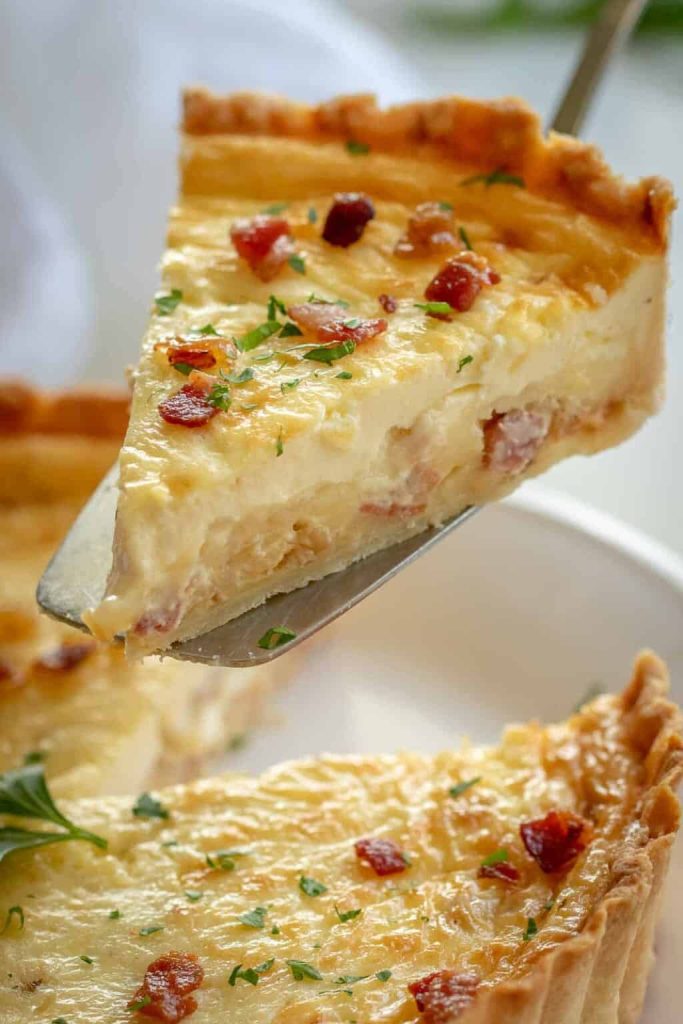
1. Classic Quiche Lorraine Recipe (Yield: 8 Slices of Quiche)
Ingredients
- 1 frozen pie crust
- ½ lb thin strips of bacon, chopped into ½-inch pieces
- ½ yellow onion, diced
- 1 cup shredded cheese, sharp white cheddar or Gruyere
- 1¾ cups half-and-half, or equal parts whole milk and heavy cream
- 4 large eggs
- ½ teaspoon kosher salt
- ¼ teaspoon finely ground black pepper
- ¼ teaspoon smoked paprika
- ⅛ teaspoon ground nutmeg
- 1 tablespoon chopped parsley or chives, optional for garnish
- 1 egg white
Instructions
Preheat the oven to 375°F. Place the frozen pie crust on a baking sheet so it is easier to move in and out of the oven.
Prick the bottom of the frozen crust several times with a fork. Brush the bottom and sides of the crust with the egg white. This helps create a light barrier between the crust and the filling.
Place the crust in the oven and bake for about 8–10 minutes, just until it begins to set. Remove it from the oven and set it aside while preparing the filling.
Place the chopped bacon in a large skillet over medium heat. Cook for about 5–7 minutes, stirring occasionally, until the bacon is cooked and lightly crisp.
Transfer the bacon to a paper towel-lined plate to drain. Leave about 1 tablespoon of bacon drippings in the skillet.
Add the diced onion to the same skillet. Cook for about 3–4 minutes, stirring occasionally, until the onion becomes tender. Remove the skillet from the heat and allow the onion to cool slightly.
In a large mixing bowl, whisk together the eggs and half-and-half until smooth and well combined.
Add the kosher salt, black pepper, smoked paprika, and nutmeg. Whisk again until the seasonings are evenly distributed throughout the egg mixture.
Sprinkle about half of the shredded cheese over the bottom of the partially baked crust. Add the cooked bacon and sautéed onion, spreading them evenly across the crust.
Pour the egg and half-and-half mixture slowly over the bacon, onion, and cheese. Avoid filling the crust all the way to the very top, leaving a little room for the filling to expand during baking.
Sprinkle the remaining cheese evenly over the surface.
Carefully transfer the quiche to the oven. Bake for approximately 35–45 minutes, or until the edges are set and the center has only a slight jiggle when the pan is gently moved.
If the crust or top begins browning too quickly, loosely cover the quiche with aluminum foil for the remainder of the baking time.
Remove the quiche from the oven and place it on a cooling rack. Let it rest for at least 10–15 minutes before slicing. This allows the filling to finish setting and makes cleaner slices.
Sprinkle the top with chopped parsley or chives if desired. Slice the quiche into 8 portions and serve warm or at room temperature.

2. Tips for Perfect Classic Quiche Lorraine
Pre-bake the crust briefly. This gives the pastry a head start and helps prevent the bottom from becoming overly soft once the egg mixture is added.
Drain the bacon well. Excess bacon grease can make the filling unnecessarily oily, so allow the cooked bacon to drain before adding it to the crust.
Do not overfill the crust. Leave a little space at the top so the egg mixture can expand during baking without spilling over.
Use room-temperature dairy when possible. Half-and-half that is not extremely cold blends more easily with the eggs and helps the filling cook evenly.
Bake until just set. The center should have a slight jiggle when the quiche comes out of the oven. It will continue setting as it rests.
Let it rest before slicing. Cutting into the quiche immediately can cause the filling to separate or produce messy slices.
Watch the crust toward the end. If it becomes too dark before the filling is finished, cover the edges or top loosely with foil.
3. Frequently Asked Questions
Can I make Quiche Lorraine without bacon?
Yes. Bacon is a traditional component, but you can replace it with cooked ham, turkey bacon, or another savory ingredient. The amount of filling may need to be adjusted depending on the substitution.
Can I use a homemade pie crust?
Absolutely. A homemade pastry crust works well in this recipe. Make sure it is chilled and properly fitted into the pie dish before partially baking it.
Can I prepare this quiche the night before?
Yes. Quiche can be baked ahead of time and refrigerated once it has cooled completely. This makes it especially convenient when preparing breakfast or brunch in advance.
Is Quiche Lorraine better served hot or cold?
It can be enjoyed warm, at room temperature, or chilled. Allowing it to rest after baking is particularly helpful because the filling becomes firmer and easier to slice as it cools.
Why is my quiche watery in the center?
A watery quiche can result from excess moisture in the ingredients or from removing it from the oven before the center has fully set. Make sure cooked ingredients are properly drained and bake until the center has only a slight jiggle.
4. Nutrition Information
The following nutrition information is an estimate based on the listed ingredients and divided into 8 slices. Actual values can vary depending on the type of crust, bacon, cheese, and dairy products used.
| Nutrient | Amount per Slice |
|---|---|
| Calories | 390 kcal |
| Protein | 16 g |
| Carbohydrates | 20 g |
| Fat | 28 g |
| Saturated Fat | 12 g |
| Cholesterol | 150 mg |
| Sodium | 650 mg |
| Fiber | 1 g |
| Sugar | 3 g |
| Calcium | 180 mg |
| Iron | 2 mg |
Classic Quiche Lorraine is a dependable recipe that combines simple preparation with a satisfying homemade result. The process is easy to manage once the crust is partially baked and the filling is prepared.
Taking the time to cook the bacon and onion properly, bake the quiche until just set, and let it rest before slicing will help you get better results. Once you are comfortable with the basic method, this classic recipe can become a useful addition to your breakfast, brunch, or lunch rotation.