Flour plays a critical role in baking because it determines the structure, texture, and overall quality of baked goods. Different types of flour are designed for different baking purposes, and choosing the right one can greatly influence the final result. Two of the most commonly used flours in baking are cake flour and all purpose flour.
Although these flours may appear similar, they behave differently when mixed into batter or dough. The differences come mainly from their protein content, milling process, and how they interact with other ingredients during baking. This guide explains what cake flour and all purpose flour are, how they differ, and when each one should be used in baking.
1. What Is Cake Flour
Cake flour is a specialized type of wheat flour designed specifically for delicate baked goods. It is made from soft wheat and contains a relatively low protein content, usually around 7–9 percent. This lower protein level limits the formation of gluten when the flour is mixed with liquid.
Gluten is a network of proteins that forms when flour and water combine. While gluten is essential for bread structure, too much gluten can make cakes dense or tough. The low protein level in cake flour helps prevent excessive gluten development, which leads to a softer crumb.
Another important characteristic of cake flour is its fine texture. During the milling process, cake flour is ground more finely than many other flours. This fine consistency allows it to blend smoothly into batters and helps create a uniform texture in baked goods.
Cake flour is also commonly bleached. The bleaching process changes the structure of the starch in the flour, allowing it to absorb liquids more effectively. This contributes to the light, tender texture that cakes are known for.
Because of these qualities, cake flour is often used in recipes where softness and delicacy are essential.
2. What Is All Purpose Flour
All purpose flour is a general-use flour designed to work in many different types of recipes. It is made from a combination of hard wheat and soft wheat varieties, resulting in a moderate protein content typically between 10 and 12 percent.
This balanced protein level allows all purpose flour to provide enough structure for baked goods while still remaining reasonably tender. Because it sits between high-protein bread flour and low-protein cake flour, it can adapt to many types of baking tasks.
Unlike cake flour, all purpose flour is not milled quite as finely. Its texture is slightly coarser, which can influence how batters and doughs develop during mixing.
Another difference is that all purpose flour is usually not bleached to the same extent as cake flour. As a result, its starch structure behaves differently in baked goods.
Due to its versatility, all purpose flour is commonly used in cookies, muffins, pancakes, brownies, and many everyday cakes.
3. Key Differences Between Cake Flour and All Purpose Flour
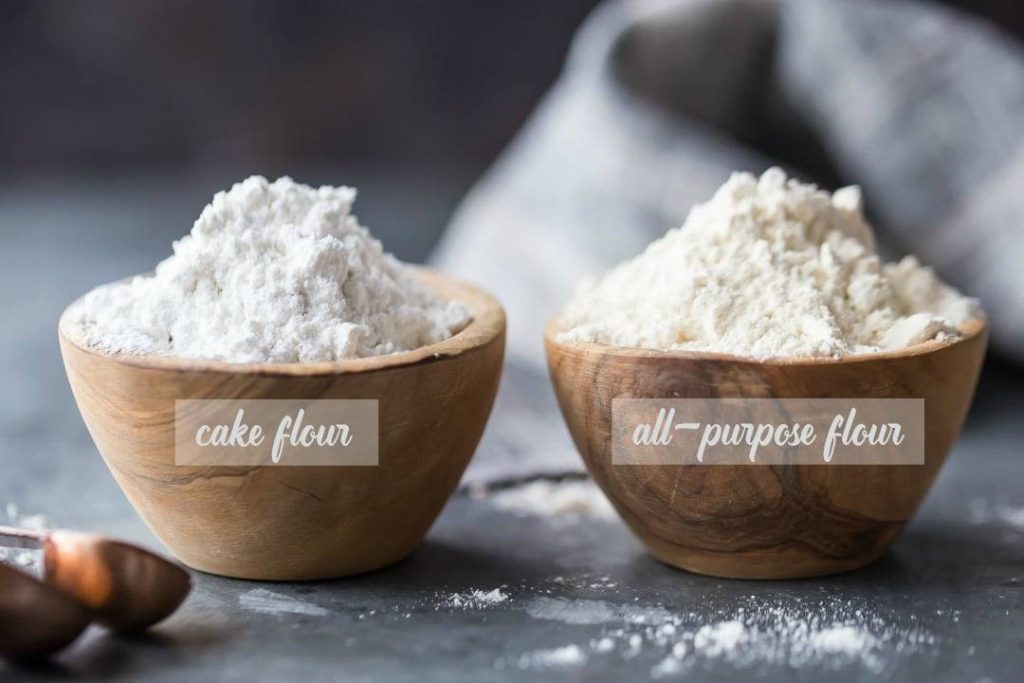
The most significant difference between cake flour and all purpose flour is their protein content. Cake flour contains less protein, which results in less gluten formation during mixing. All purpose flour has more protein, which creates a slightly stronger structure in baked goods.
This difference affects the final texture. Baked goods made with cake flour tend to be softer and lighter, while those made with all purpose flour often have a firmer crumb.
The milling process also separates these flours. Cake flour is ground much more finely, which helps create smoother batters and delicate textures. All purpose flour has a slightly heavier particle size, which can produce more structure in baked products.
Another distinction is the way each flour absorbs liquid. Cake flour’s starch structure allows it to absorb moisture differently, which helps cakes remain tender and evenly textured.
Because of these differences, recipes designed for cakes often specify cake flour to achieve the intended result.
4. When to Use Cake Flour
Cake flour is most suitable for baked goods that require a very light and delicate texture. In these recipes, limiting gluten formation helps produce a soft crumb and prevents the final product from becoming dense.
Layer cakes are a common example where cake flour performs well. The low protein content allows cakes to rise evenly while maintaining a tender interior.
Other desserts that benefit from cake flour include sponge cakes, chiffon cakes, and cupcakes. These baked goods rely on a fine crumb structure that cake flour helps create.
Cake flour is also useful in recipes where appearance matters. The fine milling contributes to smooth batter consistency, which helps cakes bake with a more uniform surface and texture.
5. When to Use All Purpose Flour
All purpose flour is best used in recipes that require a balance between structure and softness. Many baked goods need enough strength to hold ingredients together without becoming overly dense.
For example, cookies often rely on all purpose flour to provide structure so they can maintain shape during baking. Muffins and quick breads also benefit from the moderate protein content because it helps create a stable crumb.
All purpose flour is also commonly used in simple homemade cakes where an extremely delicate texture is not necessary. Its versatility makes it a convenient option when a recipe does not require specialty flour.
Because it works well across many recipes, all purpose flour is often considered a reliable everyday ingredient in baking.
6. Which One Is Healthier
From a nutritional perspective, cake flour and all purpose flour are quite similar. Both are typically refined wheat products that provide carbohydrates as their primary nutrient.
All purpose flour contains slightly more protein due to its higher wheat protein content. However, the difference is relatively small and does not significantly affect the nutritional value of most baked goods.
Calories, fat, and carbohydrate levels are also very similar between the two flours.
For people focused on nutritional improvements, switching to whole grain flours would usually have a larger impact than choosing between cake flour and all purpose flour.
7. Can You Substitute Cake Flour for All Purpose Flour
Substituting cake flour for all purpose flour is possible in some recipes, but the results may change slightly. Because cake flour forms less gluten, baked goods may become softer and more delicate.
When using all purpose flour in place of cake flour, the finished cake may turn out slightly denser or less tender.
Some bakers create a substitute for cake flour by mixing all purpose flour with a small amount of cornstarch. This mixture reduces the effective protein content and helps mimic the softer texture of cake flour.
Although substitution can work in many cases, recipes designed specifically for cake flour usually produce the best results when the intended flour is used.
Conclusion
Cake flour and all purpose flour serve different roles in baking. Cake flour is designed to produce light, delicate desserts with a soft crumb, while all purpose flour provides a balanced structure that works well in many recipes.
The main difference lies in protein content, which affects gluten formation and ultimately determines the texture of baked goods. Cake flour limits gluten development, creating softer cakes, while all purpose flour produces a slightly stronger structure.
Choosing the correct flour helps bakers achieve the desired consistency and appearance in their baked goods. By understanding how cake flour and all purpose flour differ, it becomes easier to select the right ingredient for each recipe and improve overall baking results.