Few dishes capture the fresh and vibrant flavors of the Mediterranean quite like a classic Greek salad. Crisp vegetables, creamy feta cheese, briny Kalamata olives, and a tangy homemade dressing come together in a simple yet unforgettable combination. This salad is refreshing enough for warm summer days but hearty enough to serve alongside grilled meats, seafood, or crusty bread for a complete meal.
One of the best things about this traditional recipe is how quickly it comes together. With no cooking required, it’s perfect for busy weeknights, casual lunches, picnics, or healthy meal prep. Every bite delivers crunchy textures, bright herbs, and rich olive oil flavor that make this dish timeless.
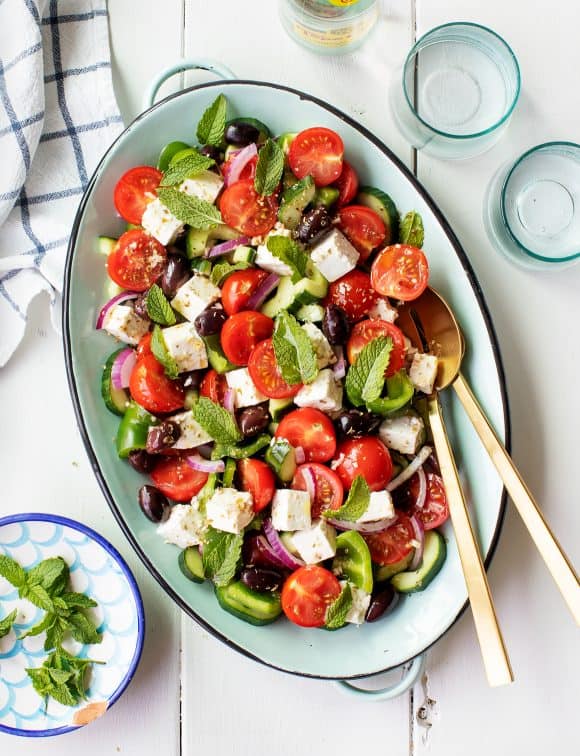
1. Classic Greek Salad Recipe (Yield: 4 Servings)
Ingredients
For the Salad
- 1 English cucumber, cut lengthwise, seeded, and sliced ¼-inch thick
- 1 green bell pepper, chopped into 1-inch pieces
- 2 cups halved cherry tomatoes
- 5 ounces feta cheese, cut into ½-inch cubes
- ⅓ cup thinly sliced red onion
- ⅓ cup pitted Kalamata olives
- ⅓ cup fresh mint leaves (optional but recommended for brightness)
For the Dressing
- ¼ cup extra-virgin olive oil
- 3 tablespoons red wine vinegar
- 1 garlic clove, minced
- ½ teaspoon dried oregano, plus more for sprinkling
- ¼ teaspoon Dijon mustard
- ¼ teaspoon sea salt
- Freshly ground black pepper, to taste
Instructions
Prepare the vegetables by washing and drying them thoroughly. Slice the cucumber into thick half-moons after removing the seeds. Chop the green bell pepper into bite-sized pieces, halve the cherry tomatoes, and thinly slice the red onion.
Place the cucumber, bell pepper, cherry tomatoes, red onion, and Kalamata olives into a large salad bowl. Toss gently to combine the vegetables evenly.
Add the feta cheese cubes to the bowl. Traditional Greek salad often features larger chunks of feta rather than crumbled cheese because the cubes hold their texture better and provide creamy bites throughout the salad.
If using mint leaves, scatter them over the salad. The mint adds freshness and complements the salty feta and olives beautifully.
In a small bowl or jar, prepare the dressing. Combine the extra-virgin olive oil, red wine vinegar, minced garlic, dried oregano, Dijon mustard, sea salt, and black pepper.
Whisk the dressing vigorously until fully emulsified. If using a jar, seal the lid tightly and shake until blended.
Pour the dressing over the salad just before serving. Toss gently to coat all the vegetables without breaking the feta cubes too much.
Sprinkle an additional pinch of dried oregano over the top for extra Mediterranean flavor.
Let the salad sit for about 5 minutes before serving. This short resting time helps the vegetables absorb the dressing while keeping everything crisp and fresh.
Serve immediately as a side dish or pair with grilled chicken, lamb, fish, or warm pita bread for a satisfying meal.
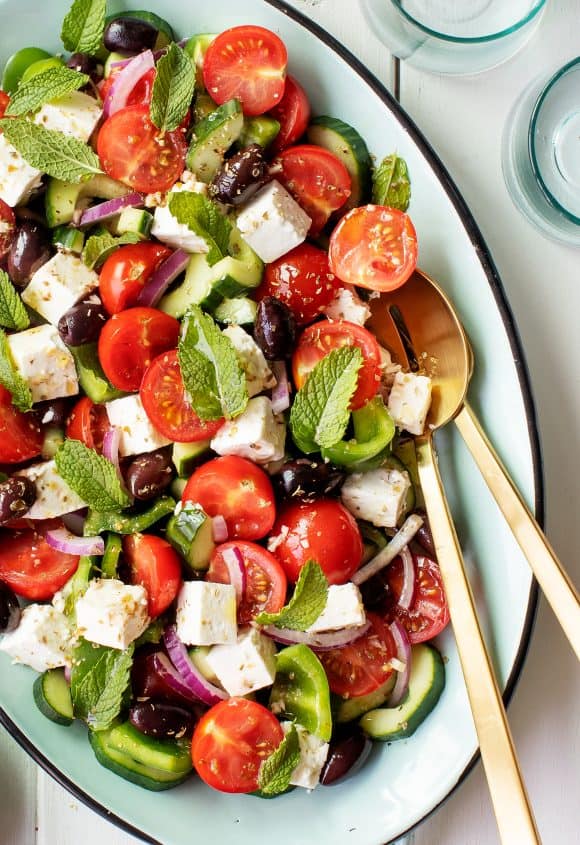
2. Tips for Perfect Classic Greek Salad
Use ripe, flavorful tomatoes for the best taste. Cherry tomatoes are naturally sweet and juicy, making them an excellent choice year-round.
Choose high-quality feta cheese packed in brine instead of pre-crumbled feta. Brined feta has a creamier texture and richer flavor.
Slice vegetables into larger chunks rather than tiny pieces. Greek salad is traditionally rustic and hearty.
Soak red onion slices in cold water for 10 minutes if you prefer a milder onion flavor. Drain well before adding them to the salad.
Use extra-virgin olive oil with a fruity flavor profile. Since the dressing is simple, the quality of the oil makes a noticeable difference.
Avoid overdressing the salad. Start with most of the dressing, toss gently, and add more only if needed.
Add the dressing shortly before serving to maintain crisp vegetables and prevent the tomatoes from becoming watery.
Fresh herbs like mint or parsley add brightness and freshness. Mint especially pairs beautifully with cucumber and feta.
Keep the salad chilled until ready to serve for the freshest texture and flavor.
For a more traditional presentation, place a larger slab of feta on top instead of cutting it into cubes.
3. Frequently Asked Questions
Can I make Greek salad ahead of time?
Yes, you can prepare the vegetables and dressing separately several hours in advance. Store them in the refrigerator and combine everything just before serving for the freshest texture.
What can I use instead of Kalamata olives?
Black olives or Nicoise olives can work as substitutes, though Kalamata olives provide the most authentic flavor with their rich, slightly fruity taste.
Is Greek salad healthy?
Greek salad is naturally rich in vegetables, healthy fats, and calcium from feta cheese. It’s a nutrient-dense option that fits well into many balanced eating plans.
Can I add protein to this salad?
Absolutely. Grilled chicken, shrimp, salmon, or chickpeas turn Greek salad into a more filling main course while keeping the Mediterranean flavor profile intact.
Why is my salad watery after sitting?
Tomatoes and cucumbers naturally release moisture after being salted or dressed. To reduce excess liquid, serve the salad soon after tossing and avoid overmixing.
4. Nutrition Information
| Nutrient | Amount Per Serving |
|---|---|
| Calories | 245 |
| Protein | 6g |
| Carbohydrates | 10g |
| Fat | 20g |
| Saturated Fat | 6g |
| Fiber | 3g |
| Sugar | 6g |
| Sodium | 540mg |
| Cholesterol | 25mg |
Classic Greek salad proves that simple ingredients can create incredible flavor when combined thoughtfully. Crisp vegetables, creamy feta, briny olives, and a bold homemade dressing make this Mediterranean favorite refreshing and satisfying at the same time.
It’s a versatile dish that works beautifully as a side salad, light lunch, or colorful addition to any gathering. Once you try this homemade version, it’s easy to see why Greek salad remains one of the world’s most beloved salads.