Creamy coconut shrimp is a flavorful seafood dish that combines tender shrimp with rich coconut milk, aromatic garlic, Thai red curry paste, and fresh vegetables. The sauce is creamy and lightly spicy, while corn and red bell pepper add sweetness and color.
This Creamy Coconut Shrimp Recipe comes together in one skillet and is simple enough for a weeknight dinner. A little rice vinegar or lime juice adds brightness to the coconut sauce, while fresh basil brings a fragrant finish to every serving.
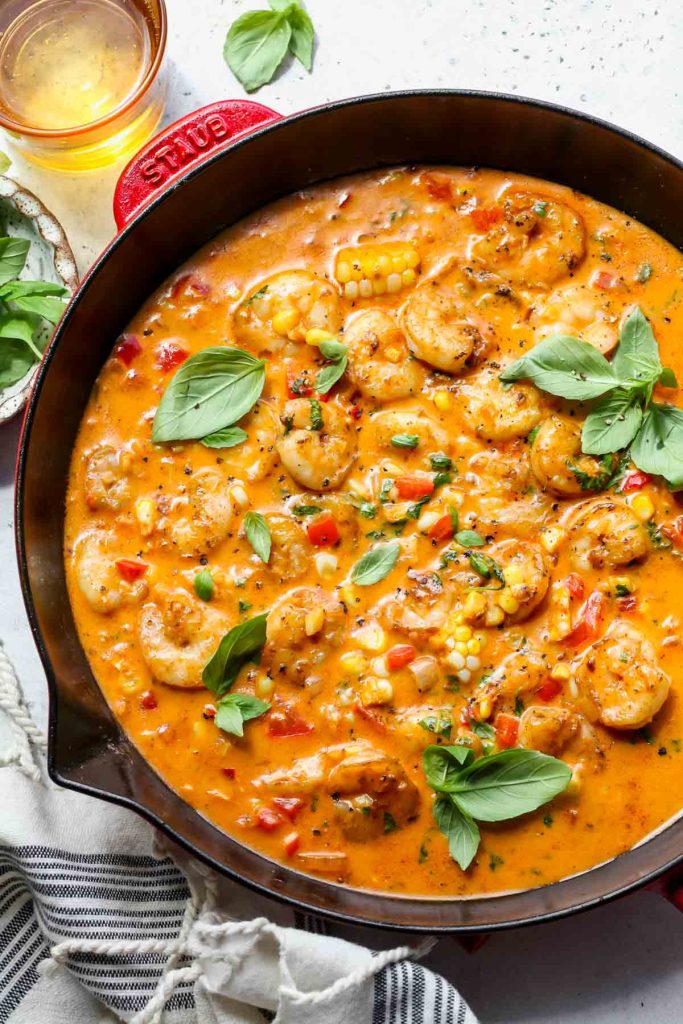
1. Creamy Coconut Shrimp Recipe (Yield: 4 Servings)
Ingredients
- 1 lb peeled and deveined raw shrimp, tails removed
- ¾ teaspoon kosher salt, divided
- ¼ teaspoon black pepper
- 3 tablespoons extra-virgin olive oil, divided
- ¾ cup fresh corn kernels, from 1 cob
- ½ cup diced red bell pepper
- 1 medium shallot, minced
- 2 garlic cloves, minced
- 2 tablespoons Thai red curry paste
- 1 can (13.5 oz) coconut milk
- 1 tablespoon rice vinegar or lime juice
- 3 tablespoons chopped fresh basil leaves, plus more for garnish
Instructions
Begin by preparing the shrimp. If you’re using frozen shrimp, thaw them completely in the refrigerator and drain well. Pat the shrimp dry with paper towels to remove excess moisture.
Season the shrimp with ½ teaspoon of the kosher salt and ¼ teaspoon black pepper. Toss gently so the seasoning coats the shrimp evenly.
Heat 1 tablespoon of olive oil in a large skillet over medium-high heat. Once the oil is hot, add the corn kernels and diced red bell pepper.
Cook the vegetables for about 3 to 4 minutes, stirring occasionally, until the corn begins to develop a little color and the bell pepper starts to soften. Transfer the vegetables to a plate and set aside.
Add the remaining 2 tablespoons of olive oil to the same skillet. Place the seasoned shrimp in the skillet in a single layer.
Cook the shrimp for about 1 to 2 minutes on each side, just until they become opaque and lightly golden. Don’t worry about cooking them completely at this stage because they will finish cooking in the coconut sauce.
Transfer the shrimp to a clean plate and set aside.
Reduce the heat to medium. Add the minced shallot to the same skillet and cook for about 2 minutes, stirring occasionally, until it softens.
Add the minced garlic and cook for about 30 seconds, stirring constantly. The garlic should become fragrant without turning brown.
Add the Thai red curry paste and stir it into the shallot and garlic. Cook for about 1 minute, allowing the curry paste to warm and release its aroma.
Slowly pour the coconut milk into the skillet while stirring. Use a wooden spoon or spatula to scrape any flavorful browned bits from the bottom of the pan.
Add the remaining ¼ teaspoon of kosher salt and stir well. Bring the coconut mixture to a gentle simmer.
Allow the sauce to simmer for about 4 to 5 minutes, stirring occasionally. It should become slightly thicker while remaining smooth and creamy.
Return the cooked corn and red bell pepper to the skillet. Stir them into the coconut sauce and cook for another 1 to 2 minutes.
Add the partially cooked shrimp back to the skillet. Stir gently to coat the shrimp with the sauce.
Continue cooking for about 2 minutes, or until the shrimp are fully cooked and opaque throughout. Avoid simmering the shrimp for too long because they can become firm and rubbery when overcooked.
Remove the skillet from the heat. Stir in the rice vinegar or lime juice to add a bright, slightly tangy flavor to the rich coconut sauce.
Add the chopped fresh basil and gently stir it through the sauce. Taste the dish and adjust the seasoning if needed.
Garnish with additional fresh basil before serving. Spoon the creamy coconut shrimp and vegetables into bowls and serve while warm.
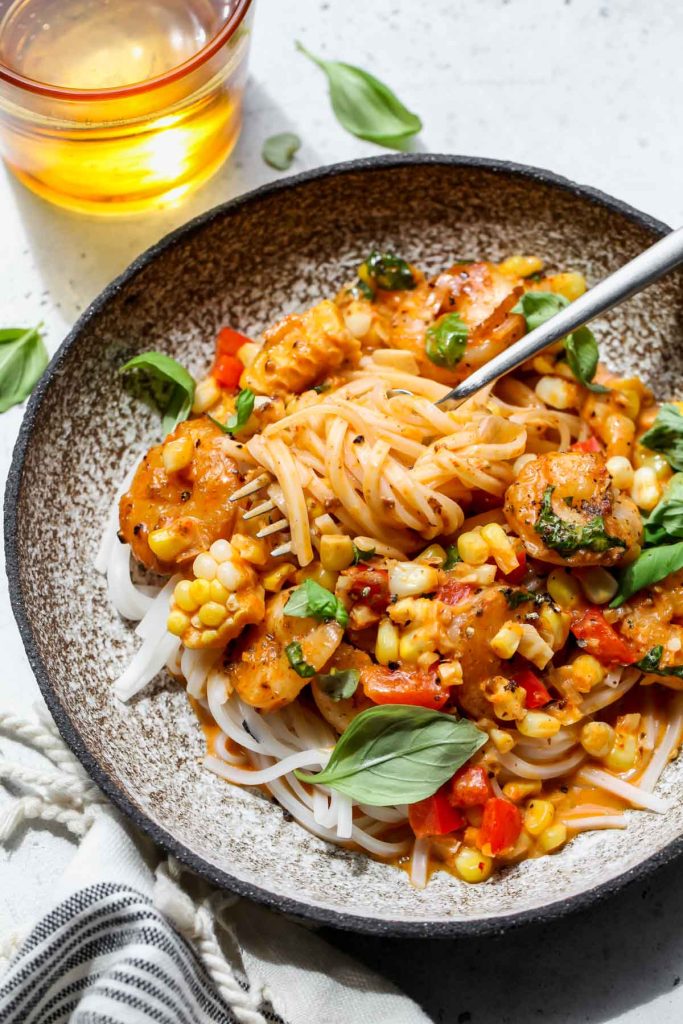
2. Tips for Perfect Creamy Coconut Shrimp
Use shrimp that are similar in size so they cook evenly. Large or medium-large shrimp are especially suitable because they remain tender while simmering briefly in the sauce.
Pat the shrimp dry before seasoning and cooking. Excess moisture can prevent them from browning and can dilute the sauce.
Don’t fully cook the shrimp during the first skillet stage. They only need a quick sear because they will finish cooking in the coconut sauce.
Choose full-fat coconut milk for the richest and creamiest sauce. Shake the can well before opening so the coconut cream and liquid are evenly combined.
Keep the sauce at a gentle simmer rather than a rapid boil. A gentle temperature helps maintain a smooth coconut sauce and prevents the shrimp from becoming overcooked.
Thai red curry paste can vary considerably in heat. If you’re sensitive to spicy food, start with less and add more gradually after tasting the sauce.
Fresh lime juice gives the sauce a bright citrus flavor, while rice vinegar provides a slightly milder tang. Both work well, so choose based on the flavor you prefer.
Add the basil near the end of cooking. This preserves its fresh aroma and prevents it from becoming dull and overcooked.
Don’t overcrowd the shrimp when searing. If necessary, cook them in batches so each piece has enough contact with the hot skillet.
Serve the dish soon after cooking. The coconut sauce is at its best while warm and creamy, and the shrimp have their most tender texture immediately after cooking.
3. Frequently Asked Questions
Can I use frozen shrimp for this recipe?
Yes. Frozen shrimp are convenient and work very well. Thaw them completely in the refrigerator before cooking, then drain and pat them dry.
What type of coconut milk works best?
Full-fat canned coconut milk gives the sauce the richest texture. Light coconut milk can be used, but the finished sauce will generally be thinner and less creamy.
Is Thai red curry paste very spicy?
The heat level depends on the brand and variety. Some curry pastes are mild, while others can be quite spicy. Check the label and adjust the amount according to your preference.
Can I add other vegetables to coconut shrimp?
Yes. Vegetables such as spinach, zucchini, snap peas, mushrooms, or broccoli can work well. Add vegetables according to their cooking time so they remain tender without becoming mushy.
How long can leftover coconut shrimp be stored?
Store leftovers in an airtight container in the refrigerator and use them within 3 to 4 days. Reheat gently on the stovetop or in the microwave until heated through.
4. Nutrition Information
The following nutrition information is approximate and based on one serving of creamy coconut shrimp without rice or other side dishes.
| Nutrient | Amount Per Serving |
|---|---|
| Calories | 430 |
| Protein | 28 g |
| Carbohydrates | 13 g |
| Fat | 32 g |
| Saturated Fat | 19 g |
| Cholesterol | 170 mg |
| Fiber | 2 g |
| Sugar | 5 g |
| Sodium | 850 mg |
| Potassium | 500 mg |
| Calcium | 75 mg |
| Iron | 4 mg |
Creamy coconut shrimp brings together tender seafood, rich coconut milk, fragrant curry paste, and colorful vegetables in one comforting skillet. The combination of creamy, savory, spicy, and slightly tangy flavors makes this dish especially satisfying.
This Creamy Coconut Shrimp Recipe is easy enough for a weeknight dinner while still feeling special. Keep the shrimp cooking time short, let the coconut sauce gently simmer, and finish with fresh basil and lime juice or rice vinegar for a flavorful homemade meal.