Mexican Birria Sauce is a rich and flavorful sauce that brings the deep, savory character of traditional birria into a homemade recipe. Made with dried chiles, tomatoes, garlic, warm spices, and vinegar, it has a bold flavor that works beautifully with slow-cooked meats and other Mexican-inspired dishes.
This recipe keeps the preparation approachable while building plenty of depth from a combination of toasted chiles, fresh vegetables, and aromatic seasonings. Once blended, the sauce has a smooth consistency that is easy to use for birria, tacos, quesadillas, or other dishes that benefit from a flavorful sauce.
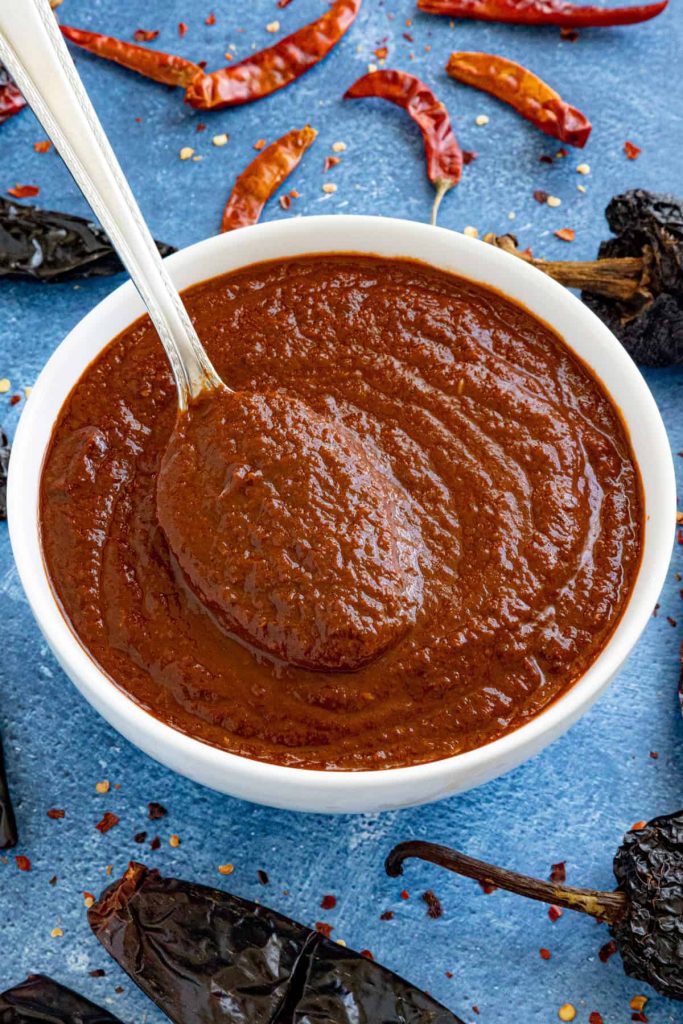
1. Mexican Birria Sauce Recipe (Yield: 2 Cups)
Ingredients
- 5 ancho peppers, stems and seeds removed
- 5 guajillo peppers, stems and seeds removed
- 2–3 chiles de arbol, optional, for a spicier sauce
- 1 tablespoon cooking oil
- 1 large white onion, chopped
- 3 large tomatoes, chopped
- 5 cloves garlic, chopped
- 1 tablespoon dried Mexican oregano
- 1 tablespoon sea salt, or to taste
- 1 teaspoon cinnamon
- 1 teaspoon cumin
- 1 teaspoon ground ginger
- 1 teaspoon black pepper
- ½ cup apple cider vinegar
- 1 cup beef stock, or more as needed
Instructions
Start by preparing the dried chiles. Remove the stems and seeds from the ancho and guajillo peppers. If you are using chiles de arbol, remove their stems as well. Leaving some seeds in the chiles de arbol will create more heat, so you can adjust them according to your preference.
Place a large skillet over medium heat and add the cooking oil. Add the chopped onion and cook for about 4 to 5 minutes, stirring occasionally, until it begins to soften.
Add the chopped tomatoes and garlic to the skillet. Cook for another 4 to 5 minutes, stirring occasionally, until the tomatoes soften and the garlic becomes fragrant. Avoid letting the garlic become deeply browned because it can develop a bitter taste.
Add the prepared ancho peppers, guajillo peppers, and optional chiles de arbol to the skillet. Toast them gently with the vegetables for about 30 seconds to 1 minute, turning them as needed. Keep the heat moderate because dried chiles can become bitter if they are burned.
Pour the beef stock into the skillet. Add the Mexican oregano, cinnamon, cumin, ground ginger, black pepper, and sea salt. Stir everything together and bring the mixture to a gentle simmer.
Reduce the heat to low and let the mixture simmer for about 10 minutes. The dried chiles should soften considerably, while the tomatoes, onion, and garlic should become tender.
Remove the skillet from the heat and allow the mixture to cool slightly. Carefully transfer the softened chiles, vegetables, and cooking liquid to a blender. Depending on the size of your blender, you may need to work in batches.
Add the apple cider vinegar to the blender. Blend the mixture on high until the sauce becomes as smooth as possible. Pause occasionally to scrape down the sides if necessary.
Check the consistency of the sauce. If it is too thick to blend smoothly, add a little more beef stock, one or two tablespoons at a time, until it reaches a smooth, pourable consistency. Avoid adding too much liquid at once because the finished sauce should remain rich rather than watery.
For an especially smooth birria sauce, pour the blended mixture through a fine-mesh strainer into a clean bowl. Press the sauce through the strainer with the back of a spoon to separate the chile skins and any remaining seeds or coarse pieces.
Taste the sauce after straining and adjust the seasoning if needed. Add a little more salt for savory depth, vinegar for brightness, or additional beef stock if the sauce needs to be loosened.
If you want a deeper, more developed flavor, return the strained sauce to a saucepan and simmer it over low heat for another 5 to 10 minutes. Stir occasionally and add a small amount of beef stock if it becomes too thick.
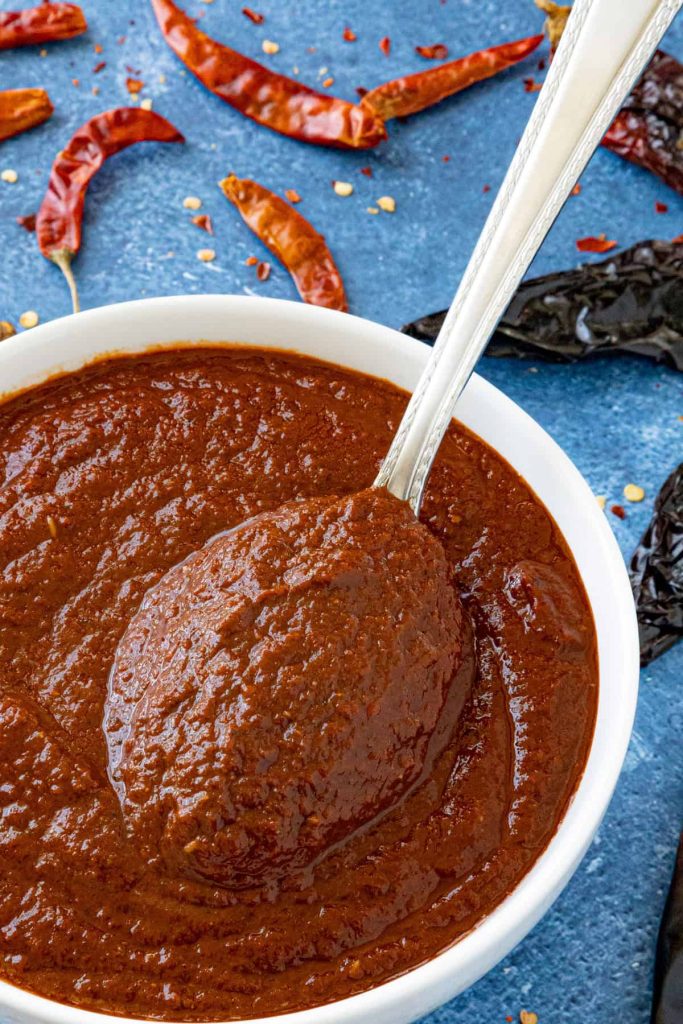
Remove the sauce from the heat and let it cool slightly before using. The finished Mexican Birria Sauce should be smooth, richly colored, and thick enough to coat the back of a spoon.
2. Tips for Perfect Mexican Birria Sauce
Toast the dried chiles carefully. Dried chiles benefit from brief toasting, but they can burn quickly. Keep the heat moderate and move them frequently so they become fragrant without turning bitter.
Use a combination of chiles. Ancho and guajillo peppers provide a balanced base with different levels of sweetness and depth. Chiles de arbol can be added when you want additional heat.
Control the spice level. The chiles de arbol are optional, so leave them out for a milder sauce. For more heat, increase them gradually rather than adding a large amount at once.
Do not burn the garlic. Garlic develops a bitter flavor when heavily browned. Cook it only until fragrant and tender before blending.
Use enough liquid for blending. The beef stock helps soften the dried chiles and allows the ingredients to blend smoothly. Add additional stock gradually if the blender struggles.
Strain the sauce for a smooth texture. A fine-mesh strainer removes tough chile skins and small pieces of seeds, creating a more polished sauce.
Taste after blending. The flavor can change once all the ingredients are combined. Always taste the finished sauce and make small seasoning adjustments at the end.
Simmer the finished sauce if desired. A short final simmer can help the flavors come together and slightly thicken the sauce. Keep the heat low to prevent splattering.
3. Frequently Asked Questions
What is birria sauce made of?
Birria sauce is typically built around dried chiles, aromatics, spices, and an acidic ingredient. Recipes vary by region and family tradition, but chile-based sauces are an important part of the characteristic flavor and color associated with birria.
Is birria sauce the same as consommé?
Not exactly. Birria consommé is the flavorful broth traditionally associated with cooked birria, while birria sauce is a thicker chile-based mixture used to season or accompany the meat. Depending on the recipe, the sauce can also become part of the cooking liquid.
Can I make birria sauce without beef stock?
Yes. You can use chicken stock, vegetable stock, or water if beef stock is unavailable. Beef stock gives the sauce a particularly savory character, especially when the sauce is being prepared for beef birria.
Can I use the sauce for chicken or other meats?
Yes. The sauce is versatile and can be used with chicken, pork, lamb, or beef. The final flavor will vary depending on the meat and cooking method, but the chile and spice mixture works well with several proteins.
How can I use leftover birria sauce?
Leftover sauce can be used in tacos, enchiladas, quesadillas, rice dishes, or other recipes that benefit from a rich chile-based sauce. It can also be added to soups or stews in small amounts to provide additional depth and seasoning.
4. Nutrition Information
The following nutrition information is an approximate estimate per serving based on the listed ingredients and a yield of 2 cups, divided into eight servings. Actual values can vary depending on the exact size of the vegetables and peppers, the amount of oil used, and how much beef stock is added.
| Nutrient | Amount per Serving |
|---|---|
| Calories | 65 kcal |
| Protein | 2 g |
| Total Fat | 2 g |
| Saturated Fat | 0.3 g |
| Carbohydrates | 11 g |
| Fiber | 3 g |
| Sugars | 5 g |
| Sodium | 790 mg |
| Calcium | 25 mg |
| Iron | 1 mg |
Mexican Birria Sauce is a flavorful homemade recipe that brings together dried chiles, fresh vegetables, aromatic spices, and a touch of vinegar in one versatile sauce. The preparation takes a few steps, but each one helps build the rich character that makes birria-inspired dishes so satisfying.
Once prepared, the sauce can become a useful addition to many homemade meals. Its bold flavor and smooth texture make it a practical recipe to keep on hand whenever you want to add a traditional Mexican-inspired touch to your cooking.