Ciabatta is a classic Italian bread known for its crisp crust, chewy texture, and airy interior filled with beautiful open holes. Its simple ingredients and rustic appearance have made it a favorite for sandwiches, soups, and everyday baking. While it may look like a bakery specialty, homemade ciabatta is easier to make than many people think.
This Homemade Ciabatta Bread Recipe uses a simple sponge to develop flavor before mixing the final dough. With a little patience and a few easy techniques, you’ll be rewarded with light, flavorful rolls that have a crisp crust and a wonderfully soft interior.
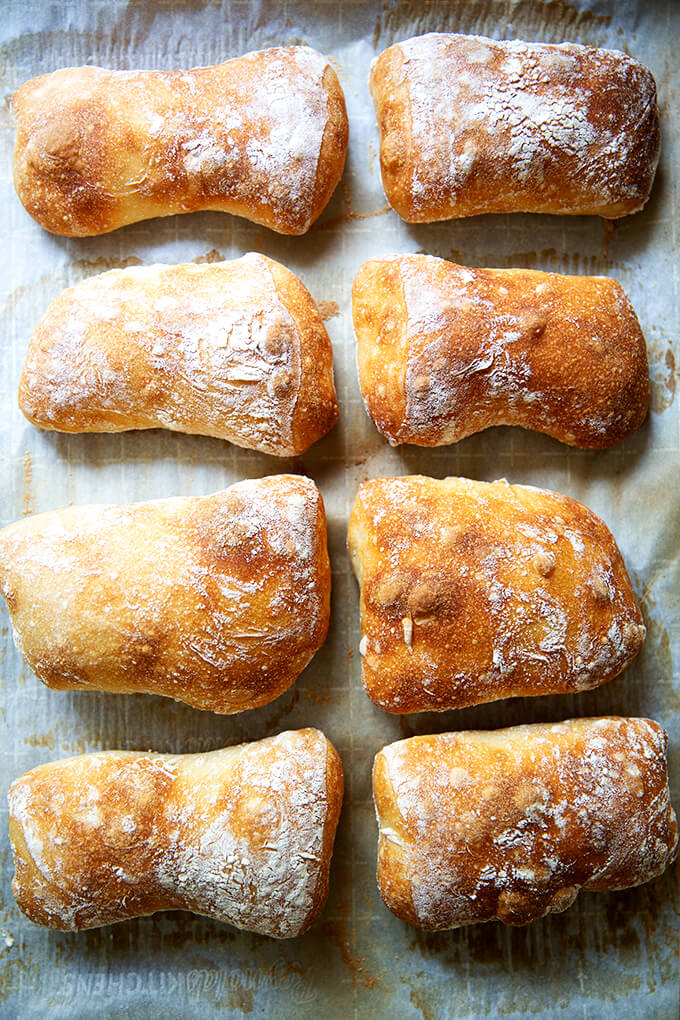
1. Homemade Ciabatta Bread Recipe (Yield: 8 Rolls)
Ingredients
For the Sponge
- 50 grams (about 1/3 cup) all-purpose flour or bread flour
- 2 grams (1/2 teaspoon) instant yeast
- 50 grams (about 1/4 cup) lukewarm or room-temperature water
For the Ciabatta Dough
- 360 grams (about 1½ cups) lukewarm or room-temperature water
- 12 grams (about 2 teaspoons) kosher salt or sea salt
- 450 grams (about 3½ cups) bread flour
Instructions
Begin by preparing the sponge. In a medium bowl, combine the flour, instant yeast, and lukewarm water. Stir until a thick, smooth paste forms and no dry flour remains. Cover the bowl loosely with plastic wrap or a clean kitchen towel and let it rest at room temperature for about 45 to 60 minutes. The sponge is ready when it has expanded and is bubbly on the surface.
Transfer the sponge to a large mixing bowl. Add the lukewarm water and stir until the sponge loosens and begins to dissolve into the liquid.
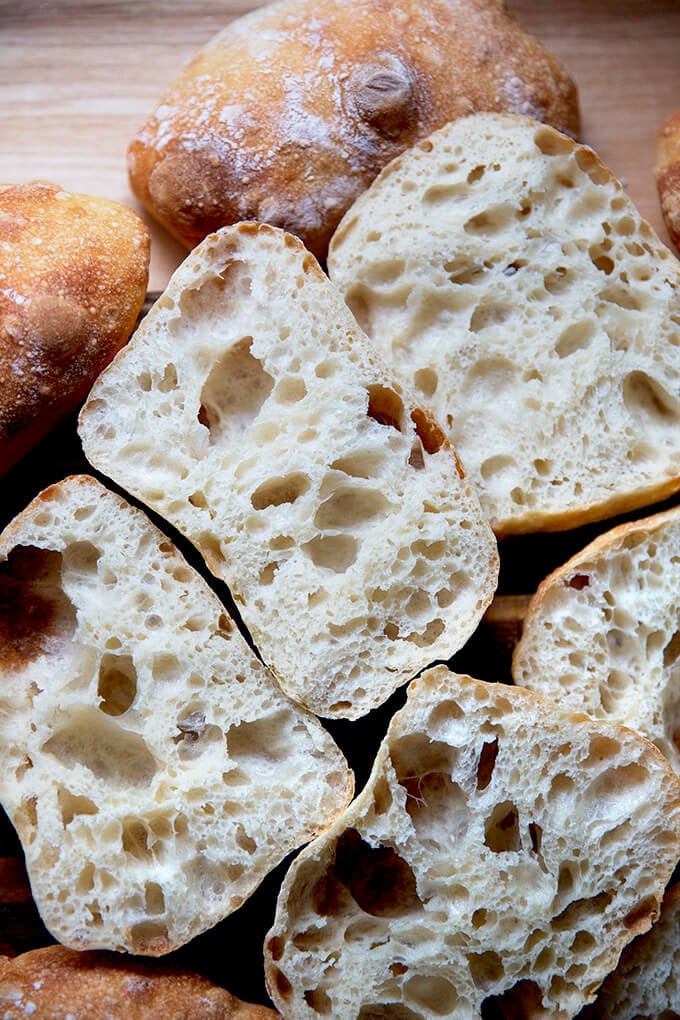
Add the bread flour and salt to the bowl. Mix with a sturdy spoon, dough whisk, or stand mixer fitted with a dough hook until all of the flour is fully hydrated. The dough will be very wet, sticky, and much softer than traditional bread dough. This high hydration is what creates ciabatta’s signature open crumb.
Cover the bowl and let the dough rest for 20 minutes. This short resting period, often called an autolyse, allows the flour to absorb the water and begins gluten development naturally.
After resting, perform the first series of stretch-and-folds. Wet your hands to prevent sticking, gently lift one side of the dough, stretch it upward, and fold it over the center. Rotate the bowl and repeat until you’ve completed four folds. Cover and let the dough rest for another 30 minutes.
Repeat the stretch-and-fold process three more times, allowing 30 minutes of rest between each round. With each set of folds, the dough will become smoother, stronger, and more elastic while still remaining soft and sticky.
After the final fold, cover the bowl and allow the dough to rise for about 1 to 1½ hours, or until it has nearly doubled in size and looks light and airy.
Generously dust your work surface with flour. Carefully turn the dough out of the bowl, taking care not to deflate the air bubbles. Sprinkle a little flour over the top of the dough.
Using a bench scraper or sharp knife, gently divide the dough into eight equal portions. Shape each portion into a rough rectangle by handling it as little as possible to preserve the airy structure.
Transfer the dough pieces onto a parchment-lined baking sheet, leaving space between each roll. Cover loosely with a clean towel and let them rise for about 45 minutes.
While the rolls are proofing, preheat the oven to 450°F (232°C). Place an empty metal baking pan on the bottom rack of the oven. Just before baking, pour one cup of hot water into the pan to create steam. The steam helps develop the crisp, golden crust that ciabatta is known for.
Bake the rolls for 18 to 22 minutes, or until they are deep golden brown and sound hollow when tapped on the bottom. If using an instant-read thermometer, the internal temperature should reach about 205°F to 210°F (96°C to 99°C).
Remove the rolls from the oven and transfer them to a wire rack. Allow them to cool completely before slicing. Cooling allows the crumb to finish setting and preserves the bread’s light, airy texture.
2. Tips for Perfect Homemade Ciabatta Bread Recipe
Use a kitchen scale whenever possible. Measuring ingredients by weight provides more consistent results, especially with high-hydration doughs.
Resist the urge to add extra flour. The dough should remain very soft and sticky, which helps create the large air pockets that make ciabatta unique.
Wet hands work much better than floured hands during the stretch-and-fold process because they prevent sticking without drying out the dough.
Handle the risen dough gently when dividing and shaping the rolls. Preserving the trapped air creates a lighter crumb after baking.
Creating steam during the first part of baking encourages better oven spring and produces a crisp, thin crust.
Allow the bread to cool fully before cutting into it. Slicing too soon can compress the crumb and make the interior gummy.
3. Frequently Asked Questions
Why is ciabatta dough so sticky?
Ciabatta uses a high percentage of water compared to most bread recipes. This wet dough creates the open, airy crumb that gives the bread its signature texture.
Can I make the dough the day before?
Yes. After the final stretch-and-fold, the dough can be refrigerated overnight. Slow fermentation develops even more flavor before baking the next day.
Can I use all-purpose flour instead of bread flour?
Yes, although bread flour is recommended because its higher protein content develops stronger gluten, resulting in better structure and chewier texture.
How should I store homemade ciabatta?
Store cooled rolls in a paper bag or bread box for up to two days. For longer storage, freeze them in airtight freezer bags for up to three months.
Why doesn’t my ciabatta have large holes inside?
Small air pockets are usually caused by overhandling the dough, adding too much flour, or insufficient fermentation. Gentle handling and proper rising time help produce a more open crumb.
4. Nutrition Information
The following nutrition values are approximate and based on one roll.
| Nutrient | Amount Per Serving |
|---|---|
| Calories | 220 |
| Protein | 7 g |
| Carbohydrates | 44 g |
| Fat | 1 g |
| Saturated Fat | 0.2 g |
| Cholesterol | 0 mg |
| Fiber | 2 g |
| Sugar | 0 g |
| Sodium | 350 mg |
| Potassium | 70 mg |
| Calcium | 8 mg |
| Iron | 2.4 mg |
Homemade ciabatta bread is a rewarding baking project that produces rustic rolls with an irresistible combination of a crisp crust and a soft, airy interior. Although the dough is wetter than many traditional bread recipes, the simple stretch-and-fold technique makes it approachable for home bakers of all skill levels.
Once you make this Homemade Ciabatta Bread Recipe, you’ll discover how satisfying it is to bake fresh bread from scratch. The flavorful rolls are perfect for sandwiches, dipping into soups, or simply enjoying fresh from the oven, making this recipe one you’ll want to bake again and again.