Oven Roasted Turkey Legs are a simple way to prepare a satisfying homemade meal without needing to cook an entire turkey. This recipe uses a straightforward roasting method that starts with a higher oven temperature and then continues cooking the turkey legs covered, helping them cook evenly.
The instructions below also account for different turkey leg sizes, since larger pieces need additional roasting time. With a few basic preparation steps and an accurate temperature check, you can make tender turkey legs at home with a reliable result.
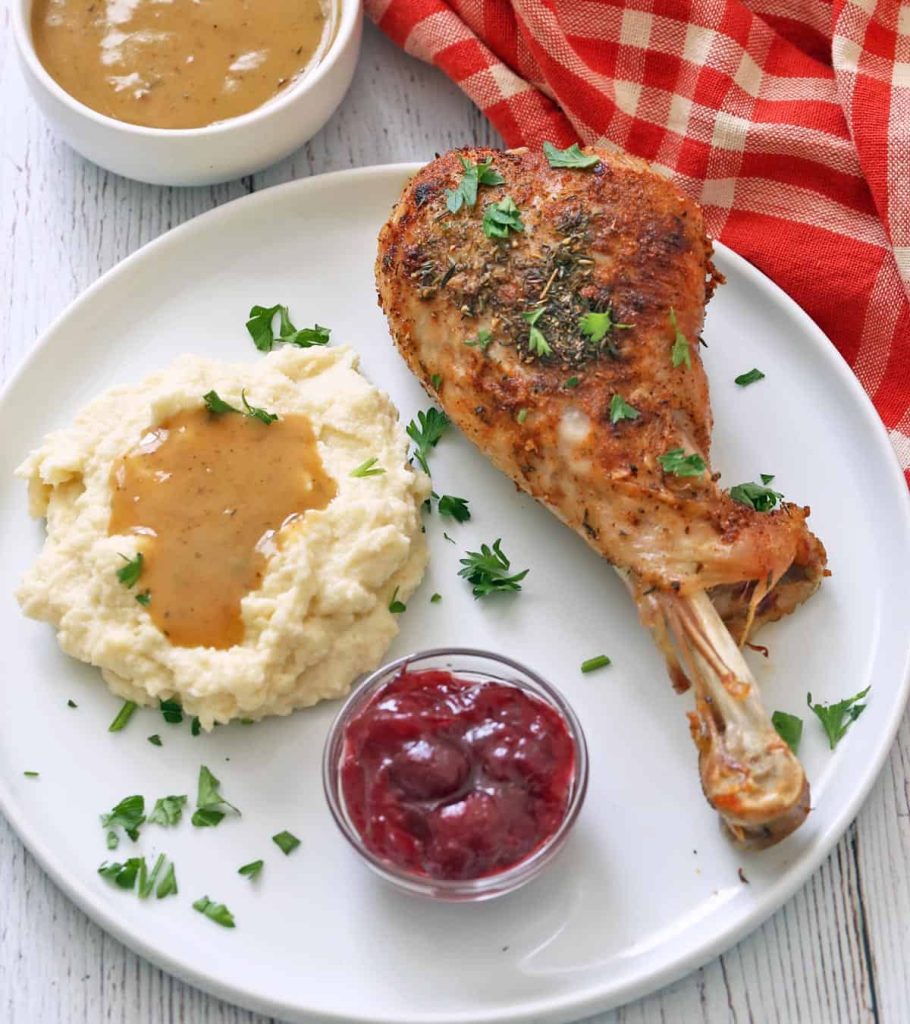
1. Oven Roasted Turkey Legs (Yield: 6 Servings)
Ingredients
- 6 turkey legs, about 10 ounces each
- ½ cup butter, melted
- 1 teaspoon sea salt
- 1 teaspoon black pepper
- 1 teaspoon garlic powder
- 1 teaspoon dried thyme
- 1 teaspoon paprika
Instructions
Preheat the oven to 450°F.
Pat the turkey legs dry with paper towels. Drying the skin helps the seasoning adhere better and encourages the outside to brown during roasting.
Place the turkey legs in the prepared baking dish, leaving a little space between each piece. Brush the melted butter evenly over all sides of the turkey legs.
In a small bowl, combine the sea salt, black pepper, garlic powder, dried thyme, and paprika. Sprinkle the seasoning mixture evenly over the turkey legs, turning them as needed so the seasoning reaches all sides.
Place the uncovered turkey legs in the preheated oven and roast for 15 minutes. This initial higher-temperature roasting helps start browning the outside of the turkey.
After 15 minutes, reduce the oven temperature to 350°F. Cover the baking dish tightly with aluminum foil and continue roasting.
For turkey legs that weigh about 10 ounces each, roast covered for approximately 30 minutes after the initial 15 minutes. Turkey legs weighing 12–14 ounces will generally need about 40 minutes, while 16-ounce turkey legs may require 45–50 minutes.
Begin checking the turkey toward the end of the recommended cooking time. Insert an instant-read thermometer into the thickest part of the meat without touching the bone. The turkey is ready when it reaches at least 165°F. For a more tender texture, turkey legs can be cooked to a higher internal temperature, as dark meat generally becomes more tender with longer cooking.
If you want the skin to become more browned and crisp, remove the foil during the final several minutes of cooking. Keep a close eye on the turkey so the skin does not become too dark.
Remove the turkey legs from the oven once they are fully cooked. Let them rest for about 10 minutes before serving. This short resting period allows the juices to settle and makes the turkey easier to handle.
Serve the roasted turkey legs warm.
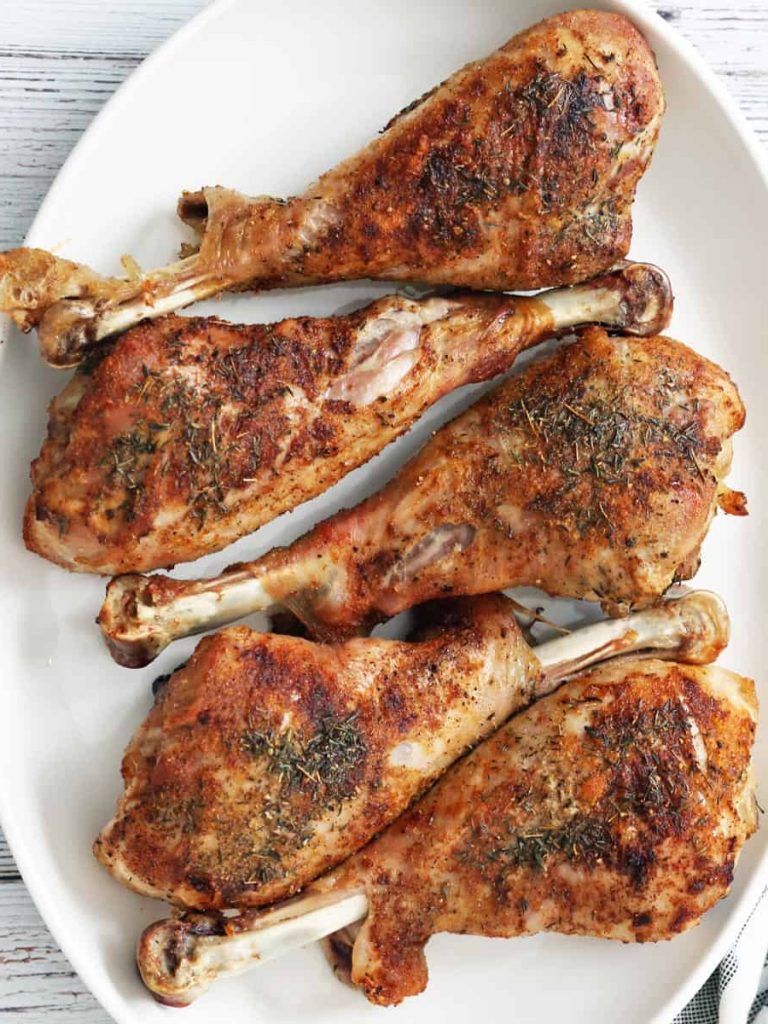
2. Tips for Perfect Oven Roasted Turkey Legs
Pat the turkey dry first. Removing excess moisture from the skin helps the butter and seasonings adhere properly and promotes better browning.
Use an instant-read thermometer. Turkey legs can vary considerably in size, so internal temperature is more reliable than cooking time alone.
Keep the legs covered during the main roasting period. Covering the turkey helps retain moisture while the meat continues cooking.
Adjust the cooking time by weight. A 10-ounce turkey leg needs less time than a 16-ounce piece, so use the size guidelines as a starting point rather than relying on one fixed cooking time.
Uncover for more browning. If you prefer more browned skin, remove the foil toward the end of cooking and allow the turkey to finish uncovered.
Let the turkey rest before serving. A short resting period helps the meat retain more of its juices when you cut into it.
3. Frequently Asked Questions
Can I use frozen turkey legs for this recipe?
It is best to thaw the turkey legs completely in the refrigerator before roasting. Fully thawed turkey cooks more evenly and makes it easier to season the meat properly.
Can I prepare the turkey legs the night before?
Yes. You can season the turkey legs and keep them covered in the refrigerator until you are ready to roast them. Keeping them refrigerated until cooking helps make preparation easier the next day.
Why are turkey legs sometimes tougher than turkey breast?
Turkey legs are dark meat and contain more connective tissue than turkey breast. They benefit from thorough cooking and often become more tender when cooked beyond the minimum safe internal temperature.
Can I use a different oil instead of avocado oil spray?
Yes. The spray is mainly used to lightly coat the baking dish. A small amount of another neutral cooking oil can be used instead.
How should I store leftover roasted turkey legs?
Allow the leftovers to cool appropriately, then place them in an airtight container and refrigerate them. For the best quality, use refrigerated leftovers within a few days and reheat them thoroughly before serving.
4. Nutrition Information
The following nutrition information is an estimate based on the ingredients listed and divided into 6 servings. Actual values can vary depending on the size of the turkey legs, how much skin is eaten, and the amount of butter retained during cooking.
| Nutrient | Amount per Serving |
|---|---|
| Calories | 480 kcal |
| Protein | 48 g |
| Carbohydrates | 1 g |
| Fat | 31 g |
| Saturated Fat | 15 g |
| Cholesterol | 190 mg |
| Sodium | 500 mg |
| Fiber | 0 g |
| Sugar | 0 g |
| Calcium | 30 mg |
| Iron | 3 mg |
Oven Roasted Turkey Legs are a practical recipe for making a satisfying homemade meal without complicated preparation. The cooking process is straightforward, and adjusting the roasting time according to the size of the turkey legs helps you achieve a more reliable result.
The most important step is checking the internal temperature rather than relying only on the clock. Once the turkey is fully cooked, allowing it to rest briefly before serving completes this simple oven-roasting method.