Hollandaise sauce is a classic favorite that adds a rich, elegant touch to many dishes. It’s a wonderful choice for breakfast, brunch, or dinner, pairing beautifully with eggs, vegetables, seafood, and more. Despite its reputation, making hollandaise at home is much simpler than many people expect.
This easy, no-fail hollandaise sauce recipe comes together in just a few minutes using basic ingredients and a blender. The result is a smooth, creamy sauce that’s perfect for serving fresh and adding a restaurant-quality finish to your favorite meals.
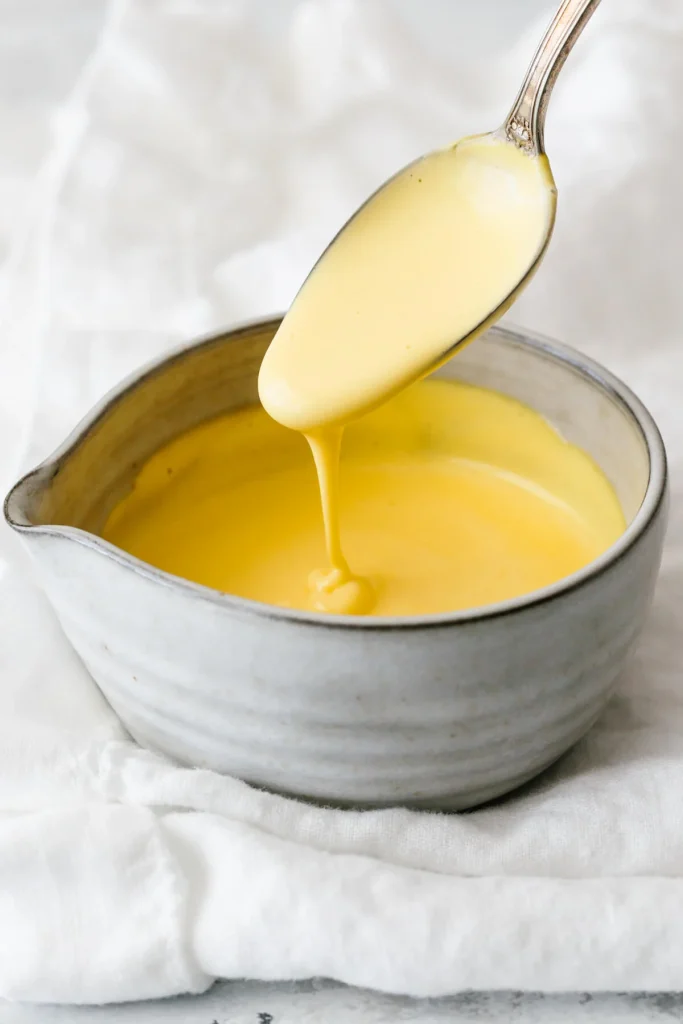
1. Hollandaise Sauce Recipe (Yield: 4 Servings)
Ingredients
- 3 egg yolks
- 1 tablespoon lemon juice, plus more to taste
- 1 teaspoon Dijon mustard
- 1/4 teaspoon salt
- Pinch of cayenne pepper
- 1/2 cup unsalted butter or ghee, melted and very hot (add a little more if a thinner consistency is desired)
Instructions
Melt the butter in a small saucepan over medium heat until completely melted and hot. If using ghee, warm it until it is hot but not smoking. Keep the butter warm while you prepare the remaining ingredients.
Place the egg yolks, lemon juice, Dijon mustard, salt, and cayenne pepper into a blender. Blend on medium speed for about 20 to 30 seconds until the mixture becomes smooth, slightly lighter in color, and well combined.
With the blender running on low speed, slowly drizzle the hot melted butter into the egg yolk mixture in a thin, steady stream. Pouring the butter gradually is important because it allows the sauce to emulsify into a smooth, creamy consistency.
Continue blending until all of the butter has been incorporated. The sauce should become thick, silky, and glossy. If it seems thicker than you prefer, blend in an additional tablespoon or two of hot melted butter until it reaches your desired consistency.
Taste the sauce and adjust the seasoning if needed. Add a little more lemon juice for extra brightness, a pinch more salt for balance, or an additional dash of cayenne pepper if you’d like a touch more heat.
Transfer the hollandaise sauce to a small serving bowl or gravy boat. Serve immediately while it is warm over Eggs Benedict, poached eggs, steamed asparagus, roasted vegetables, grilled salmon, crab cakes, or other favorite dishes.
If the sauce begins to thicken before serving, stir in a teaspoon of warm water until it loosens to the desired consistency. Hollandaise is best enjoyed fresh, as the texture is at its smoothest immediately after preparation.
If you have leftovers, refrigerate them in an airtight container for up to one day. Reheat the sauce very gently over warm water or in short microwave intervals at low power, stirring frequently to help maintain its creamy texture.
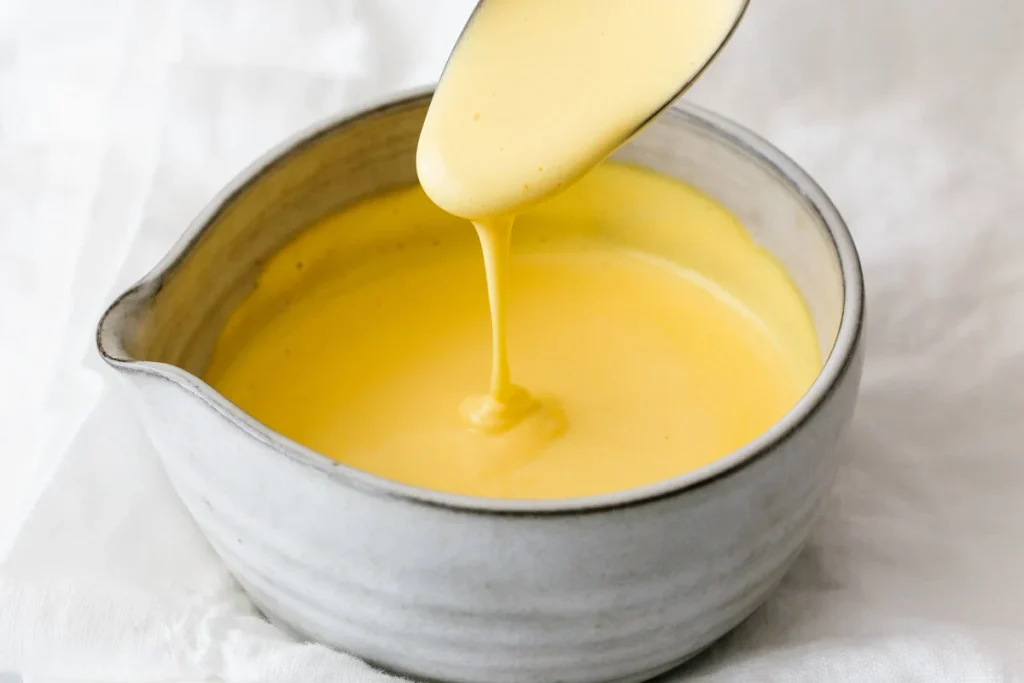
2. Tips for Perfect Homemade Hollandaise Sauce
Use fresh, good-quality eggs for the richest flavor and smoothest texture.
Heat the butter until it is hot but not browned. Butter that is too cool may not emulsify properly, while browned butter will create a different flavor profile.
Pour the butter slowly into the blender. A steady, thin stream creates a stable emulsion and helps produce a silky sauce.
Serve hollandaise shortly after making it for the best texture and appearance.
If the sauce becomes too thick while sitting, stir in small amounts of warm water until it reaches the consistency you like.
Warm your serving dish before adding the sauce. This helps keep the hollandaise warm a little longer at the table.
Prepare all of your meal components before making the sauce so it can be served immediately after blending.
3. Frequently Asked Questions
Can I make hollandaise sauce without a blender?
Yes. You can whisk it by hand over gently simmering water using a double boiler. It requires a bit more attention, but the finished sauce can be just as smooth and creamy.
Can I use bottled lemon juice?
Fresh lemon juice is recommended because it provides a brighter, fresher flavor. Bottled lemon juice can be used in a pinch, but the taste may not be quite as vibrant.
Can I freeze hollandaise sauce?
Freezing is not recommended. The emulsion often separates during thawing, resulting in a grainy or broken texture.
What dishes go well with hollandaise sauce?
Hollandaise is delicious with Eggs Benedict, poached eggs, asparagus, broccoli, green beans, grilled salmon, crab cakes, roasted potatoes, and many other vegetables or seafood dishes.
Why did my hollandaise sauce separate?
The emulsion can separate if the butter is added too quickly, the ingredients are too cold, or the sauce becomes overheated after it’s prepared.
4. Nutrition Information
| Nutrient | Amount Per Serving |
|---|---|
| Calories | 265 |
| Protein | 3 g |
| Carbohydrates | 1 g |
| Fat | 28 g |
| Saturated Fat | 17 g |
| Cholesterol | 195 mg |
| Sodium | 220 mg |
| Fiber | 0 g |
| Sugar | 0 g |
| Calcium | 20 mg |
| Iron | 0.5 mg |
Making hollandaise sauce at home is easier than it looks, and this no-fail recipe delivers smooth, creamy results in just minutes. It’s a versatile sauce that instantly elevates everyday meals and special occasion dishes alike.
Keep this recipe on hand whenever you want to add a rich finishing touch to breakfast, brunch, or dinner. Once you’ve mastered this simple technique, homemade hollandaise sauce is sure to become one of your favorite kitchen staples.