Sweeteners play an important role in cooking, baking, and everyday diets. Two of the most commonly used natural sweeteners are honey and sugar. Both provide sweetness and energy, yet they differ in composition, flavor, and how they behave in recipes.
Many people also wonder which sweetener is healthier or whether honey can replace sugar in recipes. This guide explains what honey and sugar are, how they differ, when to use each one, and whether they can be substituted for one another.
1. What Is Honey
Honey is a natural sweet substance produced by bees using nectar collected from flowers. Inside the hive, bees break down the sugars in nectar using enzymes and store the liquid in honeycomb cells. Over time, moisture evaporates and the nectar thickens into honey.
Honey is primarily made up of two simple sugars: fructose and glucose. It also contains small amounts of water, vitamins, minerals, and antioxidants. These trace nutrients come from the plants that provided the nectar.
The flavor and color of honey can vary depending on the type of flowers the bees visited. Some honeys are light and mild, while others have darker colors and stronger flavors.
Because honey contains natural acids and enzymes, it behaves differently from refined sugar in recipes. It can add moisture to baked goods and contributes its own distinctive taste.
Honey has been used for thousands of years not only as a sweetener but also as a natural ingredient in traditional medicine and food preservation.
2. What Is Sugar
Sugar usually refers to granulated white sugar, also known as table sugar. It is produced by refining sugar extracted from plants such as sugar cane or sugar beets.
The primary component of sugar is sucrose, which is a compound made of glucose and fructose bonded together. During digestion, the body breaks sucrose into these two simple sugars to be used for energy.
Unlike honey, refined sugar contains very little water and almost no vitamins or minerals. It is valued mainly for its pure sweetness and its ability to affect texture in cooking and baking.
Sugar crystals play an important role in many recipes. For example, sugar helps create structure in baked goods, contributes to browning during cooking, and stabilizes certain mixtures like whipped egg whites.
Because it has a neutral flavor, sugar does not significantly change the taste of most recipes beyond adding sweetness.
3. Key Differences Between Honey and Sugar
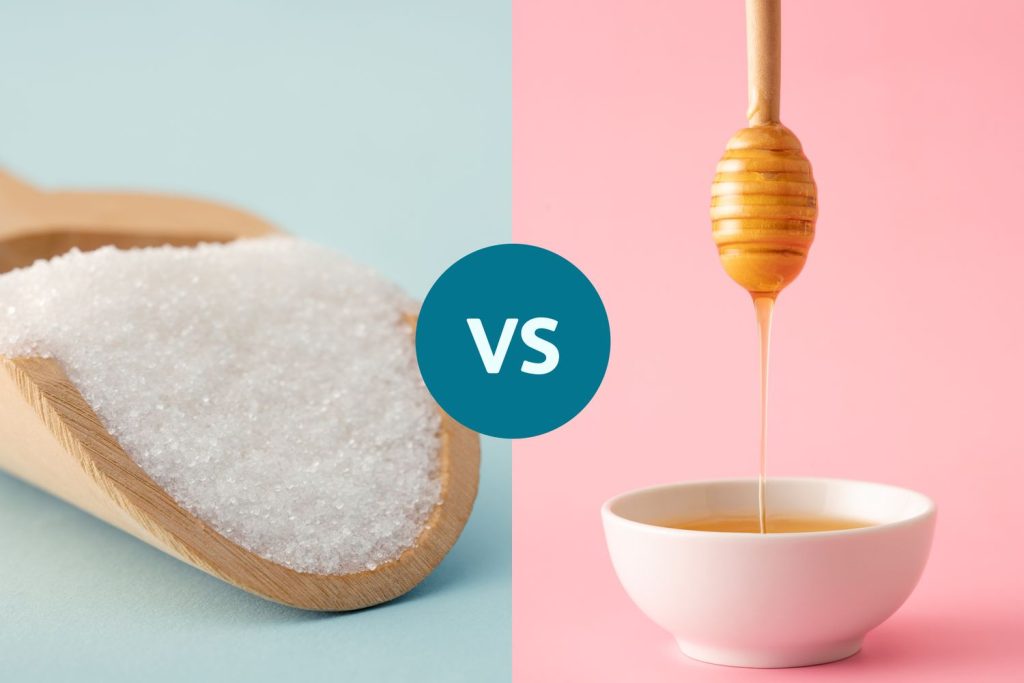
Although honey and sugar both provide sweetness, they differ in several important ways including composition, flavor, and moisture content.
One of the biggest differences is their chemical structure. Honey contains mostly simple sugars such as fructose and glucose that are already separated. Sugar, however, contains sucrose, which must be broken down during digestion.
Another difference is water content. Honey contains around 15–20 percent water, while sugar is almost completely dry. This moisture affects how ingredients behave in recipes and can change the texture of baked goods.
Flavor also varies significantly. Honey has a distinctive taste that can range from mild to rich depending on its floral source. Sugar, in contrast, provides sweetness without introducing additional flavors.
Calorie density differs slightly as well. Honey contains slightly more calories per tablespoon than sugar because it is denser and contains additional compounds.
Finally, honey is considered less processed since it is produced naturally by bees, while sugar typically undergoes multiple refining steps before reaching consumers.
4. When to Use Honey
Honey is often used when a recipe benefits from additional moisture or a subtle floral flavor. Because honey is a liquid sweetener, it blends easily into beverages, sauces, and marinades.
In baking, honey can help keep cakes, muffins, and breads moist for longer periods. The natural sugars in honey also contribute to browning, giving baked goods a rich golden color.
Honey is frequently used in recipes where a natural sweetener is preferred. It is also commonly added to tea, yogurt, oatmeal, and salad dressings.
Another advantage of honey is its smooth texture, which dissolves quickly in warm liquids without leaving crystals behind.
However, because honey has a stronger flavor than sugar, it may slightly alter the taste of some recipes.
5. When to Use Sugar
Sugar is ideal for recipes that require precise sweetness and structural stability. Many baking techniques rely on sugar crystals to create specific textures.
For example, sugar helps trap air when creamed with butter, which contributes to the light texture of cakes and cookies. It also helps form crisp edges in baked goods.
Sugar is also essential for candy making, caramelization, and syrups where exact temperature control is required. Its predictable chemical behavior allows bakers to achieve consistent results.
Because sugar does not add extra moisture, it is often preferred when recipes need to maintain a specific texture or firmness.
6. Which One Is Healthier
From a nutritional perspective, both honey and sugar are forms of added sugar and should be consumed in moderation.
Honey does contain small amounts of antioxidants, vitamins, and minerals that are not present in refined sugar. These nutrients come from plant nectar and pollen.
However, the quantities are quite small, and honey still contains a high amount of natural sugars and calories. Consuming large amounts can contribute to similar health concerns associated with excess sugar intake.
Sugar, while lacking additional nutrients, provides the same basic energy through carbohydrates.
Overall, neither sweetener is considered significantly healthier when consumed in large amounts. Moderation remains the key factor for maintaining a balanced diet.
7. Can You Substitute Honey for Sugar
Honey can often replace sugar in many recipes, but adjustments are usually necessary because of its liquid form and stronger sweetness.
When substituting honey for sugar in baking, recipes may require slightly less liquid since honey already contains water. The baking temperature may also need to be reduced slightly because honey browns faster than sugar.
Conversely, replacing honey with sugar may require adding extra liquid to maintain the correct batter consistency.
Because honey is sweeter than sugar, some bakers use a smaller amount when making substitutions.
While the swap can work in many recipes, the final flavor and texture may differ slightly depending on the dish.
Conclusion
Honey and sugar are both widely used sweeteners, but they differ in origin, composition, and how they affect recipes. Honey is a natural liquid sweetener produced by bees that adds moisture and distinctive flavor to foods. Sugar is a refined crystalline sweetener that provides consistent sweetness and structural support in baking.
The choice between honey and sugar often depends on the recipe and the desired flavor or texture. Honey works well in beverages, glazes, and moist baked goods, while sugar is better suited for precise baking techniques and recipes that rely on crystal structure.
By understanding how these two sweeteners behave in cooking and baking, it becomes easier to choose the one that best fits a particular recipe or dietary preference.