Roasting a turkey for the first time may seem like a big task, but it’s much easier than it looks. With a few simple ingredients, a flavorful herb butter, and the right roasting method, you can create a beautifully golden turkey that is juicy, tender, and full of delicious flavor.
This beginner-friendly guide explains every step in detail, from preparing the turkey to carving and serving. By following these instructions, you’ll feel confident roasting a turkey that looks impressive and tastes amazing.
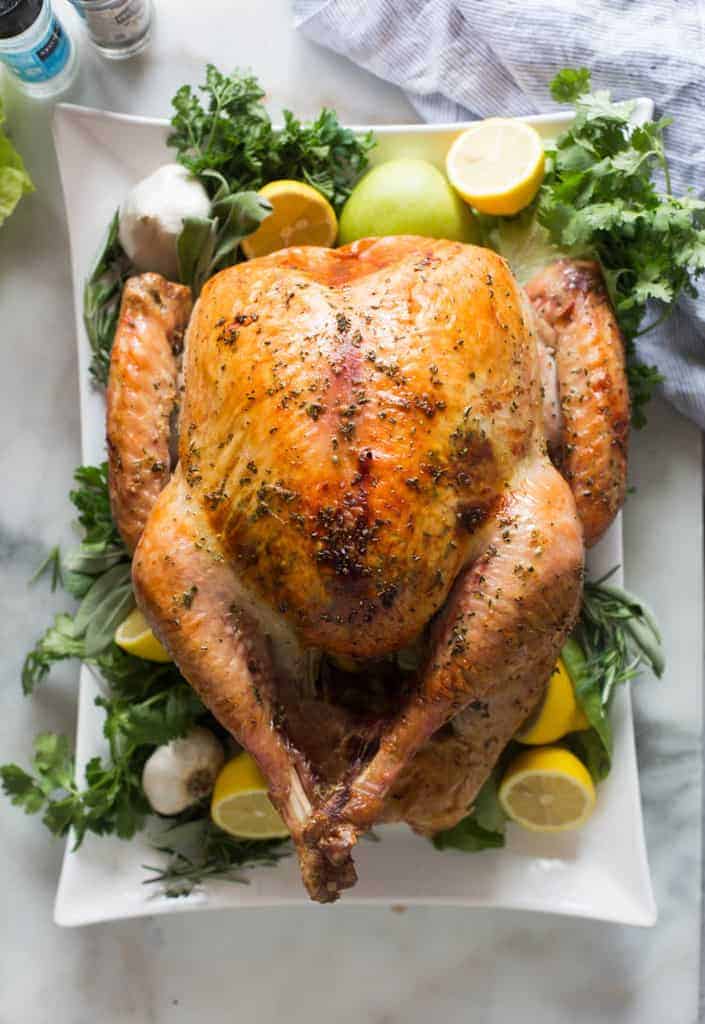
1. How to Cook a Turkey in the Oven (Yield: 10–14 Servings)
Ingredients
For the Turkey
- 1 (12–20 pound) turkey
- 1 onion, peeled and quartered
- 1 lemon, quartered
- 1 apple (your favorite variety), quartered
- 1 (0.75-ounce) container fresh rosemary
- 1 (0.75-ounce) container fresh thyme
- 1 (0.75-ounce) container fresh sage
For the Herb Butter
- 1 cup unsalted butter, softened
- 1 teaspoon salt
- 1/2 teaspoon freshly ground black pepper
- 6–8 cloves garlic, minced
- Fresh chopped herbs
Instructions
If your turkey is frozen, thaw it completely in the refrigerator before cooking. Depending on its size, this may take several days. Once thawed, remove the turkey from its packaging and take out the neck and giblets from the cavity. Save them for making gravy or discard them if you prefer.
About one hour before roasting, remove the turkey from the refrigerator to allow it to come closer to room temperature. This helps it cook more evenly.
Preheat your oven to 325°F (163°C). Position the oven rack in the lower third of the oven so the turkey has plenty of room to roast.
Pat the turkey dry inside and out with paper towels. Removing excess moisture helps the skin become beautifully golden and crisp during roasting.
In a medium bowl, combine the softened butter, salt, black pepper, minced garlic, and freshly chopped rosemary, thyme, and sage. Stir until everything is evenly mixed into a fragrant herb butter.
Carefully loosen the skin over the turkey breast by gently sliding your fingers underneath it. Spread about half of the herb butter under the skin, covering as much of the breast meat as possible. This adds incredible flavor while keeping the meat moist throughout the cooking process.
Rub the remaining herb butter over the outside of the turkey, coating the breast, legs, wings, and every exposed surface. This creates a flavorful crust as the turkey roasts.
Fill the cavity of the turkey with the quartered onion, lemon, apple, fresh rosemary, thyme, and sage. These aromatics release steam and wonderful flavors as the turkey cooks.
Tie the legs together with kitchen twine if desired. Tuck the wing tips underneath the body to help prevent them from overcooking.
Place the turkey breast-side up on a roasting rack inside a large roasting pan. The rack allows hot air to circulate underneath the bird for more even cooking.
Transfer the roasting pan to the preheated oven. Roast the turkey for approximately 13 to 15 minutes per pound. A 12-pound turkey typically takes around 2½ to 3 hours, while a larger 20-pound turkey may require closer to 4½ to 5 hours. Cooking time varies depending on your oven and the exact size of the turkey.
About halfway through cooking, check the color of the skin. If it is browning faster than expected, loosely tent the breast with aluminum foil to prevent it from becoming too dark while the rest of the turkey finishes roasting.
Begin checking the internal temperature during the final hour of cooking. Insert an instant-read thermometer into the thickest part of the thigh without touching the bone. The turkey is fully cooked when the thigh reaches 165°F (74°C), and the thickest part of the breast also registers 165°F.
Remove the turkey from the oven and carefully transfer it to a large cutting board or serving platter. Loosely cover it with foil and allow it to rest for 30 to 45 minutes before carving. Resting gives the juices time to redistribute throughout the meat, resulting in a much juicier turkey.
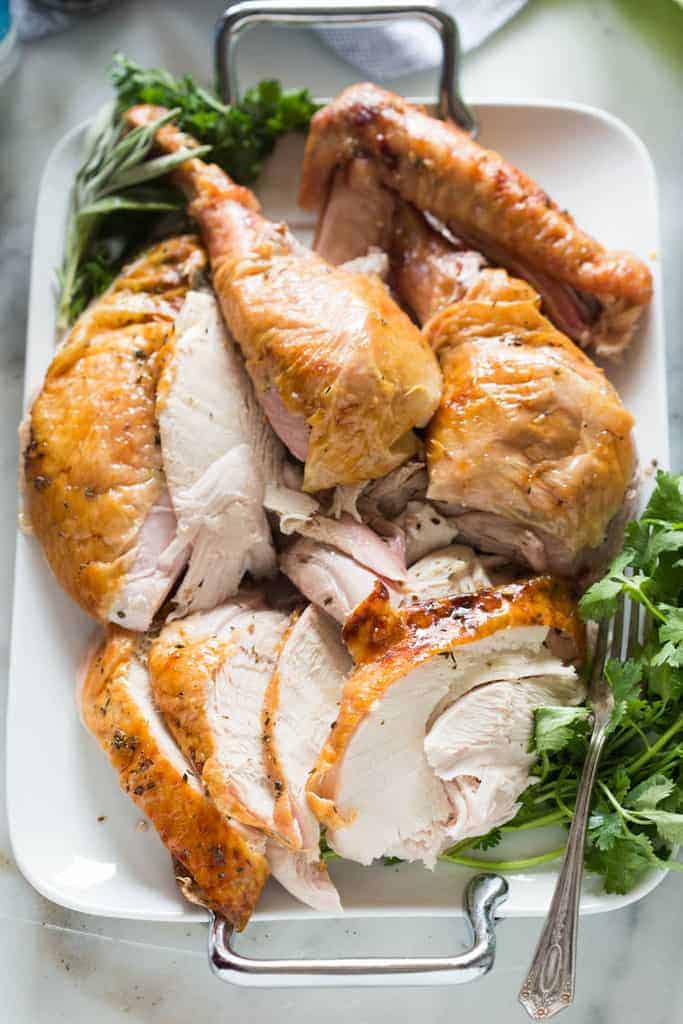
Remove the onion, lemon, apple, and herbs from the cavity before carving. Slice the breast meat, separate the drumsticks and thighs, and arrange everything on a serving platter. Serve warm with your favorite side dishes and homemade gravy if desired.
2. Tips for Perfect Oven Roasted Turkey
Choose a turkey that comfortably fits inside your roasting pan and oven, leaving enough space for proper air circulation.
Use a meat thermometer instead of relying only on cooking time. Internal temperature is the most reliable way to know when the turkey is safely cooked without becoming dry.
Dry the turkey thoroughly before applying the herb butter. Less surface moisture helps the skin brown more evenly.
Spread butter under the breast skin whenever possible. This keeps the breast meat especially moist while adding flavor directly to the meat instead of only the surface.
Avoid opening the oven door frequently. Every time the door opens, heat escapes and can increase the overall cooking time.
Allow the turkey to rest for at least 30 minutes before carving. This simple step helps keep the meat juicy and makes carving much easier.
Use a sharp carving knife to create clean, even slices without tearing the meat.
Save the pan drippings to make homemade gravy. They contain rich flavor that perfectly complements the roasted turkey.
3. Frequently Asked Questions
How much turkey should I plan per person?
A good rule is to allow about 1 to 1½ pounds of whole turkey per guest. This provides generous portions and usually leaves enough leftovers for sandwiches or future meals.
Can I prepare the turkey the night before?
Yes. You can season the turkey with the herb butter, cover it, and refrigerate it overnight. This allows the flavors to develop before roasting the next day.
What should I do with leftover turkey?
Store leftover turkey in airtight containers in the refrigerator for up to four days. It can be used in sandwiches, soups, salads, casseroles, tacos, or pasta dishes.
Can I cook stuffing inside the turkey?
Many cooks prefer preparing stuffing separately. Baking it in its own dish allows it to cook evenly and makes it easier to ensure both the stuffing and turkey reach safe serving temperatures.
Why is my turkey still slightly pink even though it’s fully cooked?
A slight pink color near the bones can occur naturally, especially in younger birds. As long as the internal temperature has reached 165°F (74°C) in the thickest parts, the turkey is safe to eat.
4. Nutrition Information
Approximate nutrition per serving (based on a 14-pound turkey with herb butter, without gravy or side dishes).
| Nutrient | Amount |
|---|---|
| Calories | 485 |
| Protein | 48 g |
| Carbohydrates | 3 g |
| Total Fat | 30 g |
| Saturated Fat | 13 g |
| Cholesterol | 185 mg |
| Sodium | 430 mg |
| Potassium | 610 mg |
| Fiber | 0.5 g |
| Sugar | 2 g |
| Vitamin A | 620 IU |
| Vitamin C | 6 mg |
| Calcium | 45 mg |
| Iron | 2.7 mg |
Roasting a turkey is a rewarding cooking project that becomes easier with practice. Using fresh herbs, flavorful garlic butter, and a careful roasting method creates a turkey with crisp golden skin and juicy, tender meat that everyone will enjoy.
Keep this beginner-friendly recipe handy for holidays and family celebrations. Once you’ve mastered the basics, you’ll have the confidence to prepare a delicious oven-roasted turkey that becomes the centerpiece of memorable meals for years to come.