Cooking brown rice on the stovetop is a simple kitchen skill that can give you a reliable side dish with just a few basic steps. Once you understand the right amount of water, cooking time, and resting period, making brown rice at home becomes much easier.
This recipe provides a straightforward method for cooking brown rice in a regular saucepan. The instructions take you from rinsing the rice to simmering, resting, and fluffing it, helping you achieve a consistent result without special equipment.
1. How To Cook Brown Rice on Stovetop (Yield: 4 Servings)
Ingredients
- 1 cup uncooked brown rice
- 2 cups water
- 1 teaspoon extra-virgin olive oil
Instructions
Place the brown rice in a fine-mesh strainer and rinse it thoroughly under cool running water. Gently move the rice around with your fingers as you rinse to remove excess starch and any loose particles. Allow the rice to drain well.
Add the rinsed brown rice, 2 cups of water, and olive oil to a medium saucepan with a tight-fitting lid. Stir briefly to distribute the rice evenly in the water.
Place the saucepan over medium-high heat and bring the water to a full boil. Once the water begins boiling, give the rice one gentle stir.
Reduce the heat to low so the water maintains a gentle simmer. Cover the saucepan tightly with the lid and let the rice cook for about 40–45 minutes. Avoid lifting the lid while the rice cooks, as the trapped steam is important for cooking the grains evenly.
After about 40 minutes, check the rice. The water should be absorbed, and the grains should be tender but still slightly firm. If the rice is not tender and the pan is dry, add a small amount of hot water, cover the pan again, and continue cooking for several more minutes.
Once the rice is tender and the water has been absorbed, remove the saucepan from the heat. Keep the lid on and let the rice rest for 10 minutes. This allows the remaining steam to finish cooking the grains and helps improve the texture.
Remove the lid and gently fluff the brown rice with a fork. Separate the grains without stirring or mashing them. Serve warm or use the cooked rice in your favorite recipes.
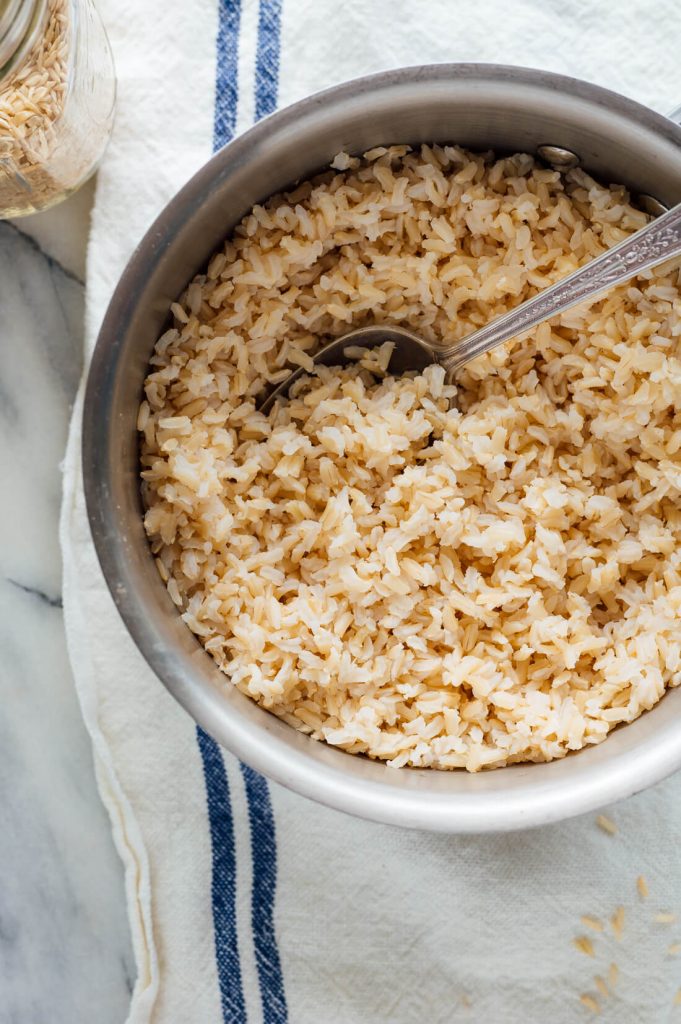
2. Tips for Perfect Stovetop Brown Rice
Rinse the rice well. Rinsing removes excess surface starch and helps prevent the cooked grains from becoming unnecessarily sticky.
Use a saucepan with a tight-fitting lid. Brown rice needs steam to cook properly, so a lid that fits securely helps prevent moisture from escaping.
Keep the heat low after boiling. A gentle simmer is enough to cook the rice. Excessively high heat can cause the water to evaporate too quickly before the rice becomes tender.
Keep the lid closed. Avoid checking the rice repeatedly while it cooks. Every time the lid is removed, steam escapes and the cooking process can be affected.
Let the rice rest after cooking. The 10-minute resting period is an important part of the process. It allows the remaining steam to finish cooking the grains and helps create a better texture.
Fluff gently with a fork. Once the rice has rested, use a fork rather than a spoon to separate the grains. This helps keep the cooked rice light rather than compact.
3. Frequently Asked Questions
What is the difference between brown rice and white rice?
Brown rice retains more of the grain’s outer layers, while white rice has those layers removed during processing. Because of this difference, brown rice generally takes longer to cook and has a firmer texture.
Can I double this recipe?
Yes. You can double the ingredients when you need more servings. Use a sufficiently large saucepan so the rice and water have enough room to cook evenly, and avoid filling the pan too close to the top.
Why does brown rice take longer to cook?
Brown rice has an outer bran layer that remains intact after processing. This layer makes the grains more resistant to water and heat, which is why brown rice generally requires a longer cooking time than white rice.
Can I cook brown rice without olive oil?
Yes. Olive oil is optional and mainly adds a little richness to the finished rice. You can leave it out if you prefer to cook the rice with only water.
How should I store cooked brown rice?
Allow the rice to cool promptly, then transfer it to an airtight container and refrigerate it. Use refrigerated cooked rice within a few days and reheat it thoroughly before eating.
4. Nutrition Information
The following nutrition information is an estimate based on the ingredients listed and divided into 4 servings. Actual values may vary slightly depending on the type and brand of brown rice used.
| Nutrient | Amount per Serving |
|---|---|
| Calories | 180 kcal |
| Protein | 4 g |
| Carbohydrates | 37 g |
| Fat | 2 g |
| Saturated Fat | 0 g |
| Cholesterol | 0 mg |
| Sodium | 5 mg |
| Fiber | 2 g |
| Sugar | 0 g |
| Calcium | 20 mg |
| Iron | 1 mg |
Cooking brown rice on the stovetop does not require complicated equipment or techniques. Once you have the basic cooking process down, you can prepare a reliable batch whenever you need it.
The most important steps are maintaining a gentle simmer, keeping the lid closed during cooking, and allowing the rice to rest before fluffing. With a little practice, this simple stovetop method can become an easy part of your regular cooking routine.