If you’ve ever wondered how to cook pinto beans on the stovetop and actually make them taste amazing (not bland, not mushy, not half-raw), you’re in the right place. Pinto beans are one of those humble pantry staples that don’t look exciting—but when cooked properly, they’re creamy, hearty, and incredibly versatile.
I make a big pot almost every week for burritos, rice bowls, soups, or just to freeze for later. Cooking pinto beans from scratch on the stovetop is easier than most people think. It does take some time, but the hands-on effort is minimal—and the flavor payoff is huge compared to canned beans. Let me walk you through exactly how I do it, step by step.
1. How To Cook Pinto Beans on Stove top (Yield: 12 Serving)
Ingredients
1 pound dried pinto beans
6 cups water
3 tablespoons olive oil
1 small onion, chopped (white or yellow)
4 cloves garlic, minced
1 teaspoon chili powder
1 teaspoon ground cumin
½ teaspoon dried oregano
¼ teaspoon freshly ground black pepper
1 bay leaf
1 teaspoon kosher salt, plus more to taste
Instructions
Step 1: Soak the beans
Start by sorting through the dried pinto beans and removing any small stones or damaged beans. Rinse them thoroughly under cold water. Place the beans in a large bowl and cover with plenty of water—at least 3 inches above the beans. Let them soak for 8 hours or overnight. This step helps soften the beans and reduces cooking time.
Step 2: Drain and rinse
After soaking, drain the beans and rinse them again. You’ll notice they’ve doubled in size, which is exactly what you want.
Step 3: Sauté the aromatics
In a large heavy-bottomed pot or Dutch oven, heat the olive oil over medium heat. Add the chopped onion and cook for about 5 minutes, stirring occasionally, until softened and lightly translucent. Add the minced garlic and cook for another 30 seconds, just until fragrant.
Step 4: Add spices
Stir in the chili powder, cumin, oregano, black pepper, and bay leaf. Toasting the spices briefly in the oil helps deepen their flavor and gives the beans a richer taste.
Step 5: Add beans and water
Add the soaked pinto beans to the pot, then pour in 6 cups of water, making sure the beans are covered by at least 2 inches. Bring everything to a gentle boil.
Step 6: Simmer slowly
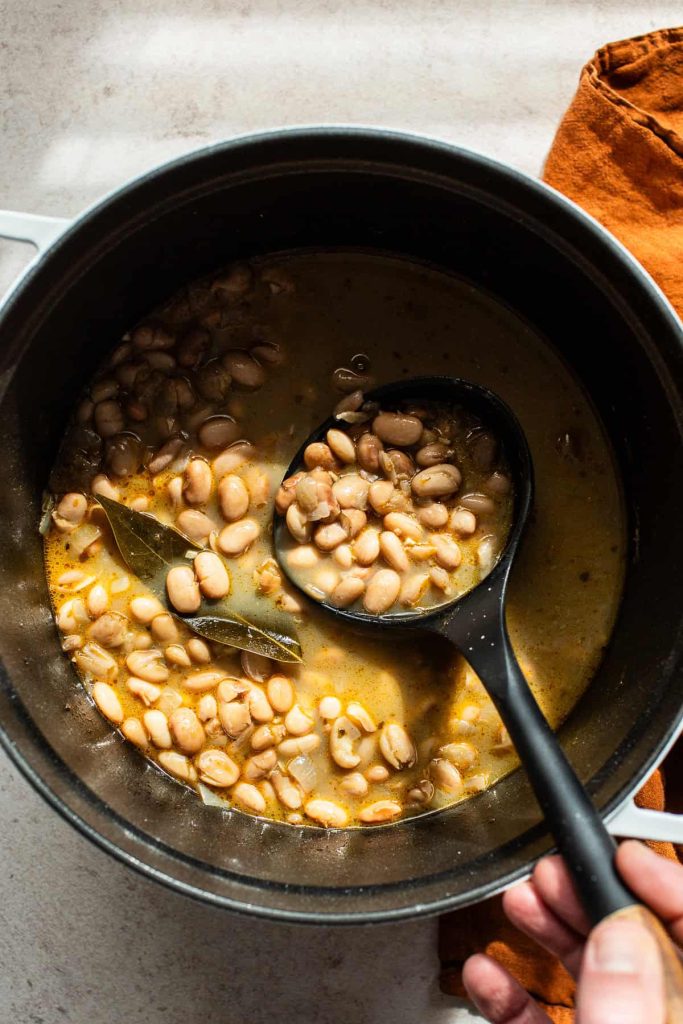
Once boiling, reduce the heat to low and partially cover the pot. Let the beans simmer for 1½ to 2 hours, stirring occasionally. Check the water level every 30 minutes and add more water if needed to keep the beans submerged.
Step 7: Season with salt
About 30 minutes before the beans are done, add the kosher salt. Adding salt too early can sometimes make beans tough, so this timing helps keep them tender.
Step 8: Check for doneness
The beans are done when they’re tender and creamy inside but still hold their shape. Taste and adjust seasoning with more salt if needed. Remove the bay leaf before serving.
Step 9: Serve
Serve warm with cotija cheese, fresh cilantro, and flour tortillas. These beans also pair beautifully with rice, baked meats, or roasted vegetables.
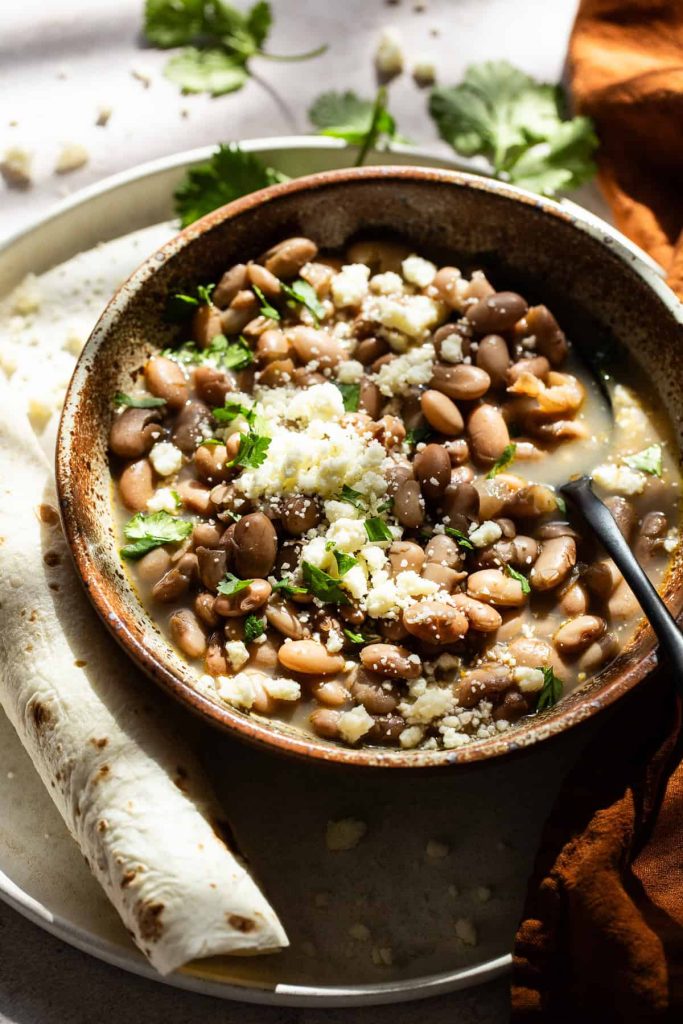
2. Tips for Cooking Pinto Beans on the Stove Top Perfectly
Use fresh dried beans: Fresher pinto beans cook faster and become creamier, while older beans may stay tough even after long cooking times.
Soak for best results: An 8-hour or overnight soak helps the beans cook evenly, improves texture, and reduces overall cooking time.
Simmer, don’t boil: Keep the heat low and steady. A gentle simmer prevents the beans from splitting and keeps them tender.
Keep beans covered with water: Check the pot occasionally and add hot water as needed so the beans stay fully submerged while cooking.
Stir occasionally: Light stirring prevents sticking, but avoid stirring too often, which can break the bean skins.
Salt at the right time: Add salt during the last 30 minutes of cooking to ensure soft, flavorful beans.
Taste and adjust seasoning: Pinto beans absorb flavor slowly, so adjust seasoning gradually toward the end for the best balance.
3. Frequently Asked Questions
Do I really need to soak pinto beans before cooking?
Soaking isn’t strictly required, but it significantly shortens cooking time and improves texture. For best results, an 8-hour soak is highly recommended.
Why are my pinto beans still hard after cooking?
This usually happens if the beans are old or if acidic ingredients were added too early. Always add salt toward the end and avoid tomatoes or vinegar until the beans are tender.
Can I cook pinto beans without oil?
Yes, you can skip the oil, but sautéing the onion and spices in olive oil adds depth and richness to the final dish.
How long do cooked pinto beans last in the fridge?
Stored in an airtight container, cooked pinto beans last up to 5 days in the refrigerator.
Can I freeze cooked pinto beans?
Absolutely. Let them cool completely, then freeze in portions with some cooking liquid for up to 3 months.
What dishes can I use these beans in?
They’re perfect for burritos, refried beans, soups, chili, salads, and even breakfast tacos.
4. Nutrition Information
Approximate values per serving (based on 12 servings):
| Nutrient | Amount |
|---|---|
| Calories | 190 |
| Protein | 11 g |
| Carbohydrates | 30 g |
| Fiber | 9 g |
| Fat | 4 g |
| Sodium | 210 mg |
Learning how to cook pinto beans on the stove top is one of those kitchen skills that pays off again and again. With just a handful of ingredients and a little patience, you get beans that are flavorful, creamy, and endlessly versatile. Whether you’re feeding a crowd, meal-prepping for the week, or building the base for your favorite Mexican-inspired dishes, this method delivers reliable, delicious results every time.