Cooking duck breast is much easier than many beginners expect. With its rich flavor, crispy skin, and tender meat, duck breast delivers a gourmet result with minimal effort. The key lies in proper scoring, slow rendering of the fat, and accurate timing.
This guide walks you through the simplest pan-seared method, perfect for anyone learning how to cook duck breast for the first time. Once you master this technique, you’ll be able to recreate impressive, restaurant-style duck dishes at home with full confidence.
1. How to Cook Duck Breast (Yield: 4 Serving)
Ingredients
- 4 duck breasts (breasts from two ducks)
- 1 teaspoon duck fat or olive oil
- Salt
Instructions
Step 1: Prepare the Duck Breasts
Start by patting each duck breast dry with paper towels—removing excess moisture is essential for crispiness. Using a sharp knife, score the skin in a crisscross pattern, being careful not to cut into the meat. This scoring helps the fat render properly and prevents the skin from shrinking tightly in the pan. Generously season both sides of the duck with salt.
Step 2: Preheat the Pan
Place a heavy skillet (preferably cast iron or stainless steel) over medium-low heat. Add 1 teaspoon of duck fat or olive oil. If your duck breasts are fatty enough, you can skip adding any fat, as the duck will release plenty during cooking.
Step 3: Render the Fat Slowly
Lay the duck breasts skin-side down in the cool or slightly warmed pan. Starting with a cooler pan helps the fat render gradually, creating ultra-crispy skin. Cook undisturbed for 8–12 minutes, depending on the size and thickness. The skin should turn golden brown and release a significant amount of fat. Spoon out excess fat from the pan as needed, reserving it for roasting potatoes or vegetables.
Step 4: Sear the Meat Side
Once the skin is crisp and beautifully browned, flip the duck breasts over. Increase the heat slightly to medium. Sear the meat side for 2–4 minutes depending on your desired doneness.
- For medium-rare: internal temperature 130–135°F (54–57°C)
- For medium: 135–140°F (57–60°C)
Duck breast is best enjoyed medium-rare for tenderness and juiciness.
Step 5: Rest the Duck
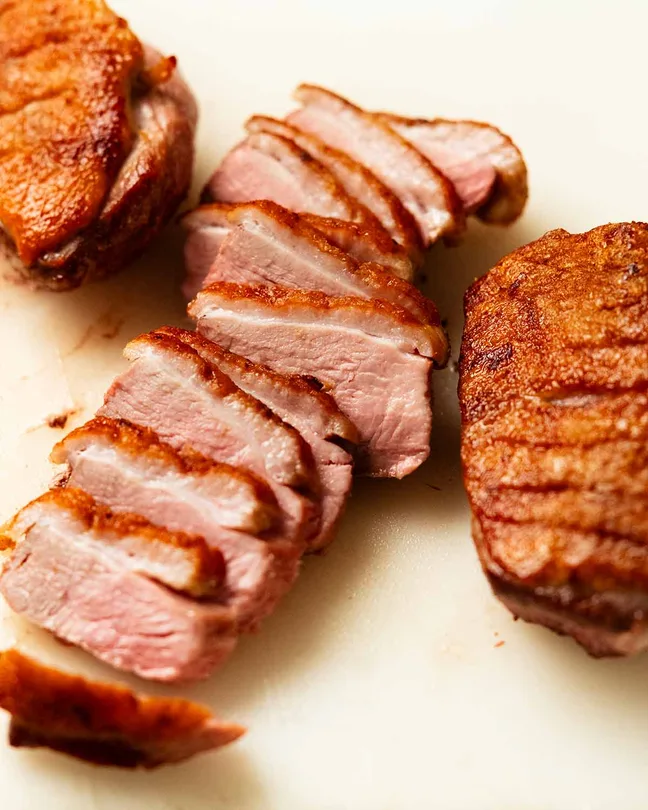
Remove the breasts from the skillet and place them on a cutting board. Allow them to rest for 5–10 minutes. Resting is crucial because it helps preserve juices and keeps the meat moist.
Step 6: Slice and Serve
Slice the duck breasts against the grain into thin pieces. Serve with your favorite side dishes such as roasted potatoes, sautéed greens, fruit-based sauces, or a simple pan reduction made from the leftover duck fat and browned bits.
2. Tips to Perfect Cooking Duck Breast
Start with Very Dry Skin: Moisture on the surface prevents browning. Pat thoroughly with paper towels before scoring or seasoning.
Score Lightly but Strategically: The goal is to cut through the skin and fat—not into the meat. Shallow, even scoring ensures the fat renders evenly.
Render Slowly: Rushing this step results in chewy, rubbery skin. Keep the heat medium-low to allow gradual rendering.
Control the Heat: Duck fat burns less easily than butter, but still monitor heat closely. Too hot and the skin will burn before the fat renders.
Use a Thermometer: Beginners benefit from using a meat thermometer to avoid overcooking.
Save the Duck Fat: Rendered duck fat is liquid gold and makes exceptional potatoes, vegetables, and fried eggs.
3. Frequently Asked Questions
Can I cook duck breast in the oven instead of the pan?
Yes. After rendering the skin in a pan for 6–8 minutes, transfer the breast (skin-side up) to a 400°F (205°C) oven for 5–7 minutes to finish cooking.
Can I cook duck breast in the air fryer?
Yes. Score and season the duck breast, then cook skin-side up at 400°F (205°C) for 10–12 minutes, checking for desired doneness.
Should duck be cooked well-done?
Duck breast is best when cooked medium-rare to medium. Overcooking can make the meat tough and dry, similar to overcooked steak.
Do I need to marinate duck breast?
Not at all. Duck has a naturally rich flavor. A simple salt seasoning works beautifully, though marinades and spice rubs can be added if desired.
Why is my duck skin not crispy?
The heat may have been too high at the beginning, or the skin wasn’t dry enough. Slow rendering is key to crispiness.
What can I serve with duck breast?
Duck pairs well with fruit sauces (orange, cherry, plum), roasted vegetables, mashed potatoes, or fresh salads with citrus or berries.
4. Nutrition Information
| Nutrient | Amount (per serving) |
|---|---|
| Calories | 310 |
| Protein | 24 g |
| Fat | 22 g |
| Saturated Fat | 6 g |
| Carbohydrates | 0 g |
| Fiber | 0 g |
| Sugar | 0 g |
| Cholesterol | 95 mg |
| Sodium | 60 mg |
Cooking duck breast perfectly doesn’t require advanced culinary skills—just the right method and a few simple tips. By scoring the skin, rendering the fat slowly, and monitoring doneness carefully, you can achieve tender, juicy meat with crave-worthy crispy skin.
This straightforward recipe is ideal for beginners who want to recreate a gourmet-level dish at home. With practice, your duck breast will turn out perfectly every time, making it a reliable and impressive meal for family dinners, date nights, or special occasions.