Cooking oils are a key part of everyday meals, influencing both flavor and nutrition. Two of the most commonly used options are olive oil and canola oil. While both are widely available and versatile, they differ in taste, nutritional composition, and how they perform under heat.
Understanding the differences between olive oil and canola oil can help you decide which one is better for your cooking style, dietary goals, and specific recipes.
1. What Is Olive Oil
Olive oil is extracted from olives, the fruit of the olive tree. The highest-quality type is extra virgin olive oil, which is made through cold-pressing without heat or chemicals.
This minimal processing helps retain natural antioxidants and beneficial compounds. Olive oil is rich in monounsaturated fats, particularly oleic acid, which is linked to heart health.
One of its defining features is its flavor. Olive oil can range from mild and buttery to bold and slightly peppery depending on its origin and quality.
Because of its distinctive taste, olive oil is commonly used in salad dressings, drizzled over dishes, and for low- to medium-heat cooking.
2. What Is Canola Oil
Canola oil is derived from the seeds of the canola plant, which is a type of rapeseed bred to have low levels of certain undesirable compounds. The oil is extracted and refined to produce a light, neutral-tasting cooking oil.
Unlike olive oil, canola oil undergoes more processing, including refining, which removes impurities and gives it a consistent flavor and appearance.
Canola oil contains a mix of fats, including monounsaturated and polyunsaturated fats. It is also a source of omega-3 fatty acids, which are beneficial for heart health.
Because of its neutral flavor and relatively high smoke point, canola oil is widely used for frying, baking, and everyday cooking.
3. Key Differences Between Olive Oil and Canola Oil
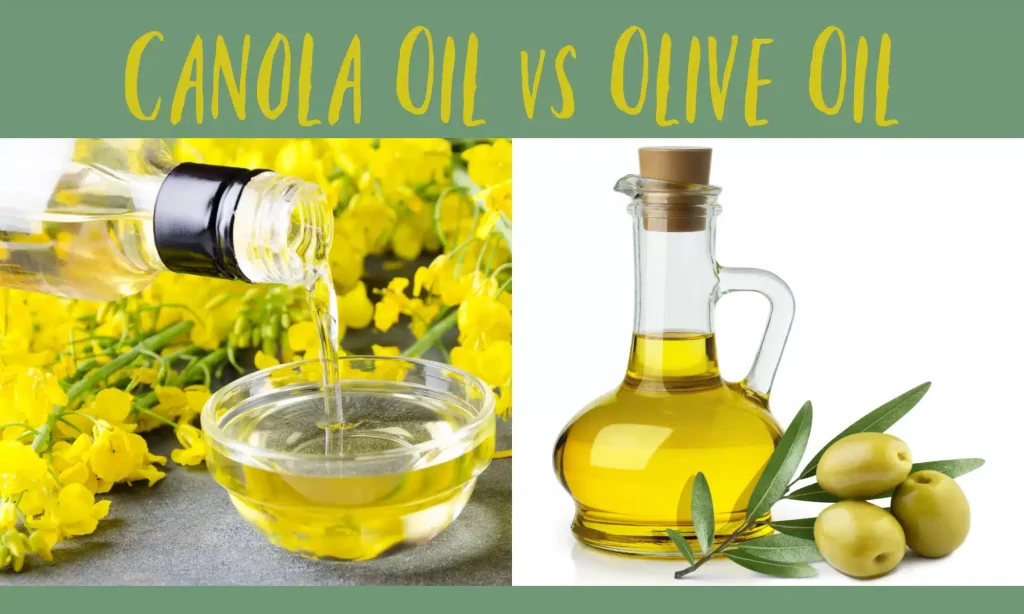
One of the main differences between olive oil and canola oil is flavor. Olive oil has a noticeable taste that can enhance dishes, while canola oil is neutral and does not significantly affect flavor.
Another important difference is processing. Olive oil, especially extra virgin, is minimally processed. Canola oil is typically refined, which results in a more uniform product but fewer natural compounds.
Fat composition also varies. Olive oil is higher in monounsaturated fats, while canola oil contains a mix of monounsaturated and polyunsaturated fats, including omega-3s.
Smoke point is another key factor. Canola oil generally has a higher smoke point than extra virgin olive oil, making it more suitable for high-heat cooking.
These differences influence how each oil is used in the kitchen and their overall nutritional profiles.
4. When to Use Olive Oil
Olive oil is best used when flavor is important. It works well in salad dressings, marinades, and as a finishing oil drizzled over cooked dishes.
It is also suitable for sautéing and cooking at moderate temperatures. Its rich taste pairs especially well with vegetables, pasta, and Mediterranean-style recipes.
Because of its natural processing and flavor profile, olive oil is often chosen for dishes where the oil plays a noticeable role.
5. When to Use Canola Oil
Canola oil is ideal for high-heat cooking methods such as frying, roasting, and grilling. Its higher smoke point allows it to withstand heat without breaking down quickly.
It is also a good choice for baking, where a neutral flavor is preferred. Because it does not add strong taste, it works well in cakes, muffins, and other baked goods.
Canola oil is often used as a general-purpose cooking oil due to its versatility and affordability.
6. Which One Is Healthier
Both olive oil and canola oil can be part of a healthy diet when used in moderation.
Olive oil is often praised for its high content of monounsaturated fats and antioxidants, especially in extra virgin varieties. These compounds are associated with heart health and reduced inflammation.
Canola oil also offers health benefits, including a favorable balance of fats and the presence of omega-3 fatty acids.
The main difference lies in processing and nutrient retention. Olive oil retains more natural compounds due to minimal processing, while canola oil provides a balanced fat profile.
Overall, both oils are considered healthy, and the choice often depends on personal preference and cooking needs.
7. Can You Substitute Olive Oil for Canola Oil
Olive oil and canola oil can usually be substituted for each other in most recipes.
If you replace canola oil with olive oil, the dish may have a more pronounced flavor. This can enhance some recipes but may not be ideal for others.
When substituting olive oil with canola oil, the result will be more neutral in taste.
For high-heat cooking, canola oil may perform better due to its higher smoke point, while olive oil is better suited for lower-heat applications.
Conclusion
Olive oil and canola oil are both versatile cooking oils with their own advantages. Olive oil stands out for its rich flavor and natural processing, making it ideal for dressings and moderate cooking. Canola oil offers a neutral taste and higher heat tolerance, making it a practical choice for frying and baking.
Choosing between the two depends on your cooking method and flavor preference. By understanding their differences, you can select the oil that best fits your kitchen needs.