Homemade Sesame Ginger Dressing is a simple way to add something special to everyday meals. Making your own dressing at home gives you more control over the ingredients and makes it easy to adjust the taste to suit your preferences.
This recipe is a useful addition to your collection of homemade staples. It comes together without much effort and offers a convenient alternative to bottled dressings, making it easy to enjoy a fresh homemade option whenever you need one.
1. Sesame Ginger Dressing Recipe ( Yield: 6 Serving )
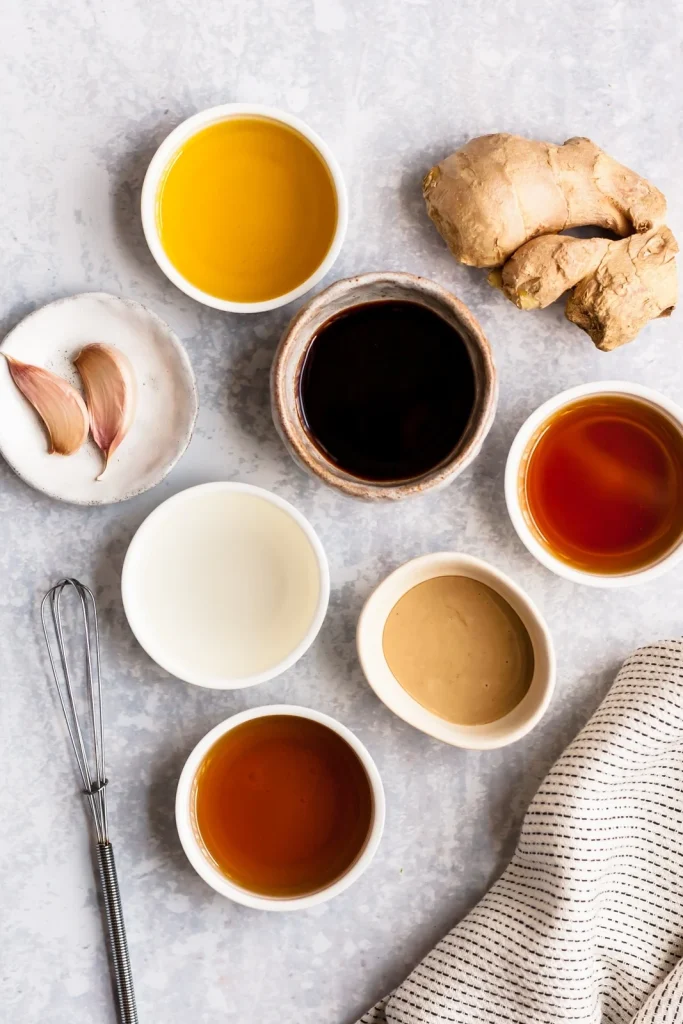
Ingredients
- 2 tablespoons toasted sesame oil
- 2 tablespoons olive oil
- 2 tablespoons reduced sodium soy sauce (or substitute coconut aminos)
- 2–3 tablespoons rice vinegar
- 1 ½ tablespoons pure maple syrup
- 2 cloves garlic, finely minced
- 1 tablespoon freshly minced ginger
Instructions
Prepare the aromatics
Begin by finely mincing the garlic cloves and fresh ginger. Cutting them very small ensures they distribute evenly throughout the dressing and release maximum flavor.
Combine liquid ingredients
In a medium bowl or glass measuring cup, add the toasted sesame oil, olive oil, soy sauce, rice vinegar, and maple syrup. Whisk gently until the liquids are well combined.
Add garlic and ginger
Stir in the minced garlic and ginger, making sure they are evenly dispersed. At this stage, the dressing will begin to develop its signature aroma.
Adjust the acidity
Taste the dressing and add the remaining tablespoon of rice vinegar if you prefer a brighter, more tangy flavor. This step allows you to tailor the balance to your preference.
Whisk until emulsified
Whisk vigorously for 30–45 seconds until the oils and vinegar blend into a slightly thickened, cohesive dressing.
Rest before serving
Let the dressing rest for 5–10 minutes before using. This allows the garlic and ginger to infuse the oils and deepen the overall flavor.
Serve or store
Use immediately or transfer to an airtight container and refrigerate. Shake or stir before each use, as natural separation may occur.

2. Tips for Perfect Sesame Ginger Dressing
Use toasted sesame oil sparingly
Toasted sesame oil is very strong. Stick to the recommended amount to avoid overpowering the dressing.
Fresh ginger makes a difference
Freshly minced ginger provides brightness and warmth that ground ginger simply cannot replicate.
Balance sweet and tangy flavors
Adjust the maple syrup and rice vinegar gradually until you achieve the perfect balance for your taste.
Whisk thoroughly
Proper whisking helps emulsify the oils and creates a smoother texture.
Let it rest before serving
A short resting time allows flavors to meld and results in a more cohesive dressing.
3. Frequently Asked Questions
Can I make sesame ginger dressing ahead of time?
Yes, this dressing can be prepared up to one week in advance and stored in the refrigerator in an airtight container.
Is this dressing suitable for vegan diets?
Yes, all ingredients in this recipe are plant-based, making it suitable for vegan and vegetarian diets.
What can I use instead of soy sauce?
Coconut aminos are an excellent alternative if you prefer a soy-free or slightly sweeter option.
Why does my dressing separate after chilling?
Natural separation is normal due to the oils and vinegar. Simply shake or whisk before using.
Can I use this dressing as a marinade?
Absolutely. This dressing works well as a marinade for tofu, vegetables, or grilled meats due to its balanced flavor profile.
How can I make the dressing less salty?
Use reduced sodium soy sauce and slightly increase the olive oil or maple syrup to mellow the saltiness.
4. Nutrition Information
| Nutrient | Amount per Serving |
|---|---|
| Calories | 110 kcal |
| Total Fat | 10 g |
| Saturated Fat | 1.5 g |
| Carbohydrates | 4 g |
| Sugars | 3 g |
| Protein | 1 g |
| Sodium | 380 mg |
Homemade Sesame Ginger Dressing is a handy recipe to keep in your kitchen for adding variety to everyday meals. Its straightforward preparation and flexible ingredients make it easy to prepare at home and adjust to your personal taste.
Once you try making your own dressing, you may find it becomes a regular part of your cooking routine. It is a practical homemade staple that offers a little more flexibility than relying on store-bought options.