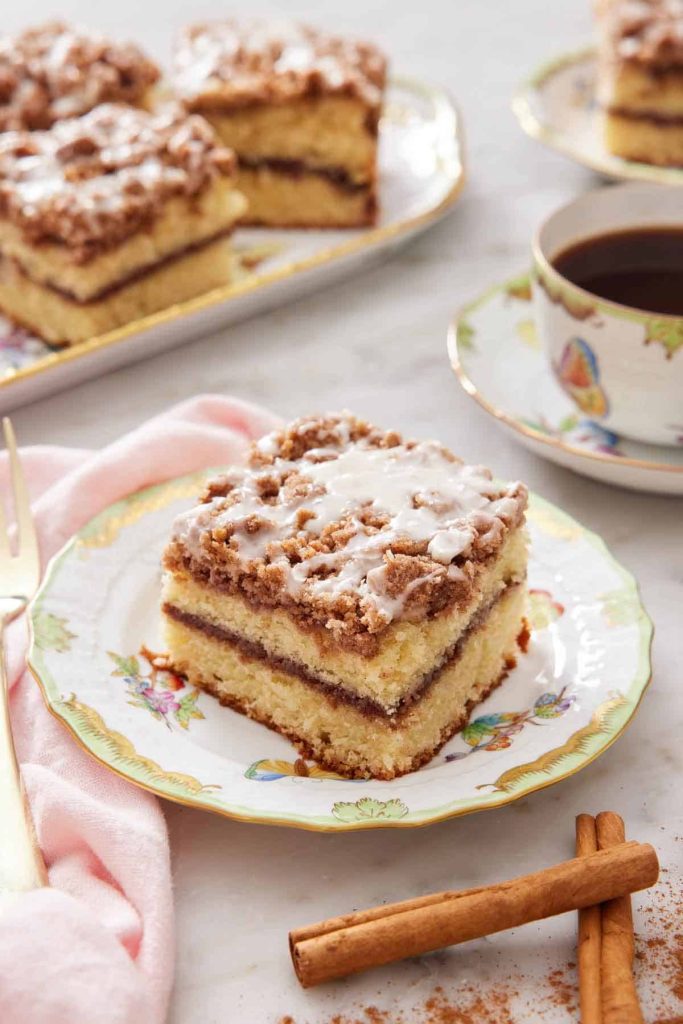
Coffee cake is a timeless homemade treat that’s perfect for breakfast, brunch, afternoon coffee breaks, or dessert. Despite its name, traditional coffee cake doesn’t contain coffee—it’s designed to be enjoyed alongside a warm cup of coffee or tea.
Made with simple pantry ingredients and sour cream for extra moisture, this coffee cake stays soft and flavorful for days. The optional vanilla glaze adds just the right finishing touch, making this bakery-style cake an impressive yet easy recipe you’ll want to bake again and again.
1. Coffee Cake Recipe (Yield: 9 Servings)
Ingredients
For the Cake
- 1¾ cups all-purpose flour (210g)
- 2 teaspoons baking powder
- ¾ teaspoon salt
- 10 tablespoons unsalted butter, softened (142g)
- ¾ cup granulated sugar (150g)
- ¼ cup packed light brown sugar (55g)
- 2 large eggs, room temperature
- ⅔ cup sour cream, room temperature (160g)
- 2 teaspoons vanilla extract
For the Cinnamon Filling
- ⅔ cup packed light brown sugar (147g)
- ¼ cup all-purpose flour (30g)
- 2 teaspoons ground cinnamon
For the Streusel Topping
- ¾ cup all-purpose flour (90g)
- ½ cup packed light brown sugar (110g)
- 2 teaspoons ground cinnamon
- ¼ teaspoon salt
- 6 tablespoons cold unsalted butter, diced (85g)
For the Vanilla Glaze (Optional)
- 1 cup powdered sugar (120g)
- 2 tablespoons whole milk
- ½ teaspoon vanilla extract
Equipment
- 8-inch square baking pan
- Mixing bowls
- Electric hand mixer or stand mixer
Instructions
Preheat your oven to 350°F (175°C). Grease an 8-inch square baking pan and line it with parchment paper, leaving a slight overhang for easy removal after baking.
In a medium bowl, whisk together the flour, baking powder, and salt. Set aside.
In a separate bowl, prepare the cinnamon filling by combining the brown sugar, flour, and cinnamon. Stir until evenly mixed and set aside.
For the streusel topping, combine the flour, brown sugar, cinnamon, and salt in another bowl. Add the cold diced butter and use a pastry cutter, two forks, or your fingertips to work the butter into the dry ingredients until coarse crumbs form. Refrigerate the streusel while preparing the cake batter.
In a large mixing bowl, beat the softened butter, granulated sugar, and brown sugar with an electric mixer on medium speed for about 3 to 4 minutes until the mixture becomes light and fluffy.
Add the eggs one at a time, beating well after each addition. Mix in the vanilla extract.
Add half of the flour mixture to the butter mixture and mix on low speed just until incorporated.
Add the sour cream and continue mixing until smooth.
Add the remaining flour mixture and mix only until no dry streaks remain. Avoid overmixing to keep the cake tender.
Spread about half of the batter evenly into the prepared baking pan. Because the batter is thick, use an offset spatula or the back of a spoon to smooth it into the corners.
Sprinkle the cinnamon filling evenly over the batter, leaving a small border around the edges.
Carefully spread the remaining batter over the filling. Work gently to avoid disturbing the cinnamon layer.
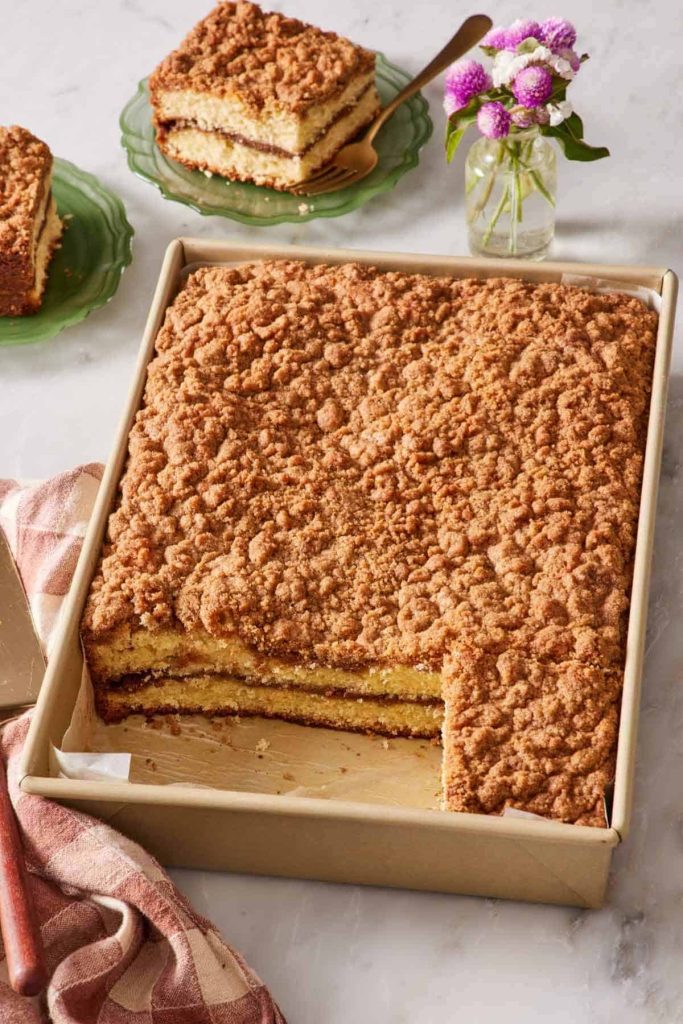
Remove the chilled streusel from the refrigerator and sprinkle it evenly over the top of the cake.
Bake for 40 to 50 minutes, or until the top is golden brown and a toothpick inserted into the center comes out clean or with only a few moist crumbs attached.
Allow the cake to cool in the pan for about 20 minutes before transferring it to a wire rack to cool completely.
If using the vanilla glaze, whisk together the powdered sugar, milk, and vanilla until smooth. Drizzle it over the cooled cake just before serving.
Slice into nine squares and serve with coffee, tea, or a glass of milk.
2. Tips for Perfect Homemade Coffee Cake
Use room-temperature butter, eggs, and sour cream. Ingredients at the same temperature blend more evenly, creating a lighter, more uniform crumb.
Measure flour correctly by spooning it into the measuring cup and leveling it off with a knife. Too much flour can make the cake dense and dry.
Cream the butter and sugars thoroughly. This step incorporates air into the batter, producing a softer, fluffier cake.
Keep the butter for the streusel very cold. Cold butter creates distinct crumbs that stay crisp during baking.
Avoid overmixing after adding the flour. Mixing just until combined helps keep the cake tender.
Chill the streusel before sprinkling it on the cake if your kitchen is warm. This helps maintain its crumbly texture while baking.
Allow the cake to cool before adding the glaze. A hot cake will cause the glaze to melt instead of forming a beautiful drizzle.
Store leftovers tightly covered at room temperature for up to three days to maintain freshness and softness.
3. Frequently Asked Questions
Why is it called coffee cake if it doesn’t contain coffee?
Coffee cake gets its name because it’s traditionally served alongside coffee or tea rather than containing coffee as an ingredient.
Can I make the cake a day ahead?
Yes. In fact, the flavors develop even more after resting overnight, making it an excellent make-ahead dessert for brunches and gatherings.
Can I freeze coffee cake?
Absolutely. Wrap the cooled cake tightly in plastic wrap and foil, then freeze for up to three months. Thaw overnight at room temperature before serving.
Can I add nuts to the streusel?
Yes. Chopped pecans or walnuts add extra crunch and pair beautifully with the cinnamon streusel.
How should I store leftover coffee cake?
Store the cake in an airtight container at room temperature for up to three days or refrigerate for up to one week. Bring refrigerated slices to room temperature or warm them slightly before serving.
4. Nutrition Information
| Nutrient | Amount Per Serving |
|---|---|
| Calories | 465 |
| Protein | 6 g |
| Total Fat | 21 g |
| Saturated Fat | 13 g |
| Carbohydrates | 65 g |
| Fiber | 1 g |
| Sugar | 41 g |
| Sodium | 260 mg |
| Cholesterol | 85 mg |
| Calcium | 90 mg |
This Coffee Cake Recipe with Cinnamon Streusel combines everything you want in a homemade coffee cake: a soft, buttery crumb, a sweet cinnamon filling, and a crisp, golden streusel topping. Finished with an optional vanilla glaze, it’s a bakery-worthy treat that’s surprisingly simple to make at home.
Perfect for breakfast, brunch, holidays, or afternoon coffee breaks, this cake is guaranteed to impress family and friends. Once you master this recipe, you’ll have a dependable homemade favorite that’s delicious any time of year.