Few desserts feel as timeless and dependable as a homemade pound cake. With its buttery flavor, golden crust, and rich yet tender texture, pound cake has remained a favorite for generations because it turns simple pantry ingredients into something truly comforting.
If you have ever ended up with a pound cake that felt dry, dense, or lacking flavor, the small techniques in this recipe will help you avoid those common problems and bake a loaf that tastes bakery-quality right from your own kitchen.
1. Pound Cake Recipe ( Yield: 12 slices )
Ingredients
- 1½ cups all-purpose flour (180g)
- ½ teaspoon salt
- ½ teaspoon baking powder
- ½ cup unsalted butter, room temperature (113g)
- 1½ cups granulated sugar (300g)
- 4 large eggs, room temperature
- ½ cup sour cream, room temperature (120g)
- 2 teaspoons vanilla extract
Equipment
- 9×5 inch loaf pan
- Stand mixer with whisk attachment
Instructions
Preheat your oven to 325°F (163°C). Grease the 9×5 inch loaf pan thoroughly with butter or nonstick spray, then lightly dust it with flour. This extra step helps the cake release cleanly after baking.
In a medium bowl, whisk together the all-purpose flour, salt, and baking powder. Set the dry mixture aside.
Place the room-temperature butter and granulated sugar into the bowl of your stand mixer. Using the whisk attachment, beat the mixture on medium speed for about 4 to 5 minutes. The mixture should become noticeably lighter in both color and texture. This stage is extremely important because it creates the structure of the cake.
Add the eggs one at a time, mixing well after each addition. Scrape down the sides of the bowl occasionally to make sure everything mixes evenly. If the batter looks slightly curdled during this step, do not worry. It will smooth out once the flour is added.
Mix the sour cream and vanilla extract together in a small bowl. The sour cream adds moisture and gives the pound cake a softer crumb that stays tender longer than traditional recipes.
Reduce the mixer speed to low. Add half of the flour mixture to the batter and mix gently until just combined. Add the sour cream mixture and continue mixing slowly. Finish with the remaining flour mixture. Stop mixing as soon as the flour disappears. Overmixing at this stage can make the cake tough instead of soft.
Pour the batter into the prepared loaf pan and smooth the top with a spatula. Tap the pan gently on the counter two or three times to remove large air bubbles.
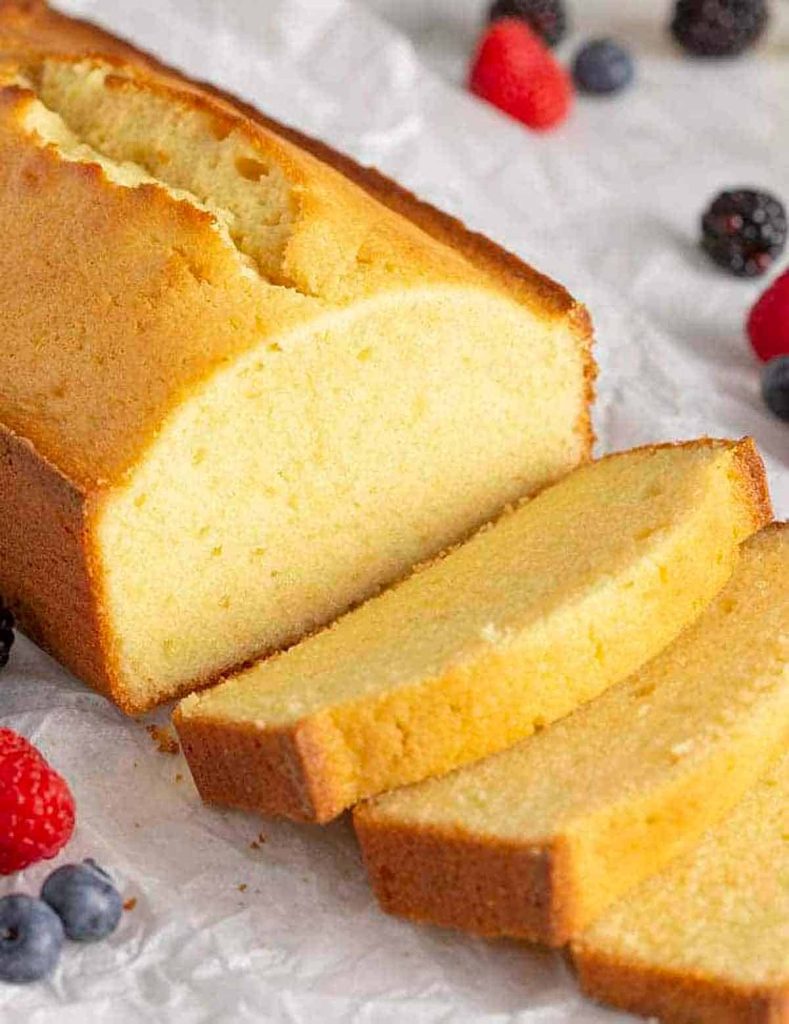
Bake for 60 to 70 minutes, or until a toothpick inserted into the center comes out clean or with a few moist crumbs attached. The top should be golden brown with a slight crack running down the center.
Allow the cake to cool in the pan for about 15 minutes before transferring it to a wire rack. Let it cool completely before slicing. Cutting too early can make the texture gummy because the cake is still setting inside.
For the best flavor, wrap the cooled cake tightly and let it rest for a few hours before serving. Pound cake develops a deeper buttery flavor as it sits.
2. Tips for Perfect Pound Cake
Use room-temperature ingredients every single time. Cold butter will not cream properly, and cold eggs can cause the batter to separate.
Measure flour carefully using a kitchen scale if possible. Too much flour is one of the most common reasons pound cakes turn out dry.
Cream the butter and sugar longer than you think necessary. A properly creamed mixture should look fluffy and pale. This process adds air naturally and improves the final texture.
Avoid opening the oven door during the first 50 minutes of baking. Sudden temperature changes can cause the center to sink.
Bake at a lower temperature rather than a high one. Pound cake needs time to bake evenly from the center outward without overbrowning the crust.
Line only the bottom of the loaf pan with parchment paper if you want easier removal while still allowing the sides to grip the pan for proper rise.
If the top browns too quickly near the end of baking, loosely cover it with foil during the final 10 to 15 minutes.
For cleaner slices, use a serrated knife and wipe the blade between cuts.
3. Frequently Asked Questions
Why is my pound cake dense instead of soft?
A dense pound cake usually comes from under-creaming the butter and sugar or overmixing after adding flour. Proper creaming creates air pockets that help lighten the texture naturally.
Can I freeze pound cake?
Yes. Wrap the completely cooled cake tightly in plastic wrap and then in foil. It can be frozen for up to three months. Thaw overnight in the refrigerator or at room temperature for several hours.
Why did my pound cake crack on top?
A crack on top is actually normal for pound cake. The thick batter rises slowly, causing the top surface to split as the cake expands during baking.
Can I add fruit or chocolate chips to this recipe?
Yes, but coat them lightly in flour before folding them into the batter. This helps prevent them from sinking to the bottom during baking.
How should I store pound cake to keep it moist?
Store it tightly wrapped at room temperature for up to four days. Avoid refrigerating it because cold air can dry out the texture faster.
4. Nutrition Information
| Nutrient | Amount Per Slice |
|---|---|
| Calories | 320 |
| Carbohydrates | 43g |
| Protein | 4g |
| Fat | 15g |
| Saturated Fat | 8g |
| Cholesterol | 85mg |
| Sodium | 140mg |
| Sugar | 28g |
| Fiber | 1g |
A well-made pound cake proves that classic recipes never lose their charm. With its rich buttery flavor, soft crumb, and beautifully golden crust, this cake delivers the kind of homemade comfort that feels special without requiring complicated techniques. By paying attention to details like ingredient temperature, proper mixing, and gentle baking, you can create a loaf that tastes far better than most store-bought versions.