
If you are looking for the best way to cook frozen salmon on Bing or Google, I think you are at the right place. In this article, I will instruct you how to cook frozen salmon fillets in the oven & air fryer.
1. Frequently Asked Questions
Do You Need To Defrost Salmon Before Cooking?
The answer to this question will depend on the size of the frozen salmon fillet you purchased.
If you buy vacuum-sealed frozen salmon fillets that are less than 6 oz, you won’t need to defrost them before cooking. However, you will need to cook frozen salmon fillets in the oven with foil
For larger pieces, you should use the standard thawing by way thaw in the refrigerator overnight or placing your frozen salmon in cool water for an hour.
Best Way To Cook Frozen Salmon Fillets?
Air frying is a fantastic method for cooking frozen salmon fillets. It provides a convenient and healthier alternative to traditional frying methods, as it requires little to no oil.
The hot circulating air in the air fryer helps to create a crispy exterior while locking in the moisture of the salmon, resulting in a tender and flavorful dish.
Air frying also offers a quicker cooking time compared to other methods, making it a great option for busy individuals looking for a convenient yet delicious way to prepare frozen salmon.
How To Know When Frozen Salmon is Done?
Use a meat thermometer to check the internal temperature of the salmon. The salmon is considered done when it reaches an internal temperature of 145°F (63°C). Insert the thermometer into the thickest part of the fillet to get an accurate reading.
Checking the internal temperature is the most reliable way to ensure that the frozen salmon is fully cooked and safe to consume.
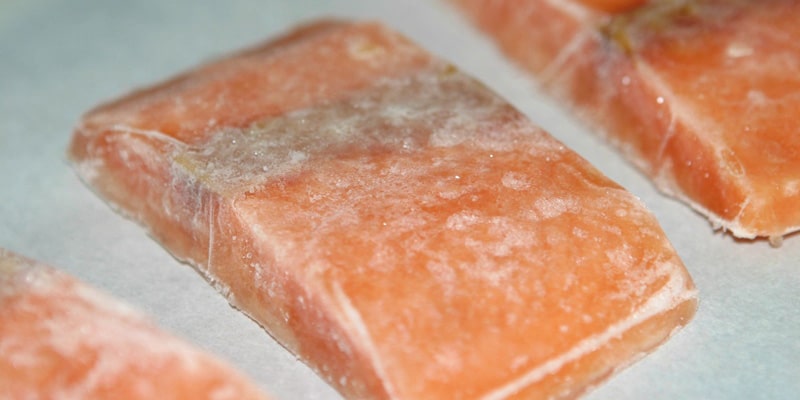
2. How to Cook Frozen Salmon in Oven
Ingredients
2 (6-ounce) frozen salmon fillets (do not thaw)
3 tablespoons Dijon mustard
2 teaspoons maple syrup
2 cloves garlic, minced
1/2 teaspoon red pepper flakes (optional)
1/2 teaspoon kosher salt
Instructions
Preheat the oven
Begin by preheating your oven to 425°F (220°C). This temperature is ideal for bringing frozen salmon up to the right internal temperature while still keeping the fish moist and flaky. Lightly grease a baking dish or line it with parchment paper for easy cleanup.
Prepare the salmon fillets
Remove the frozen salmon from its packaging. If there is any visible ice on the surface, rinse it under cold water for a second, then pat dry with paper towels. Place the frozen fillets in the prepared baking dish, skin-side down if they have skin.
Make the mustard-maple glaze
In a small bowl, stir together the Dijon mustard, maple syrup, minced garlic, red pepper flakes (optional), and kosher salt. Mix until everything is fully combined. The glaze should be thick enough to cling to the salmon and will provide a balance of sweet, tangy, and savory flavors.
Coat the salmon
Spoon or brush the mustard-maple mixture evenly over the tops of the frozen fillets. It’s okay if the salmon is still frosty; the glaze will melt beautifully as it cooks. Make sure the fillets are fully coated for maximum flavor.
Cover and bake
Cover the baking dish tightly with aluminum foil. This traps steam and ensures the frozen salmon cooks gently and evenly. Place the dish in the oven and bake for 15 minutes.
Uncover and continue roasting
After 15 minutes, remove the foil and return the uncovered dish to the oven. Continue roasting the salmon for 8 to 10 minutes, or until the fillets are cooked through.
Rest and serve
Allow the salmon to rest for 2 minutes before serving. This helps the juices settle, keeping the fish moist and tender. Serve the salmon with your favorite sides—steamed vegetables, garlic rice, mashed potatoes, roasted asparagus, or a crisp green salad all pair beautifully.

3. How to Cook Frozen Salmon in Air Fryer
Ingredients
2 (6-ounce) frozen salmon fillets (do not thaw)
½ teaspoon olive oil
½ lemon, thinly sliced
Instructions
Preheat the air fryer
Set your air fryer to 390°F (200°C) and let it preheat for 3 minutes. Preheating ensures the salmon cooks evenly and develops a lightly crisp exterior.
Prepare the frozen salmon
Remove the salmon fillets from their packaging. If there is any excess ice on the surface, quickly rinse under cold water and pat dry with a paper towel. Place the fillets on a clean plate.
Season the salmon
Drizzle ½ teaspoon olive oil evenly over the tops of the frozen fillets. Use your fingers or a brush to spread the oil across the surface. The olive oil helps the salmon brown slightly and prevents it from drying out.
Place a few thin lemon slices on top of each fillet. As the salmon cooks, the heat releases the lemon’s natural oils, infusing the fish with a bright, fresh flavor.
Arrange the salmon in the air fryer basket
Lightly spray the air fryer basket with cooking spray or place a parchment liner designed for air fryers. Arrange the salmon fillets in a single layer, ensuring they are not touching. Proper spacing allows air to circulate freely for the best texture.
Air fry the frozen salmon
Cook the salmon at 390°F (200°C) for 7 minutes. This first cook time begins thawing and heating the center of the fillets while gently crisping the outside.
Check and continue cooking
After 7 minutes, open the air fryer and check the salmon. The surface should be lightly thawed and beginning to turn opaque. Continue cooking for an additional 4–6 minutes, depending on thickness.
The salmon is ready when it flakes easily with a fork and reaches an internal temperature of 145°F (63°C) at the thickest part.
Rest and serve
Carefully remove the salmon from the air fryer and let it rest for 2 minutes. Resting allows the juices to settle, making the fish even more tender.
Serve with extra lemon wedges, fresh herbs, steamed vegetables, rice, or a crisp salad for a complete meal.

Frozen salmon is an excellent solution for busy homemakers; I hope that after reading this article, you knew how to cook frozen salmon in 2 different ways. Good Luck
Read More: Air Fryer Salmon
